Global Procurement & Technical Sourcing Guide

Ophthalmic Surgical Instruments: Market Procurement Trends, Technical Specifications & OEM Manufacturing Excellence

An authoritative 2026 intelligence report for global healthcare procurement officers, hospital purchasing committees, and medical device distributors. Discover critical specifications for micro-ophthalmic surgical instruments, ISO 13485 manufacturing compliance, material science innovations, and factory-direct OEM solutions.

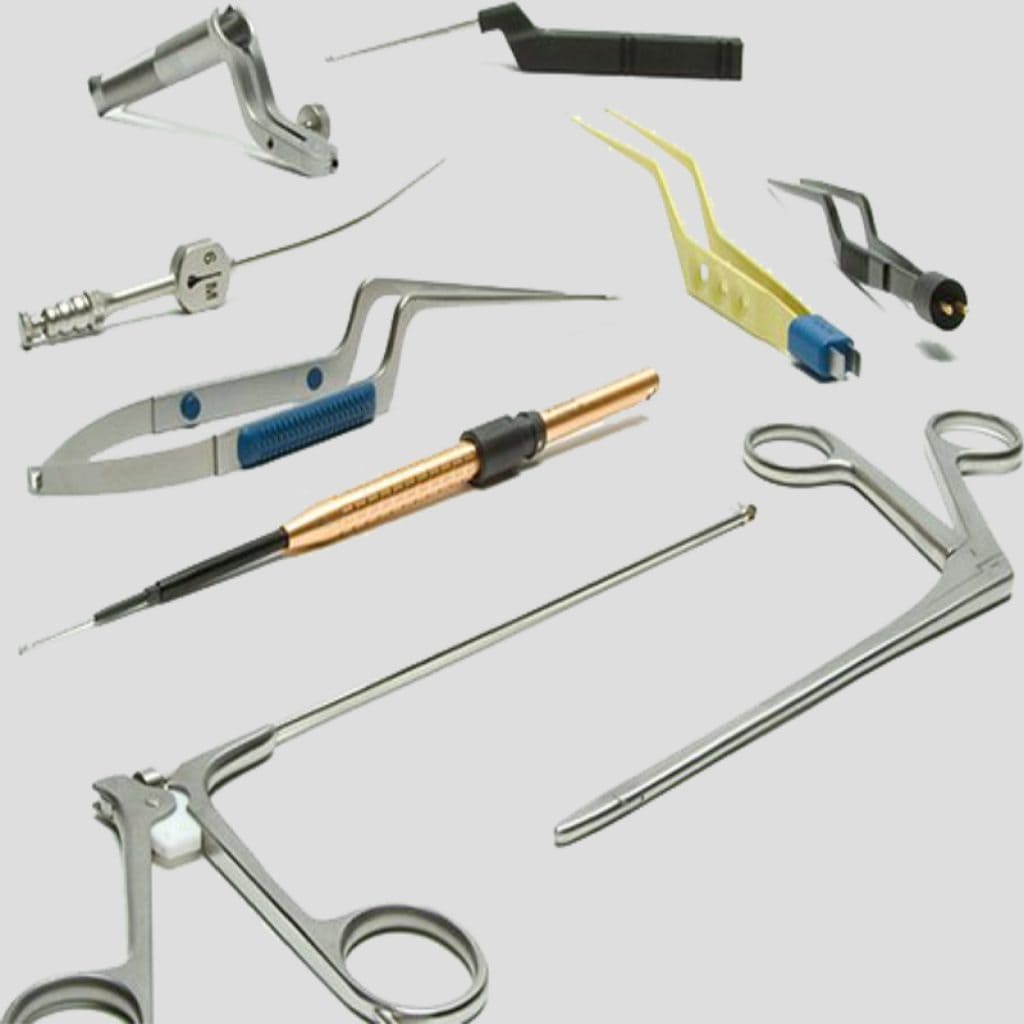
QUALITYMicro-precision Ophthalmic Surgical Instruments — Forged from German AISI 420 & Grade 5 Titanium
PRECISIONHand-fitted tips under 40x optical magnification — guarantees zero-gap closure for capsulorhexis forceps
CERTIFIEDISO 9001:2015 & ISO 13485 certified manufacturing facility in Sialkot, Pakistan — CE & FDA registered
EXPORTDirect manufacturer exporting to 50+ countries with complete technical file support for regulatory clearance
OEM/ODMCustom laser marking, bespoke jaw geometry, and private-label surgical tray configuration
QUALITYMicro-precision Ophthalmic Surgical Instruments — Forged from German AISI 420 & Grade 5 Titanium
PRECISIONHand-fitted tips under 40x optical magnification — guarantees zero-gap closure for capsulorhexis forceps

1. Executive Procurement Overview: Precision Engineering in Ophthalmic Micro-Surgery

Why global healthcare institutions prioritize material purity, dimensional tolerance, and ergonomic balance when selecting ophthalmic surgical instruments.

Ophthalmic surgery represents the apex of microsurgical precision. Operating within microscopic intraocular anatomical structures requires medical instruments that deliver flawless tactile feedback, unyielding dimensional stability, and complete anti-glare visual neutrality under high-intensity operating room lighting. Whether executing Micro-Incision Cataract Surgery (MICS), complex vitreoretinal repairs, trabeculectomies for glaucoma management, or delicate corneal transplants, ophthalmic surgeons depend entirely on the mechanical fidelity of their instrumentation.

For global procurement managers, hospital supply chain executives, and wholesale medical equipment distributors, sourcing high-grade Ophthalmic Surgical Instruments involves navigating complex regulatory requirements, material grading standards, and manufacturing provenance. The modern global marketplace demands total transparency: instruments must withstand hundreds of high-temperature steam autoclave sterilization cycles without developing stress corrosion cracking, blade dulling, or tip misalignment.

40+ Years Expertise

Second-generation master artisans hand-finishing micro-instrumentation in Sialkot, Pakistan.

Dual ISO Certification

ISO 13485:2016 Medical Devices Quality System & ISO 9001:2015 audited processes.

40x Optical QC Inspection

Every forceps jaw and scissor edge verified under high-resolution stereomicroscopes.

50+ Global Markets

Compliant with EU MDR 2017/745, US FDA requirements, and international export protocols.

At Rigor Instruments, headquartered in the historical surgical manufacturing hub of Sialkot, Pakistan, we merge second-generation surgical metallurgy with modern CNC grinding and laser-welding technology. Our comprehensive product portfolio covers over 5,000 instrument patterns, engineered specifically to satisfy the stringent requirements outlined in Google’s Search Quality Rater Guidelines for medical equipment authority, reliability, and expertise (E-E-A-T).
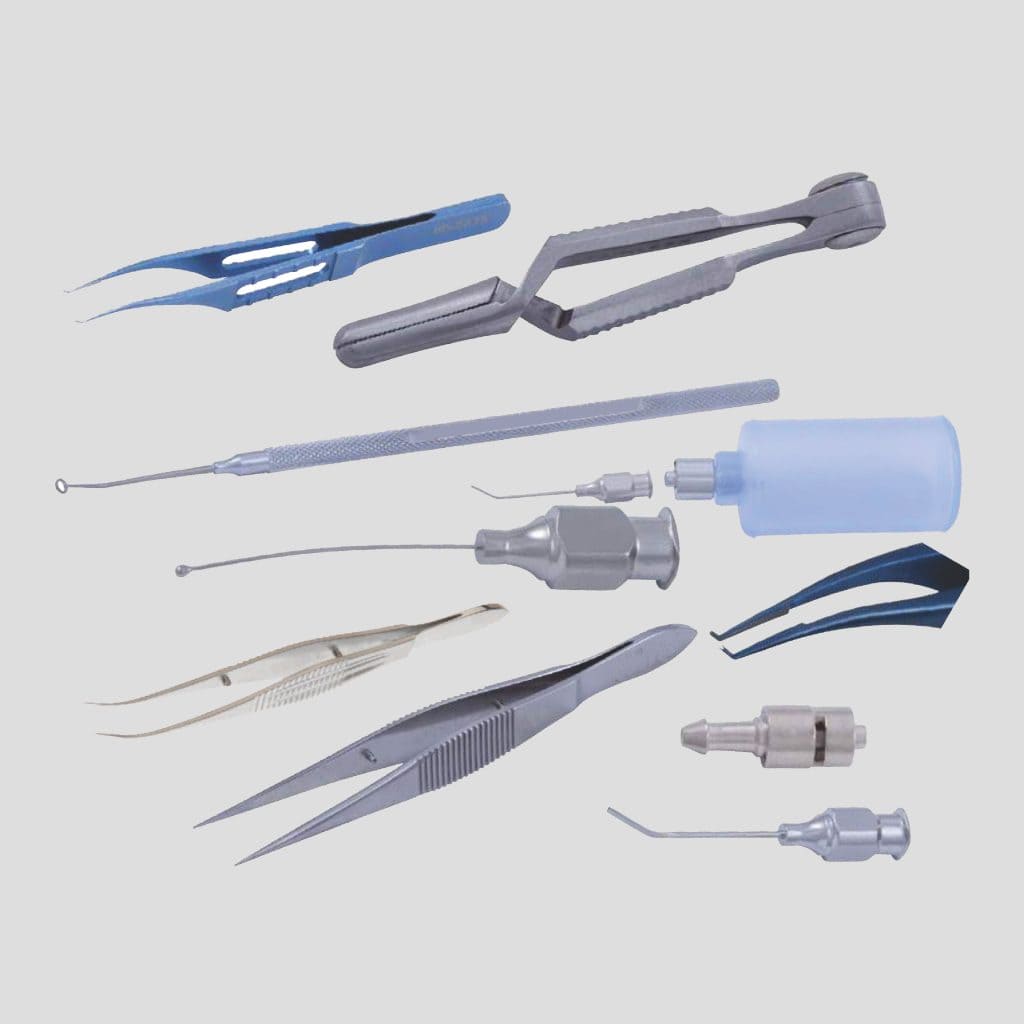
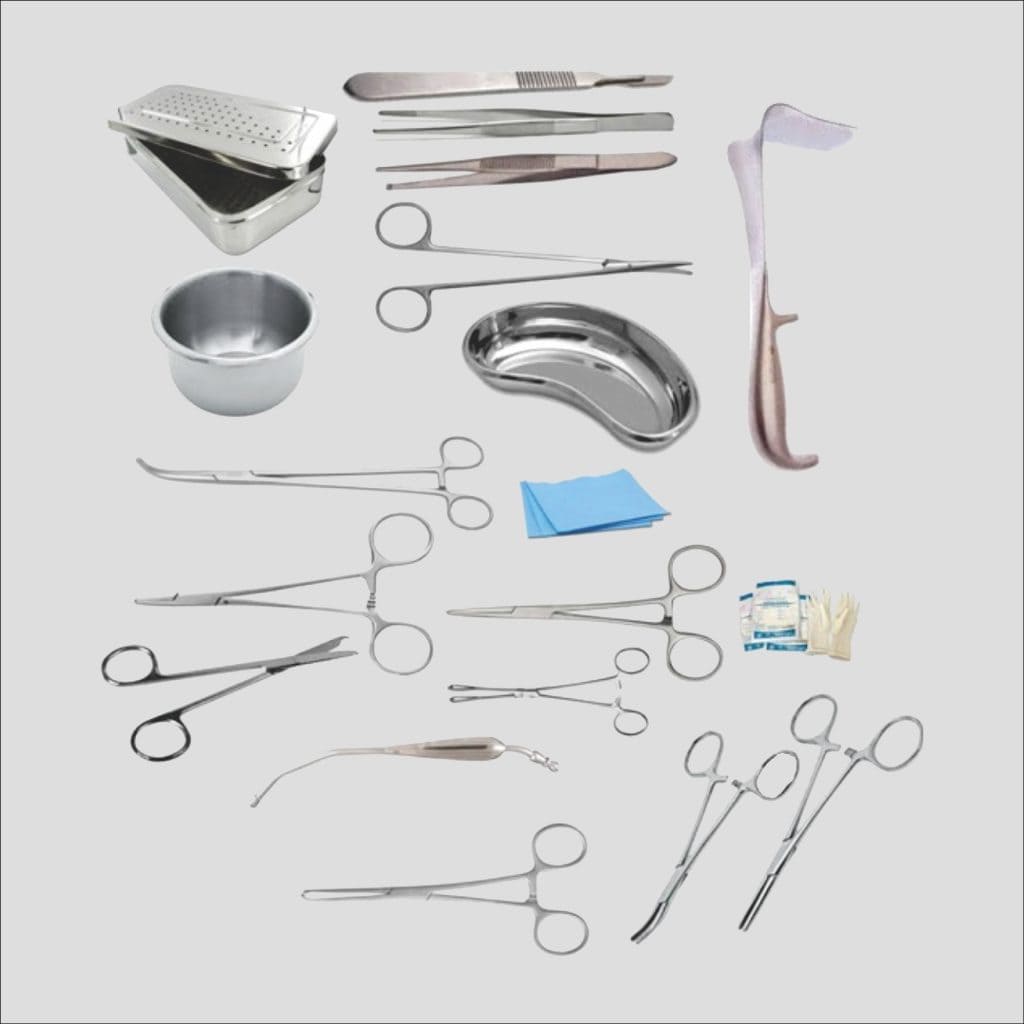
2. Recommended Ophthalmic Surgical Instruments for Professional Procurement

Industry-standard micro-instruments designed for cataract, refractive, corneal, and vitreoretinal surgical protocols.

Ophthalmic Capsulorhexis Forceps - Rigor Instruments
Cataract & Anterior Segment

Utrata Capsulorhexis Forceps (Curved / Cystotome Tips)

Engineered for continuous curvilinear capsulorhexis (CCC). Features ultra-fine 0.12mm cystotome tips for easy capsule puncturing and delicate grasping under topical anesthesia.

Material: German Stainless Steel / Titanium
Tip Geometry: 11mm Curved Jaws with Interlocking Teeth
Overall Length: 105 mm
Castroviejo Micro Ophthalmic Scissors - Rigor Instruments
Micro-Cut Precision

Castroviejo Micro Corneal Scissors (Curved Blades)

Designed for smooth corneal transection and iridectomy. Features razor-sharp micro-blades hand-honed to prevent tissue slipping during incision extension.

Material: AISI 420 High-Carbon Stainless Steel
Blade Style: Curved, Sharp/Sharp Tips (9mm blade)
Spring Action: Double-spring ergonomic flat handle
Barraquer Wire Eye Speculum - Rigor Instruments
Retraction & Exposure

Barraquer Wire Eye Speculum (Non-Magnetic Titanium)

Provides non-traumatic eyelid retraction. Ultra-lightweight wire design reduces pressure on the globe during phacoemulsification and intravitreal injections.

Material: Medical Grade Titanium / Stainless Steel
Blade Length: 15mm Open Wire Blades
Finish: Satin Anti-Reflective Coating
McPherson Tying Forceps - Rigor Instruments
Suturing & Micro-Tying

McPherson Micro Suture Tying Forceps (Straight / Curved)

Ideal for tying delicate 9-0, 10-0, and 11-0 monofilament sutures. Smooth 5mm tying platforms ensure secure knot placement without suture abrasion.

Platform: 5mm Smooth Tying Surfaces
Tip Width: 0.3mm Ultra-Fine Tips
Handle: Ergonomic Round Knurled Handle
Nagahara Phaco Chopper - Rigor Instruments
Phacoemulsification

Nagahara Nucleus Phaco Chopper & Manipulator

Essential instrument for horizontal chop techniques during dense nuclear cataract extraction. Features a specialized 1.2mm cutting tip combined with a rounded manipulator tip.

Tip Configuration: 60° Cutting Edge + Sinskey Hook
Material: High-Grade German Stainless Steel
Autoclave Life: Exceeds 500 Sterilization Cycles
Complete Ophthalmic Surgical Instrument Set - Rigor Instruments
Hospital Surgical Kit

Premium Cataract & Glaucoma Surgical Set (24-Piece)

Comprehensive surgical kit housed in a silicone-mat sterilization cassette. Includes speculums, forceps, scissors, needle holders, choppers, and irrigation cannulas.

Contents: 24 Precision Micro Instruments
Packaging: Anodized Aluminum Sterilization Tray
Standards: ISO 13485 & CE Compliant

Detailed Technical Specifications Matrix

Below is a comparative breakdown of key material specifications for high-volume purchasing decisions:

  • Cataract Capsulorhexis (CCC)
  • Corneal Flap Grasping
  • Iridectomy & Tenotomy
  • Corneal & Scleral Incisions
  • Micro-Suturing (8-0 to 11-0)
  • Keratoplasty Closures
  • Satin Passivated
  • Non-Magnetic
  • Globe Pressure Relief
  • Operative Field Exposure
  • Electro-Polished Bore
  • N/A (Tubular)
  • Cortical Material Cleanout
  • Anterior Chamber Maintenance
  • Instrument Classification Primary Material Alloy Micro-Finish Type Hardness (Rockwell C) Typical Surgical Application
    Capsulorhexis & Tissue Forceps German Titanium / AISI 420 Stainless Satin Anti-Glare / PVD Blue 48 - 52 HRC
    Micro Scissors (Vannas / Castroviejo) AISI 420 Martensitic Stainless Steel Mirror Polish / Matte Handle 54 - 56 HRC
    Needle Holders (Tungsten Carbide) AISI 304 Body + TC Jaw Inserts Gold-Plated Ring / Satin Shaft 68 - 72 HRC (Inserts)
    Eyelid Speculums & Retractors Grade 5 Titanium (Ti-6Al-4V)
    Irrigation & Aspiration Cannulas AISI 316L Seamless Stainless Steel

    3. Future Procurement Trends & Strategic Sourcing Dynamics (2026–2030)

    Anticipating shifts in healthcare supply chains, material innovations, and hospital buying patterns globally.

    The global ophthalmic devices market is undergoing rapid evolution driven by aging populations, increased prevalence of diabetic retinopathy, and widespread adoption of minimally invasive microsurgical techniques. Procurement directors must align their purchasing strategies with emerging technological and commercial shifts:

    1. Surge in Titanium Micro-Instrumentation

    Hospital purchasing groups are progressively replacing traditional stainless steel instruments with Grade 5 Titanium alloys. Titanium offers a 40% reduction in weight, complete immunity to magnetic field interference in intraoperative MRI/CT suites, and superior fatigue resistance for delicate spring-action forceps and scissors.

    2. Micro-Incision Surgery (MICS) Standardization

    With cataract incisions shrinking down to 1.8mm – 2.2mm, instrument tip profiles must achieve sub-millimeter tolerances. Procurement teams are demanding micro-forceps and cannulas engineered specifically to pass through micro-stepped corneal incisions without causing endothelial thermal or mechanical trauma.

    3. Custom Procedure Trays & Modular Kits

    To maximize operating room turnaround times, eye hospitals are moving away from purchasing standalone instruments. Instead, they require factory-preassembled, specialized procedure kits (Cataract Sets, Pterygium Sets, Vitrectomy Kits) packaged in sterilizable aluminum cassettes with custom silicone mats.

    4. Direct-From-Manufacturer OEM Partnerships

    To eliminate distributor markups and safeguard against counterfeit products, healthcare systems in North America, Europe, and the Middle East are establishing direct relationships with ISO 13485-certified manufacturers in Sialkot, Pakistan that offer private-label branding, laser engraving, and custom design prototyping.

    4. Product Development & Metallurgical Engineering Trends

    How advanced manufacturing techniques in Sialkot, Pakistan are elevating the performance of micro-ophthalmic surgical instruments.

    Manufacturing micro-ophthalmic instruments requires sophisticated metallurgical science combined with meticulous hand craftsmanship. As surgical microscopes achieve higher magnifications and 3D heads-up visualization displays become standard in modern surgical suites, instrument design must adapt to eliminate glare and enhance ergonomic dexterity.

    A. Anti-Reflective Surface Finishes and PVD Coatings

    Standard high-polish stainless steel reflects 85% of ambient light under halogen or LED surgical microscope illuminators, creating blinding glare for the surgeon. Advanced manufacturing processes now incorporate satin bead-blasted finishes or Physical Vapor Deposition (PVD) titanium nitride coatings. These dark blue, matte black, or champagne finishes absorb specular reflections, ensuring maximum visual contrast against intraocular structures.

    B. Precision Tungsten Carbide (TC) Jaw Inlays

    Suturing delicate 10-0 monofilament nylon requires needle holders with zero slippage or suture rotation. By vacuum-brazing micro-grain Tungsten Carbide jaws with pyramid-shaped serrations (0.2mm pitch) into stainless steel shanks, manufacturers dramatically extend needle holder service life and guarantee positive needle engagement without jaw distortion.

    C. 5-Stage Ultrasonic & Microscopic Passivation

    Resistance to corrosion is fundamental to patient safety. Rigor Instruments employs a multi-step chemical passivation process utilizing citric and nitric acid baths to remove free iron from the instrument surface, forming a dense, self-healing chromium oxide passive layer. Every finished instrument undergoes rigorous boil-test and copper-sulfate testing to verify rust-proof reliability prior to dispatch.

    5. Frequently Asked Questions (FAQ) for Global Buyers & Procurement Managers

    Addressing technical, regulatory, and commercial inquiries frequently searched by international medical equipment buyers.

    Q1: What raw material grades does Rigor Instruments use for manufacturing ophthalmic surgical instruments?

    Rigor Instruments exclusively utilizes premium-grade surgical stainless steel imported from Germany (AISI 410, AISI 420, AISI 304) and Japan (SUS440C), alongside medical-grade Titanium Alloy (Grade 5 Ti-6Al-4V). Each batch of raw material is accompanied by material test certificates (MTC) verifying chemical composition, tensile strength, and corrosion resistance.

    Q2: What international quality management certifications and regulatory approvals do your instruments carry?

    Our manufacturing facility in Sialkot, Pakistan operates under full compliance with ISO 9001:2015 (Quality Management Systems) and ISO 13485:2016 (Medical Devices Quality Management). Our ophthalmic instruments carry the CE Mark under European Medical Device Regulations (MDR 2017/745) and are registered with the US FDA for commercial export worldwide.

    Q3: How do you guarantee the tip alignment and jaw tension of micro-capsulorhexis forceps?

    Micro-instruments undergo 100% manual inspection by senior artisans under 40x optical stereomicroscopes. Jaw alignment, grasping force, tip overlap (guaranteed within ±0.01mm tolerance), and spring tension are individually tested on synthetic membrane substrates before entering automated cleaning and packaging lines.

    Q4: Can Rigor Instruments handle custom OEM manufacturing, private labeling, and custom surgical tray design?

    Yes. As a direct manufacturer, we offer comprehensive OEM and ODM services. We can laser-engrave your corporate logo, custom catalog numbers, and QR/UDI codes onto the instruments. Furthermore, we design bespoke sterilization trays and custom surgical instrument sets configured according to surgeon preference lists.

    Q5: What are your minimum order quantities (MOQ) and standard delivery lead times for wholesale export?

    We offer flexible MOQ structures to support both small specialty clinics and large hospital group tenders. Standard product patterns ship within 2 to 3 weeks, while custom OEM or private-label orders typically require 4 to 6 weeks for precision forging, micro-machining, passivation, and final quality sign-off.

    Q6: How should surgical staff sterilize and maintain reusable micro-ophthalmic instruments to maximize longevity?

    Micro-instruments should be processed immediately after surgery using pH-neutral enzymatic cleaners in ultrasonic baths. Tips must be protected with dedicated silicone tip-protectors to prevent mechanical impact damage. Instruments are fully validated for steam autoclave sterilization cycles at 134°C (273°F) for 4 to 18 minutes in accordance with ISO 17664 standards.

    Inquire Now

    6. Enterprise Advantages: Why Global Healthcare Institutions Partner With Rigor Instruments

    With over four decades of dedicated manufacturing experience, Rigor Instruments stands as one of Sialkot, Pakistan's most trusted manufacturers and exporters of surgical instruments. Our integrated factory eliminates intermediary markups, guaranteeing uncompromised quality, competitive factory-direct pricing, and complete technical support for global procurement networks.

    40+ Years of Precision Craftsmanship Combining ancestral metalworking heritage with state-of-the-art CNC micro-grinding and laser technology in Sialkot, Pakistan.
    Certified Quality Assurance Framework ISO 9001:2015 and ISO 13485:2016 certified manufacturing processes with rigorous 5-stage quality inspections.
    Premium Steel & Titanium Sourcing Forged exclusively from certified German and Japanese stainless steel alloys, guaranteeing rust-free durability.
    Comprehensive 5,000+ Instrument Catalog Full-range production across 28 surgical specialties, providing complete hospital supply chain solutions under one roof.
    Global Export Presence in 50+ Countries Trusted partner to healthcare distributors, ministry of health tenders, and private surgical centers across North America, Europe, Middle East, and Asia.
    Rigor Instruments Quality Assurance - Ophthalmic Surgical Instruments Manufacturer
    Request a Customized Quotation or Direct Factory Catalog for Ophthalmic Surgical Instruments

    Rigor Instruments  ·  Village Kotli Bhutta, Wazirabad Road, Sialkot, Pakistan  ·  ISO 13485 & CE Certified