1. Technical Framework & Strategic Overview of ENT Surgical Instrumentation
Otolaryngology—commonly designated as Ear, Nose, and Throat (ENT) surgery—represents one of the most intricate, high-precision surgical disciplines in modern medicine. Operating within narrow anatomical passages, micro-vessels, and delicate cartilage structures demands a specialized class of surgical tools. High-caliber ENT Surgical Instruments are engineered to provide maximum tactile feedback, optimal visibility, surgical access, and rust-free durability across demanding sterilization protocols.
From micro-otology procedures such as stapedectomy and tympanoplasty to complex Functional Endoscopic Sinus Surgery (FESS) and reconstructive laryngology, the metallurgical composition and mechanical tolerances of ENT tools directly dictate clinical outcomes. B2B healthcare buyers, hospital purchasing committees, and global medical supply distributors face an increasingly complex procurement environment. Evaluating suppliers requires an in-depth understanding of raw material grades, micro-machining precision, international regulatory compliance (ISO 13485, CE Mark, US FDA listing), and supply chain transparency.
Information Gain Insights: Metallurgical & Machining Benchmarks for ENT Tools
Unlike general abdominal retractor sets, surgical-grade ENT tools require specialized martensitic stainless steel alloys (such as AISI 410 and 420) for sharp-cutting instruments like nasal punches, forceps, and scissors, ensuring high Rockwell hardness (HRC 50–56). Non-cutting structural tools, such as speculums and mouth gags, utilize austenitic AISI 304 or 316L steel to deliver superior tensile strength and extreme resistance to stress corrosion cracking under steam sterilization.
2. Expert Product Recommendations: Specialized ENT Surgical Instrument Collections
To assist global procurement officers in establishing comprehensive inventory frameworks, Rigor Instruments categorizes its premium ENT surgical collection into three core anatomical specializations. Every instrument is hand-finished by master craftsmen in Sialkot, Pakistan, adhering strictly to global medical manufacturing guidelines.
Micro-Otology & Ear Surgery Instruments
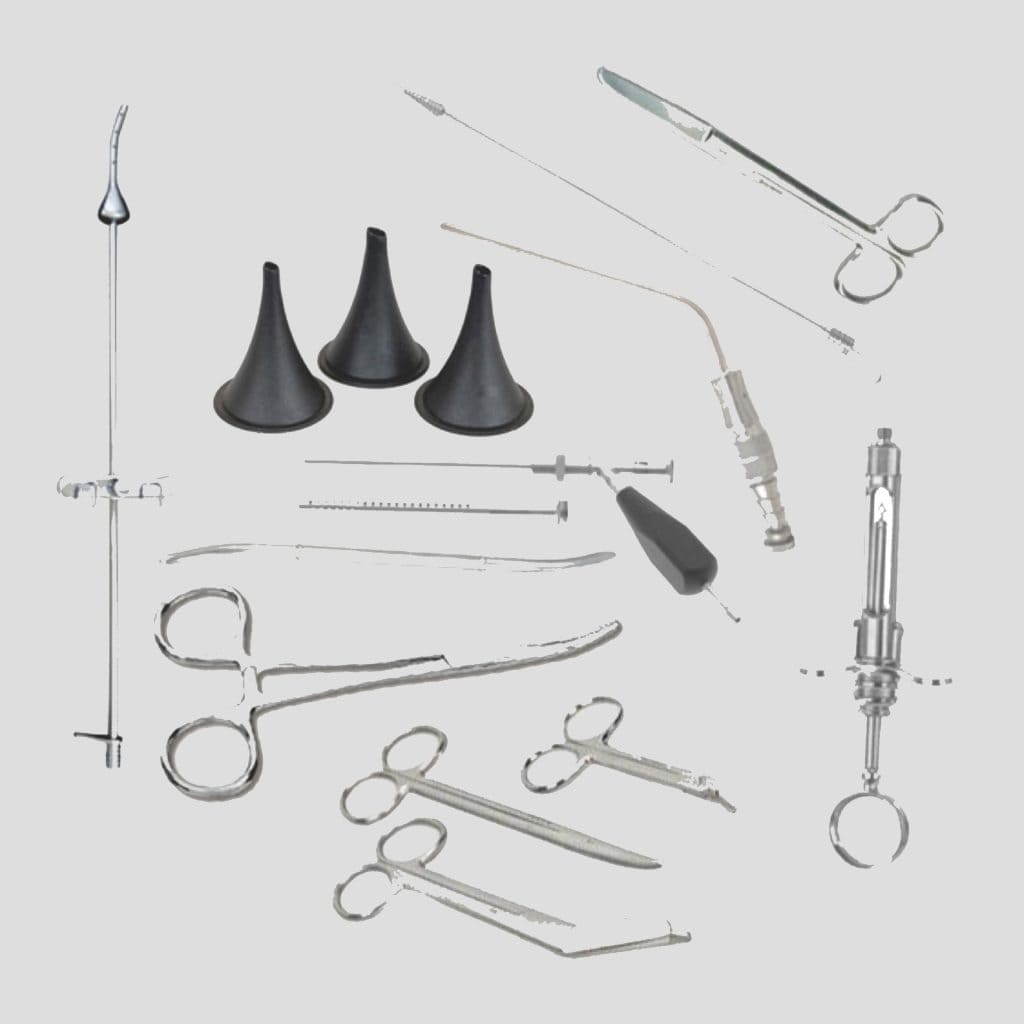
Includes Hartmann Micro Alligator Forceps, Bellucci Micro Scissors, Rosen Needle, Shea Stapes Picks, and Lempert Endaural Speculums. Designed with ultra-thin shanks (0.5mm) and non-reflective satin finishes for microscopic clarity.
Get Catalog Rhinology & FESS (Sinusitis) Sets
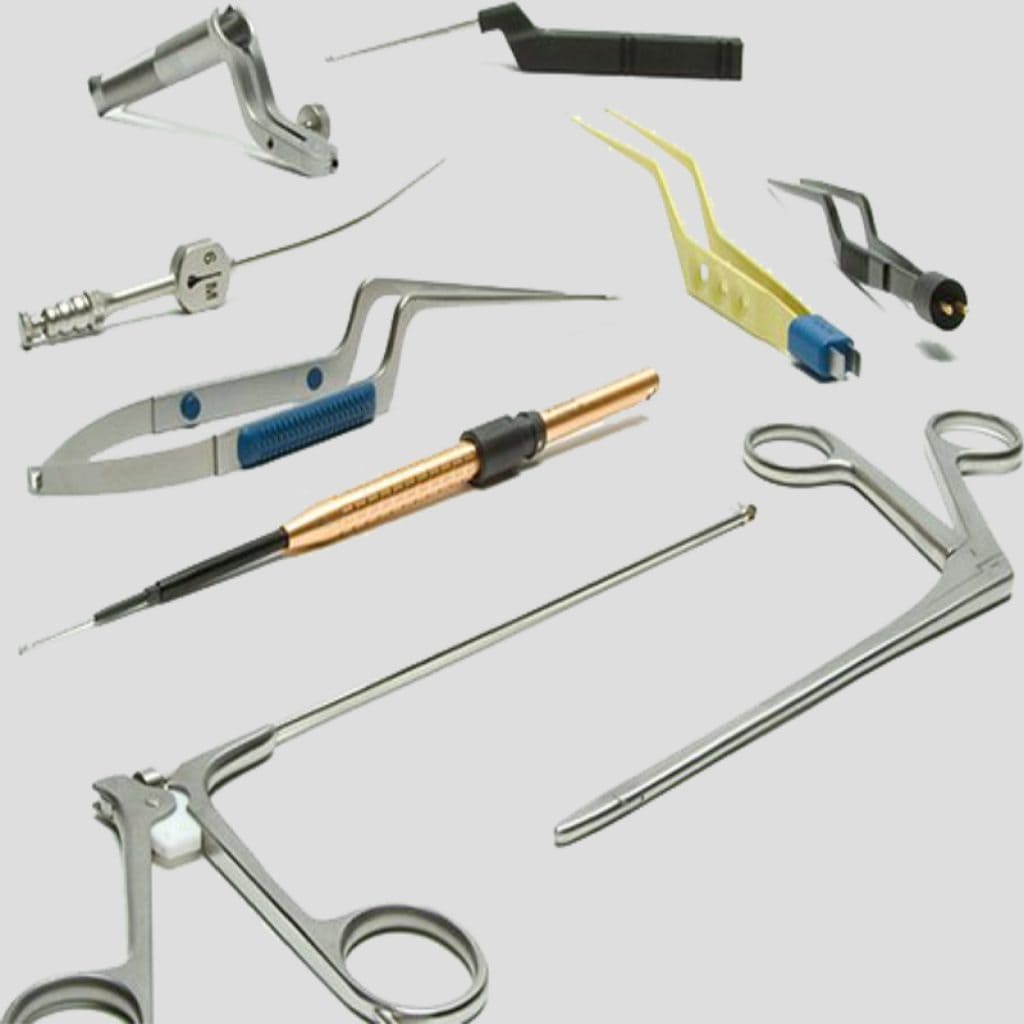
Features Blakesley Nasal Forceps, Takahashi Ethmoid Forceps, Back-Biting Antrum Punches, Freer Elevators, and Killian Nasal Speculums. Engineered for clean tissue shearing without tearing, minimizing postoperative mucosal trauma.
Get Catalog Laryngology & Tonsillectomy Assemblies
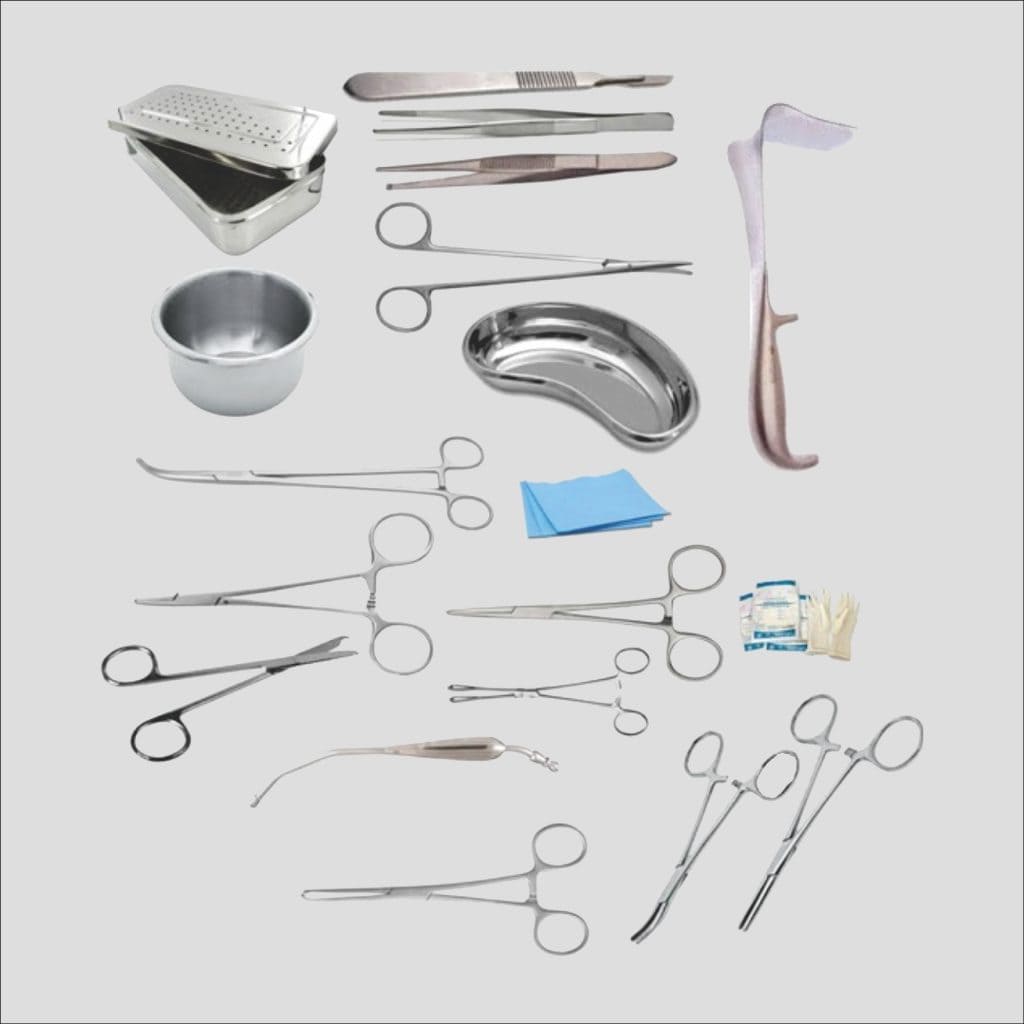
Comprises Davis-Boyle Mouth Gag with interchangeable blades, Sluder-Ballenger Tonsillotomes, Hurd Tonsil Dissectors, Negus Bronchoscopy Forceps, and Jackson Laryngeal Micro Tools built for high-torque stability.
Get Catalog Comprehensive Sub-Category Matrix for B2B Sourcing
When assembling complete operating room sets, procurement agencies must specify precise catalog references and functional features. Below is an overview of essential ENT tools engineered by Rigor Instruments:
- Otology Suite: Hartmann Alligator Forceps (serrated, smooth, 1x2 teeth), Bellucci Micro-Scissors (straight, curved up/down), Rosen Needle (45° and 90° angles), House Cuticle Knife, Wullstein Suction Tubes (0.6mm to 2.5mm diameters), Boucheron Ear Specula (Sizes 1-5).
- Rhinology & Septoplasty Suite: Cottle Septum Elevators, Ballenger Swivel Knives, Knight Nasal Scissors, Asch Septum Straightening Forceps, Cottle Bone Crushers, Takahashi Soft Tissue Punches, Kerrison Micro-Rongeurs with 45° up-biting jaws.
- Throat, Larynx & Oral Surgery Suite: McIvor Mouth Gag Sets, White Tonsil Seizing Forceps, Eve Tonsil Snare with stainless steel wire loops, Magill Endotracheal Catheter Forceps (Adult and Pediatric), Laryngeal Micro-Forceps with flexible handles.
3. Global Healthcare Procurement Trends: The Shifting Landscape
The international trade landscape for surgical devices is undergoing a structural paradigm shift driven by stringent post-market surveillance laws, economic cost-pressures, and supply-chain risk mitigation strategies. Procurement managers in healthcare networks across Europe, North America, the Middle East, and Asia-Pacific must adapt to several emerging purchasing patterns:
A. Strategic Direct-from-Manufacturer (DFM) Sourcing
Historically, healthcare providers relied heavily on regional Western distributors who white-labeled instruments sourced from specialized hubs like Sialkot, Pakistan. Today's hospital group purchasing organizations (GPOs) and international medical wholesalers are bypassing traditional multi-tier brokerage channels. Sourcing direct from certified manufacturing factories reduces acquisition costs by 35% to 50% while opening direct technical lines of communication for custom tool modifications.
B. Transition to Hybrid Procurement: Reusable vs. Single-Use ENT Tools
While single-use instruments have expanded in basic diagnostic settings to eliminate cross-contamination, high-tier surgical otolaryngology remains anchored in premium reusable instruments. Environmental sustainability mandates (ESG framework compliance) combined with the superior tactile responsiveness of hand-crafted German/Japanese steel have spurred a resurgence in reusable ENT instruments. High-performance clinics prioritize durable tools capable of enduring over 500 steam autoclave cycles (134°C / 273°F) without jaw misalignment or surface pitting.
C. UDI Compliance and Supply Chain Traceability
Regulatory bodies—including the United States FDA under the Unique Device Identification (UDI) system and the European Union under EU MDR 2017/745—mandate full device traceability. Modern ENT instrument orders require laser-etched Data Matrix codes on individual shanks, matching batch documentation, material test certificates, and biocompatibility safety profiles. Procurement teams must ensure their supplier delivers complete compliance documentation prior to customs clearance.
4. Future Technological & Development Trends in ENT Instrumentation
The evolution of minimally invasive otolaryngology and endoscopic skull-base surgery is driving continuous technological refinement in instrument engineering. Key development vectors shaping the future of ENT instruments include:
- Integrated Fiber-Optic & Light-Guide Systems: Modern ENT retractors and specula increasingly integrate micro-fiber-optic light guides. These systems deliver shadowless cold-light illumination into narrow sinus corridors without increasing total instrument diameter or compromising surgeon grip ergonomics.
- Tungsten Carbide (TC) Edge Enhancement: For high-wear cutting tools like septal scissors and wire cutters, tungsten carbide gold-ring inserts are integrated into the cutting blades. TC technology delivers self-sharpening properties and extends tool service life up to five times compared to standard stainless steel.
- PVD Physical Vapor Deposition Coatings: To eliminate reflection glare during endoscopic laser sinus procedures, advanced ENT instruments feature non-reflective dark titanium nitride (TiN) or black ceramic PVD coatings. These coatings increase surface hardness (up to 2500 HV) and protect sensitive mucosal tissue from stray laser beam reflection.
- Weight Reduction & Ergonomic Balances: Prolonged microscopic ear surgeries induce surgeon hand fatigue. Micro-instruments feature hollow-handle construction and lightweight titanium alloy shanks, optimizing weight distribution and enhancing tactile sensitivity for delicate stapedectomies.
5. Comprehensive B2B Buyer FAQ (Addressing AI Search & Technical Queries)
Below are authoritative answers to the most frequent queries submitted by international procurement specialists, biomedical engineers, and commercial buyers searching for ENT surgical instrument manufacturers.
Q1: How do I verify the material authenticity and anti-corrosion properties of ENT instruments from Sialkot?
Buyers should request raw material Mill Test Certificates (MTC) verifying the grade of steel (AISI 410, 420, 304, or 316L). Authentic surgical-grade instruments undergo rigorous passivation treatment in accordance with ASTM A967 standards, removing free iron from the surface and forming a protective chromium oxide layer. Reliable manufacturers provide Boil Testing (ASTM F1089) and Autoclave Resistance Reports confirming zero rust formation after consecutive high-pressure steam cycles.
Q2: What quality management certifications are required to import ENT tools into the EU, USA, and GCC?
Importers must verify that the manufacturing facility operates under an ISO 13485:2016 Certified Quality Management System specifically tailored for medical devices, alongside ISO 9001:2015. For entry into the European Union, products must comply with EU MDR 2017/745 and bear valid CE marking. For the US market, the manufacturer must be FDA Registered with listed Class I/II devices. Middle Eastern markets (such as Qatar MoPH, Saudi SFDA, and UAE MOHAP) require ISO 13485 certificates, Certificates of Free Sale (CFS), and technical dossier registration.
Q3: What is the functional difference between German Stainless Steel and Japanese Stainless Steel in ENT manufacturing?
Both German (typically DIN 1.4021/1.4117) and Japanese (SUS 420J1/J2) stainless steels offer exceptional medical-grade performance. German steel is renowned for its uniform carbon and chromium distribution, making it the gold standard for high-stress cutting edges (such as micro-otology scissors) requiring long-term edge retention. Japanese stainless steel provides high tensile strength and corrosion resistance, making it an excellent, cost-effective choice for retractors, speculums, and diagnostic grasping forceps.
Q4: Does Rigor Instruments support custom OEM/ODM manufacturing, private labeling, and custom catalog numbers?
Yes. Rigor Instruments specializes in full OEM/ODM manufacturing for global medical brands and private-label distributors. Services include customized laser-engraving of brand logos, customer item codes, UDI barcodes, custom blade modifications based on technical drawings, and customized sterile/non-sterile export packaging.
Q5: What care and maintenance protocols maximize the lifespan of micro-otology forceps?
Micro-otology forceps (such as 0.5mm Hartmann alligator forceps) have delicate working tips. They must be cleaned immediately post-surgery using enzymatic detergent solutions with a pH between 7.0 and 8.5. Ultrasonic cleaning should be conducted with tip protectors attached. Instruments must be rinsed in demineralized water and thoroughly dried before undergoing steam sterilization at 134°C. Box locks and joints should be lubricated periodically with steam-permeable surgical instrument milk.
Q6: What are the typical Minimum Order Quantities (MOQ) and production lead times for wholesale ENT catalog orders?
Standard catalog items typically carry low minimum order quantities (MOQ as low as 5–10 units per pattern for distributor sampling), while custom OEM orders depend on tooling requirements. Production lead times average 3 to 5 weeks for standard bulk orders, shipped via expedited air freight (DHL, FedEx, Emirates Cargo) or sea freight for large tenders.
6. Enterprise Supremacy: Why Rigor Instruments is the Preferred Global OEM Partner
Rooted in the renowned surgical manufacturing hub of Sialkot, Pakistan, Rigor Instruments represents over four decades of second-generation engineering expertise. We combine traditional forging craftsmanship with CNC precision machining to produce surgical tools trusted across 50+ countries worldwide.
ISO 13485 & 9001
Certified medical quality management system ensuring full lot traceability.
Premium Alloys
Forged exclusively from imported German & Japanese surgical stainless steel.
100% Inspection
Every instrument is hand-finished, microscopic-inspected, and autoclave tested.
50+ Countries
Trusted supplier to hospital networks, GPOs, and distributors worldwide.
Proven Manufacturing Heritage & Facility Standards
Our state-of-the-art facility in Sialkot houses forging drop-hammers, 5-axis CNC machining centers, automated ultrasonic cleaning lines, laser-marking stations, and an in-house metallurgical testing lab. Operating across 28 surgical specialties with a portfolio exceeding 5,000 active patterns, Rigor Instruments provides complete surgical set solutions tailored to specific hospital tender requirements.
Whether you require complete FESS sinus sets, customized pediatric tonsillectomy trays, or specialized micro-otology instruments, our engineering team collaborates directly with your procurement department. We review technical specifications, produce sample prototypes, and deliver export-ready products with complete regulatory documentation.
7. Technical Compliance Summary & Procurement Checklist
When finalizing your bulk procurement contract for ENT surgical instruments, ensure your purchase order incorporates the following quality assurance checkpoints:
- Material Specification: Confirm AISI 410/420 steel for cutting tools (Scissors, Forceps jaws) and AISI 304/316 for structural components.
- Surface Finish: Specify Satin/Matte finish to avoid intense reflection under operating room lamps and surgical microscopes.
- Passivation & Corrosion Compliance: Require ASTM A967 passivation certificate and ASTM F1089 boil test compliance.
- Dimensional Verification: Verify micro-tip alignment under 10x magnification for all ear alligator forceps and micro-scissors.
- Regulatory File: Ensure receipt of ISO 13485 certificate, Declaration of Conformity (CE), and FDA registration data.
Streamline Your ENT Instrument Supply Chain Today
Connect directly with our technical sales engineers to request custom quotes, request factory samples, or download our complete 2026 ENT Surgical Instruments Catalog.
Get Catalog