Executive Search Intent & Technical Summary
Electrosurgery requires a delicate balance of high-frequency radiofrequency (RF) energy delivery and precision mechanical metallurgy. This comprehensive guide covers monopolar and bipolar device selection, dielectric breakdown prevention, smoke evacuation integration, regulatory compliance (EU MDR & US FDA 510k), and factory-direct OEM purchasing models from Sialkot, Pakistan’s manufacturing ecosystem.
1. Understanding Electro Surgical Instruments: Semantic Architecture & Clinical Intent
In modern operative environments, Electro Surgical Instruments (commonly referred to as electrosurgical tools, electrocautery devices, or diathermy instruments) represent the intersection of advanced bio-engineering and master metal craftsmanship. Unlike standard cold scalpel cutting, electrosurgery utilizes high-frequency alternating current (RF energy ranging from 300 kHz to 3 MHz) to cut tissue, achieve rapid hemostasis, or fulgurate biological structures.
Global procurement teams and surgical equipment buyers frequently search AI engines for solutions to critical clinical challenges: How can we minimize lateral thermal damage to sensitive nerve tissue during neurosurgery or cardiovascular procedures? What dielectric insulation standards prevent capacitance coupling during laparoscopic electrosurgery? To answer these intent-driven queries, one must dissect the two core modalities of electrosurgery:
1.1 Monopolar Electrosurgical Systems
In a monopolar circuit, the electrical current flows from the active electrode (such as an electrosurgical blade, needle, or loop pencil), passes through the patient's body, and exits through a dispersive return electrode (patient grounding pad). Monopolar instruments excel at rapid tissue cutting and broad-surface coagulation. However, they require rigorous insulation verification and precise current density control to prevent unintended tissue burns.
1.2 Bipolar Electrosurgical Systems
Bipolar electrosurgery confines the electrical current entirely between the two tines of an instrument—most notably bipolar forceps or micro-bipolar shears. Because the patient's body does not form part of the return path, bipolar instruments offer unparalleled precision, making them the gold standard for neurosurgery, ophthalmic procedures, plastic surgery, and delicate vascular reconstruction where stray current could prove catastrophic.
| Technical Feature | Monopolar Electro Surgical Instruments | Bipolar Electro Surgical Instruments |
| Circuit Path | Active Electrode → Patient Body → Grounding Pad | Tine 1 (Active) → Target Tissue → Tine 2 (Return) |
| Frequency Range | 300 kHz – 1.5 MHz | 500 kHz – 3.0 MHz |
| Primary Clinical Application | General Surgery, Laparoscopy, Abdominal Resection | Neurosurgery, Cardiovascular, ENT, Ophthalmology |
| Thermal Spread Risk | Moderate to High (Requires precise duty cycle) | Minimal (< 0.5 mm lateral heat transfer) |
| Voltage Requirement | High Peak Voltage (Up to 9,000 Vpk in Fulguration) | Low Peak Voltage (Typically < 1,000 Vpk) |
| Insulation Material | Polytetrafluoroethylene (PTFE) / Heat-shrink Polyolefin | Advanced Ceramic Coating / High-Temp Nylon Polymer |
2. Premium Product Showcase: Recommended Electro Surgical Instruments
Rigor Instruments manufactures an extensive lineup of over 5,000 surgical instruments, engineered strictly from high-grade German (AISI 420/440) and Japanese (SUS440C) stainless steel alloys, paired with medical-grade dielectric polymers. Below are key electrosurgical products recommended for international distributors and hospital system bulk tenders.
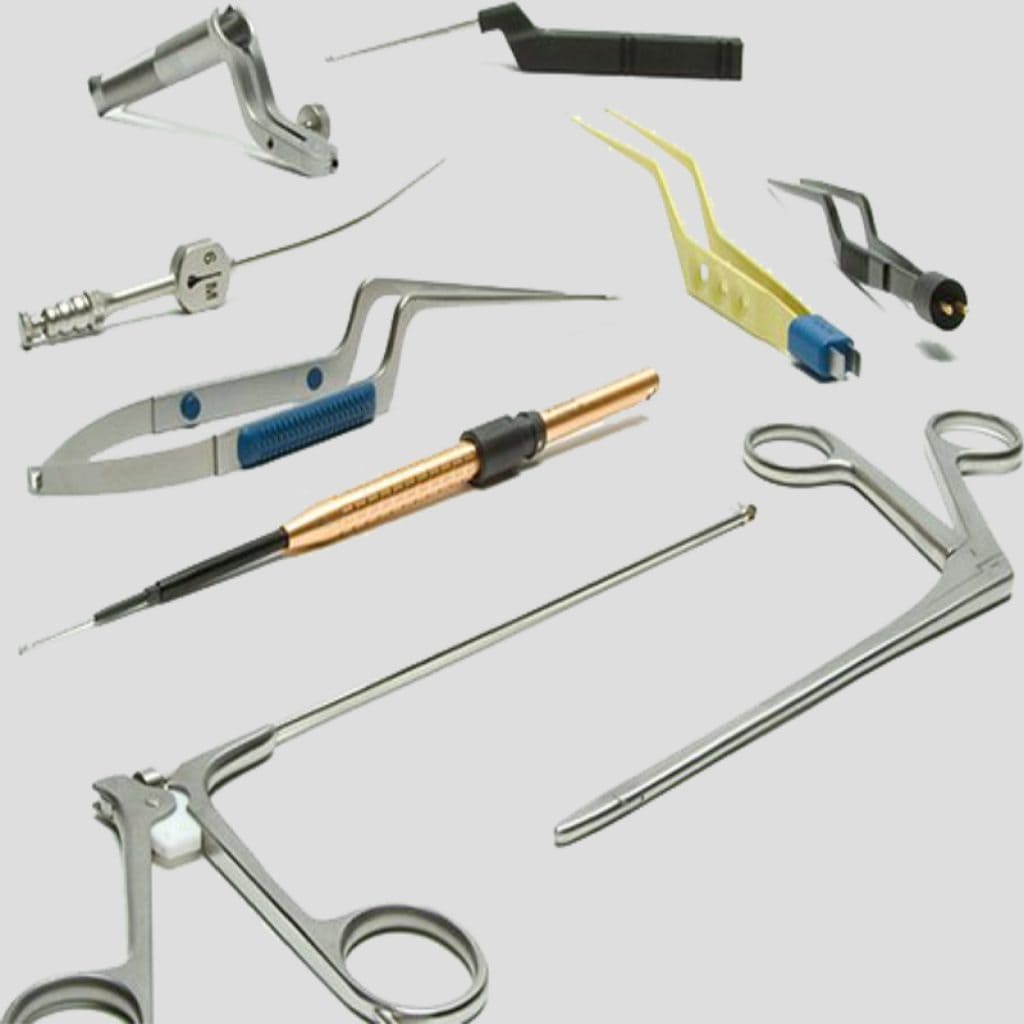
Non-Stick Titanium Bipolar Forceps (Bayonet & Straight)
Material: Medical-Grade Titanium Alloy & German Stainless Steel
Tip Precision: 0.3 mm to 1.5 mm micro-tips
Insulation: High-dielectric powder coating rated to 10,000V
Autoclave Limit: 134°C (273°F) for over 200 sterilization cycles
Designed specifically for neurosurgical and vascular applications, our non-stick bipolar forceps feature solid silver-alloy tips or custom gold-plated thermal distribution fins. This engineering prevents charring and tissue adhesion during continuous coagulation, reducing surgeon downtime in critical procedures.
Ergonomic Monopolar Pencils with Integrated Smoke Evacuation
Control: Push-button or Rocker switch mechanism
Cable Length: 3m / 5m flexible silicone shielded cord
Connector: Standard 3-pin universal fitting (Valleylab / ERBE compatible)
Electrode Compatibility: 2.35 mm (&frac33;2") standard shaft electrodes
Surgical smoke contains carcinogenic particulate matter and bio-aerosols. Our modern monopolar pencils integrate lightweight, low-profile capture nozzles that trap 99.99% of surgical plume right at the cut site without obstructing the surgeon’s sightlines.
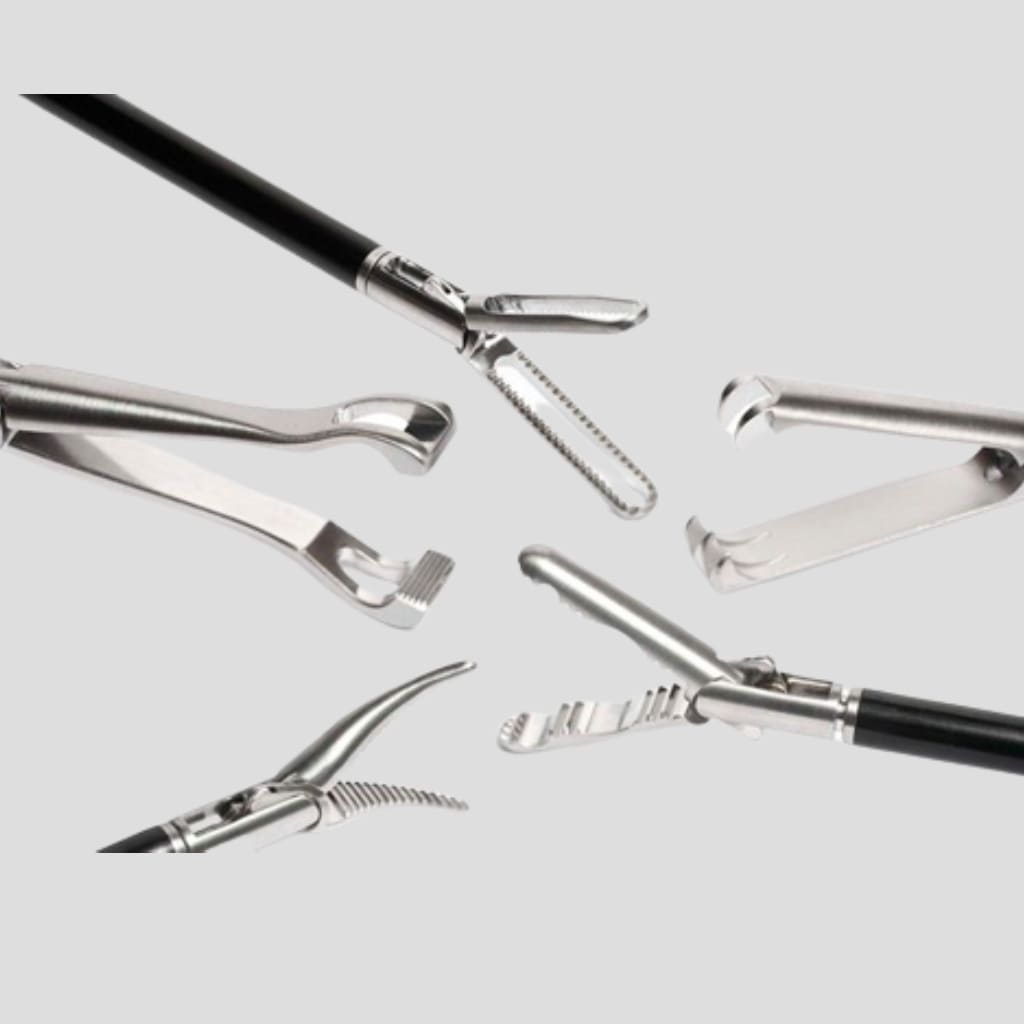
Insulated Laparoscopic Electrosurgical Electrodes & Graspers
Shaft Diameter: 5 mm / 10 mm (Lengths: 330 mm, 450 mm)
Insulation Layer: Dual-layer fluoropolymer heat-shrink coating
Testing: 100% spark-tested at 4,000V for micro-pinhole detection
Tip Styles: L-Hook, J-Hook, Spatula, Bipolar Maryland Grasper
Laparoscopic procedures demand absolute insulation integrity. Rigor Instruments manufactures laparoscopic electrosurgical tools with dual-layer color-contrast insulation: if the outer layer wears down, the bright inner layer alerts sterile processing teams before catastrophic stray current can damage abdominal organs.
Reusable Diathermy Cables & Generator Adapters
Conductor: Multi-strand pure copper core with ultra-low impedance
Outer Jacket: High-grade medical silicone (flexibility down to -40°C)
Compatibility: Martin, Berchtold, Erbe, Valleylab, Bovie, Storz
Sterilization: Autoclavable at 134°C up to 500+ cycles
Cable failure is the leading cause of electrosurgical equipment downtime. Our heavy-duty silicone diathermy cables utilize molded stress-relief boots and corrosion-resistant gold-plated connectors to deliver uncompromised signal transmission and longevity.
3. Future Procurement Trends in Electro Surgical Instruments (2026–2035)
The global electrosurgical market is shifting rapidly under the influence of regulatory tightening, sustainability imperatives, and advanced surgical robotics. B2B buyers and hospital supply chain directors who want to remain competitive must align their procurement strategies with four key macro-trends over the coming decade:
3.1 The Rise of Hybrid Reusable-Sterile Procurement Models
While single-use disposable pencils captured significant market share over the past decade, hospital networks in North America and Europe are experiencing severe plastic waste compliance burdens. The procurement trend is pivoting toward hybrid reusable electrosurgical systems—instruments designed with autoclavable titanium bodies and easily replaceable, eco-friendly electrode tips. This approach reduces landfill waste by up to 70% while dropping per-procedure instrument costs by 40%.
3.2 Mandatory Smoke Evacuation Compliance (OSHA & EU Directives)
Legislative bodies across 15 US states and multiple European Union member nations have passed mandatory surgical smoke evacuation laws. Procurement officers can no longer buy standalone monopolar pencils in isolation; future supply agreements require pencils with integrated smoke evacuation conduits or modular slip-on suction sleeves that plug into central operating room vacuum systems.
3.3 Smart Generator Integration & Impedance Sensing
Modern high-frequency electrosurgical generators (ESUs) now utilize microprocessors to read tissue impedance 1,000 times per second, adjusting voltage output dynamically to prevent charring. Consequently, electro surgical instruments must be engineered with exact resistive tolerances and specialized pin configurations (such as RFID-tagged smart connectors) that allow the generator to auto-identify the instrument tip and load preset power limits instantly.
3.4 Supply Chain Resilience via OEM Direct Manufacturing Hubs
Geopolitical friction and freight volatility have exposed vulnerabilities in multi-tiered distribution networks. Healthcare organizations are bypassing middle-man trading houses to partner directly with certified original equipment manufacturers (OEMs) in established manufacturing centers like Sialkot, Pakistan. Direct factory agreements guarantee price stability, custom laser marking, rigid batch testing, and tailored inventory buffering.
4. Industry Development Trends & Metallurgical Innovations
The technological advancement of electrosurgery relies heavily on material science. Key engineering breakthroughs transforming the manufacture of electro surgical instruments include:
- Nano-Ceramic Non-Stick Coatings: Traditional Teflon (PTFE) coatings tend to degrade after repeated high-temperature sterilization. Modern electrosurgical tips utilize plasma-deposited nano-ceramic coatings that withstand up to 400°C without flaking, ensuring tissue release without toxin emission.
- Dielectric Pinhole Integrity Testing: Advanced automated testing rigs use high-potential (Hi-Pot) spark testing up to 10,000 volts during production to detect microscopic voids in instrument insulation, completely eliminating stray thermal current risks.
- Ergonomic Weight Redistribution: Fatigue among surgeons during lengthy 8-hour microsurgical or laparoscopic cases has driven manufacturers to adopt lightweight aerospace-grade aluminum handles anodized for autoclave safety, combined with ultra-flexible silicone cabling.
5. Rigor Instruments: Enterprise Advantages & E-E-A-T Manufacturing Authority
40+ Years of Manufacturing Excellence in Sialkot, Pakistan
Rigor Instruments operates at the historic epicenter of surgical metalwork in Sialkot, Pakistan. As a second-generation family-owned enterprise, we blend hand-forged artisan craftsmanship with state-of-the-art 5-axis CNC machining, micro-laser welding, and automated dielectric insulation coating.
We don't just supply instruments—we partner with global distributors, private labels, and hospital networks to deliver uncompromising precision, complete regulatory documentation, and factory-direct pricing.
ISO 13485 Medical Quality
ISO 9001:2015 Certified
CE Mark (EU MDR Compliant)
US FDA Registered Facility
100% Autoclave & Spark Tested
Exporting to 50+ Nations
5.1 Premium Raw Material Integrity
Great electrosurgical tools begin with superior raw steel. We import certified surgical-grade stainless steel bars and sheets directly from Germany (AISI 420/440) and Japan (SUS440C). Our titanium instruments utilize Ti-6Al-4V ELI (Grade 23) alloy, providing exceptional bio-compatibility, low weight, and total resistance to magnetic interference in intraoperative MRI suites.
5.2 Full OEM / ODM Private-Label Capabilities
For medical brand owners and international equipment suppliers, Rigor Instruments provides end-to-end OEM manufacturing solutions:
- Custom Laser Etching: Engrave your brand logo, custom catalog numbers, lot codes, and DataMatrix UDI barcodes directly on the metal instrument body or cable connector.
- Custom Tip Design & Bending: Send us your technical drawings or physical prototypes—our toolmaking division will craft custom dies and jigs to produce bespoke bipolar forceps or specialized monopolar electrodes.
- Tailored Packaging: Choose between sterile unit pouches (Tyvek/Film) or bulk non-sterile hospital box packaging built to your branding specifications.
6. Global Procurement FAQ: AI Intent & Technical Buyer Guide
Below are clear, expert-backed answers to the most frequent technical and purchasing inquiries submitted by medical device buyers, biomedical engineers, and supply chain managers.
FAQ 1: What is the main structural difference between electro surgical instruments and standard surgical instruments?
Standard surgical instruments ("cold steel") rely purely on mechanical force and razor-sharp bevel angles to cut tissue. Electro surgical instruments integrate an electrical conductor insulated by high-dielectric polymers (such as PTFE, silicone, or PEEK). They require precise electrical contact pins, heat-resistant insulation capable of withstanding high RF voltages without breakdown, and specialized non-stick tip alloys engineered to conduct high-frequency energy while preventing tissue adhesion.
FAQ 2: Why is German and Japanese stainless steel superior for electrosurgical tool manufacturing?
Electrosurgical tools are subjected to rapid thermal cycles, high RF energy, and harsh chemical sterilization (enzymatic cleaners, autoclaving, or ethylene oxide). German AISI 420/440 and Japanese SUS440C steel alloys possess superior grain structure, high tensile strength, and exact chromium-to-carbon ratios. This ensures the instrument tines maintain their spring tension, alignment, and corrosion resistance over hundreds of surgical cycles, unlike lower-grade commercial steel alloys.
FAQ 3: How does Rigor Instruments prevent insulation breakdown and stray current burns in laparoscopic electrosurgery?
Insulation failure in laparoscopic monopolar instruments can cause hidden spark discharges to internal organs. Rigor Instruments mitigates this risk by applying a dual-layer fluoropolymer coating. Every single laparoscopic instrument undergoes a 10,000-volt high-potential (Hi-Pot) spark test before packaging. If even a microscopic pinhole exists, the automated tester rejects the unit immediately, ensuring zero insulation flaws leave our factory floor.
FAQ 4: Can your electrosurgical cables connect to market-leading generators like Valleylab, ERBE, Bovie, or Martin?
Yes. We manufacture universal electrosurgical cables and custom adapters with molded 2-pin, 3-pin, 4-mm banana plug, and coaxial pin configurations. Whether your facility operates Medtronic Valleylab FT10, ERBE VIO 3, Bovie Aaron, or KLS Martin generators, our cables deliver seamless electrical contact and low conductor resistance.
FAQ 5: What is the recommended cleaning and sterilization protocol for reusable bipolar forceps?
Reusable bipolar forceps should be rinsed immediately post-procedure with cold deionized water to prevent blood drying. Use an enzymatic detergent with a neutral pH (6.5–7.5) and a soft nylon brush to clean around the guide pin and cable connectors. Avoid abrasive metal wire brushes. Rinse thoroughly with distilled water and autoclave using a standard pre-vacuum cycle at 134°C (273°F) for 4 to 18 minutes. Always store forceps in dedicated instrument trays with protective silicone tip caps.
FAQ 6: What regulatory documents and quality certificates are included with wholesale orders exported from Pakistan?
Every export shipment from Rigor Instruments includes full regulatory documentation, including ISO 13485:2016 Certificate of Compliance, ISO 9001:2015 Quality Management System documentation, CE Mark declaration of conformity, Certificate of Origin (issued by the Sialkot Chamber of Commerce & Industry), Material Test Reports (MTR) confirming steel origin, and batch inspection reports.
FAQ 7: What is your Minimum Order Quantity (MOQ) and lead time for OEM / private-label orders?
For standard catalog electrosurgical items, our MOQ starts at just 20 to 50 pieces per reference number, making it easy for distributors to test new product lines. Custom OEM orders requiring new forging dies or specialized mold tooling generally carry an MOQ of 100 to 500 units. Standard production lead times range between 3 to 5 weeks from sample approval, with expedited air shipping via DHL, FedEx, or air freight available worldwide.
FAQ 8: How do non-stick titanium bipolar forceps compare to standard stainless steel bipolar forceps?
Titanium offers two distinct advantages in electrosurgery: superior thermal conductivity and zero magnetic resonance interaction. Titanium bipolar forceps dissipate heat away from the tip faster than stainless steel, significantly reducing blood coagulum buildup on the tips. Furthermore, titanium is 40% lighter, drastically minimizing hand fatigue during delicate micro-neurosurgery.
Ready to Upgrade Your Surgical Supply Chain with Direct Factory Pricing?
Partner with Rigor Instruments for ISO 13485-certified Electro Surgical Instruments. Our engineering team is standing by to assist with wholesale catalogs, custom OEM quotes, and sample evaluations.
7. Conclusion: Partnering with a Proven Electrosurgical Manufacturer
Sourcing high-performance Electro Surgical Instruments requires a manufacturer that understands both the physics of radiofrequency energy delivery and the rigid quality control demands of modern healthcare systems. Rigor Instruments brings over four decades of hand-crafted mastery, certified quality management systems (ISO 9001:2015, ISO 13485, CE Mark), and competitive direct-from-factory pricing in Sialkot, Pakistan.
Whether you are a medical device distributor building a high-margin private label brand or a hospital system procurement director seeking to optimize your surgical instrument spend, our team is equipped to exceed your expectations. Contact us today to request a factory-direct quotation or request product samples for evaluation in your facility.