
Whitepaper: Engineering Standardizations for Diathermy & Electrosurgical Instrumentation in Modern Riyadh Hospitals
As Saudi Arabia advances its Saudi Vision 2030 Healthcare Transformation Program, the capital city of Riyadh has emerged as the Middle East's primary nexus for complex surgical interventions. Modern facilities—including King Faisal Specialist Hospital & Research Centre, Dr. Sulaiman Al Habib Medical Group, and King Fahad Medical City—are rapidly expanding their surgical suites. This expansion demands an unprecedented level of quality, precision, and compliance in high-frequency diathermy surgical instruments.
Diathermy, or high-frequency electrosurgery, relies on the conversion of high-frequency electrical current (300 kHz to 3 MHz) into thermal energy to achieve precise tissue cutting, fulguration, desiccation, and bipolar coagulation. However, the extreme thermal and electrical stress placed upon surgical instruments during repeated electrosurgical procedures requires specialized metallurgical forging and dielectric insulation standards that exceed those of basic surgical tools.
1. Metallurgical Science: German & Japanese Stainless Steel Forging
At Rigor Instruments, based in the historic manufacturing center of Sialkot, Pakistan, our electrosurgical tools are forged exclusively from premium-grade imported AISI 420, 316L, and German X20Cr13 stainless steels. Electrosurgical instruments undergo localized thermal spikes exceeding 300°C at the active tip. Low-grade steels suffer micro-pitting, carbon precipitation, and eventual stress-corrosion cracking when exposed to combined high voltages and aggressive steam sterilization (autoclaving at 134°C).
Our OEM/ODM manufacturing process integrates a multi-stage heat treatment regimen within vacuum furnaces, achieving a Rockwell Hardness (HRC) balance between 48 and 54 HRC. This optimal hardness prevents tip splaying on bipolar forceps during heavy vessel clamping while retaining sufficient ductility to absorb torsional stress during endoscopic sinus (FESS) or spine procedures (UBE).
2. Thermal Dispersion Control and Dielectric Insulation Integrity
A primary failure mode in legacy monopolar electrosurgical accessories is insulation breakdown. Parasitic capacitance and microscopic pinhole fractures in instrument coatings can cause current leakage, inflicting thermal burns on surrounding healthy tissue or delicate neural structures—a critical hazard in endoscopic neurosurgery and facial cosmetic procedures.
To combat this, Rigor Instruments utilizes an advanced double-dipping and electro-statically applied fluid-bed polyolefin and Nylon 11 coating process. Each insulated shaft undergoes rigorous quality verification:
- High-Voltage Dielectric Spark Testing: 100% of manufactured diathermy shafts are dry-spark tested at up to 5,000V AC to guarantee zero microscopic porosity or coating voids.
- Autoclave Resistance Testing: Coatings are engineered to maintain adhesion and dielectric properties through more than 150 continuous steam sterilization cycles without cracking or peeling.
- Non-Stick Tip Metallurgy: Monopolar blades and bipolar tips are available with gold-plated titanium nitriding (TiN) or silver-alloy inserts that reduce tissue adhesion, eschar buildup, and intraoperative smoke creation.
3. Riyadh Market Alignment: Specialized Clinical Applications
Through close consultation with clinical procurement managers across the Riyadh Governorate, we tailored our production lines to fulfill five key surgical specialties dominating the local market demand:
A. Gastrointestinal & Minimally Invasive Endoscopy
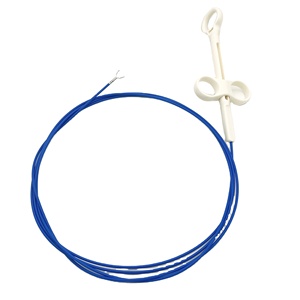
The prevalence of complex GI conditions in the region has elevated the demand for single-use and reusable endoscopic hemoclips (such as our 135° rotatable endoscopic hemoclips), diathermy snare electrodes, and flexible foreign body retrieval forceps. High rotation accuracy (1:1 torque transmission) allows gastroenterologists in Riyadh clinics to position clips precisely at bleeding sites prior to or following electrosurgical resection.
B. Rhinology & Functional Endoscopic Sinus Surgery (FESS)
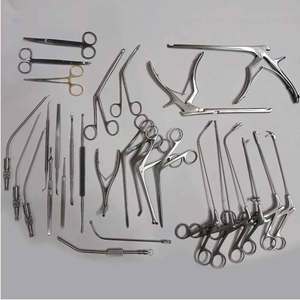
Riyadh's arid climate drives high volumes of rhinological procedures. Our 30-piece FESS instrument sets incorporate fine-tipped, insulated bipolar forceps, micro-debriders, and sinus suction-coagulators built with ergonomic handpieces that allow microsurgeons to maintain absolute hemostasis within narrow nasal passages while avoiding thermal damage to the optic nerve or skull base.
C. Facial Cosmetic & Plastic Surgery
With Riyadh becoming a regional hub for aesthetic procedures, our CE-certified Class I endoscopic facelift forceps sets and illuminated fiber-optic retractors allow plastic surgeons to perform sub-SMAS dissections with integrated electro-coagulation. The addition of cool light fiber optics directly onto diathermy-ready retractors provides unmatched visualization during facial re-contouring.
D. Spinal Surgery & Unilateral Biportal Endoscopy (UBE)
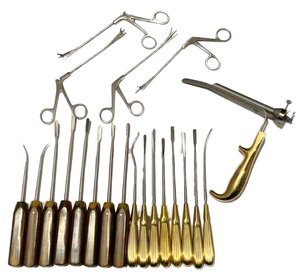
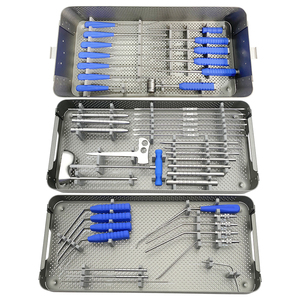
Minimal-access spine surgery requires micro-diathermy tips capable of operating under continuous saline irrigation. Our UBE instrument sets include specialized radiofrequency/diathermy probes, radio-opaque Kerrison rongeurs, and micro-bipolar forceps engineered specifically for unilateral biportal lumbar and cervical discectomies.