1. Technical Whitepaper: B2B Maxillofacial Procurement for Sri Lanka
The healthcare delivery system in Sri Lanka—spanning both the Ministry of Health (MOH) public hospital network and rapidly expanding private healthcare institutions—demands medical equipment that merges metallurgical durability, extreme tactile precision, and strict regulatory compliance. Oral and Maxillofacial Surgery (OMFS) represents one of the most technically demanding surgical disciplines across Sri Lanka's clinical centers. Specialists operating in trauma units, oncological resections, and pediatric reconstructive clinics routinely handle complex skeletal structures adjacent to critical neurovascular bundles.
As a global pioneer in surgical instrument manufacturing based in Sialkot, Pakistan—a historic region renowned for supplying over 70% of the world's precision hand-held surgical tools—our facility bridges the gap between high-cost European reseller brands and budget-tier items that compromise clinical outcomes. This industry whitepaper outlines the clinical dynamics, metallurgical requirements, local Sri Lankan regulatory workflows (NMRA compliance), and procurement strategies required by hospital directors, chief maxillofacial surgeons, and B2B medical supply importers in Sri Lanka.
E-E-A-T AUTHORITATIVE INSIGHT Structural Superiority of Sialkot German-Grade Surgical Steel
Surgical instruments intended for tropical clinical environments such as Colombo, Kandy, or Galle must withstand rigorous, high-frequency Central Sterile Supply Department (CSSD) steam sterilization cycles (134°C at 2.1 bar) without pitting, rusting, or jaw alignment failure. Our instruments utilize high-tensile AISI 420 and AISI 316L German stainless steel combined with chemical passivation adhering strictly to ASTM F86 standard guidelines.
2. Clinical Application Scenarios Across Sri Lankan Hospitals
Maxillofacial surgery in Sri Lanka addresses a unique epidemiological profile. Procurement teams must stock specialized instrument trays optimized for four primary clinical scenarios commonly encountered in Sri Lankan healthcare facilities:
High traffic density along Sri Lankan arterial highways (A1, A9, and southern expressways) accounts for significant emergency admissions involving pan-facial, mandibular, and zygomaticomaxillary complex (ZMC) fractures at trauma centers like the National Hospital of Sri Lanka (NHSL) Colombo and Teaching Hospital Karapitiya. Surgeons require specialized bone-reduction forceps, Rowe maxilla elevators, Tessier osteotomes, and micro-mini plate bending pliers that provide zero-flex torque handling under emergency conditions.
Due to localized betel-quid chewing habits, Oral Submucous Fibrosis (OSMF) and oral cancer rates are notably prevalent across rural and suburban Sri Lankan demographics. Oncological resections performed at Apeksha Hospital Maharagama require extreme precision. Instrument sets must feature tungsten-carbide (TC) tipped dissecting scissors, micro-vascular DeBakey clamp forcep arrays, bone saws, and periosteal elevators capable of performing flawless mandibulectomies and free-flap soft tissue reconstructions.
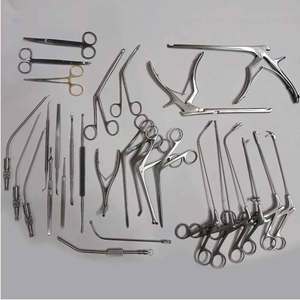
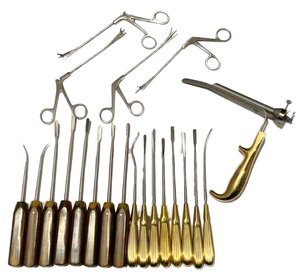
The modernization of ENT and craniofacial suites at Teaching Hospital Kandy and Sri Jayewardenepura General Hospital has accelerated demand for Functional Endoscopic Sinus Surgery (FESS) and skull-base instruments. 30-piece reusable FESS instrument sets—featuring punch forceps, sickle knives, curved suction cannulas, and frontal sinus rasps—allow Sri Lankan surgeons to execute minimally invasive interventions with reduced operative time and minimal patient morbidity.
2.1 Pediatric Craniofacial & Cleft Lip/Palate Surgery
Sri Lanka maintains dedicated pediatric surgical units and outreach programs addressing congenital cleft lip and palate anomalies. Surgical instruments for pediatric maxillofacial care demand micro-sized tips, refined spring-action handles, and delicate atraumatic serrations. Our specialized micro-plastic sets—including Castroviejo needle holders, fine Adson-Brown tissue forceps, and delicate skin hooks—provide Sri Lankan pediatric surgeons with the ultra-delicate tactile feedback necessary for tissue handling without causing micro-vascular necrosis.
3. Sri Lankan Market Trends & NMRA Regulatory Compliance
Navigating medical device procurement in Sri Lanka requires an intimate understanding of the economic landscape and regulatory protocols set by the National Medicines Regulatory Authority (NMRA). Over recent years, Sri Lankan healthcare procurement has evolved rapidly along three key vector trends:
3.1 Shift from Third-Party European Brands to Direct OEM Sourcing
Historically, Sri Lankan hospital tenders relied heavily on Western European reseller brands. However, macroeconomic shifts and currency fluctuations have created severe budget constraints for both State Pharmaceuticals Corporation (SPC) public tenders and private healthcare groups like Asiri Health, Nawaloka Hospitals, and Lanka Hospitals. By partnering directly with ISO 13485-certified manufacturers in Sialkot, Sri Lankan distributors eliminate 40% to 60% of reseller markups while retaining identical German steel forge origin and ISO compliance standards.
3.2 Stringent NMRA Registration Dossier Requirements
The NMRA enforces rigorous safety and efficacy audits under the Medical Devices Act of Sri Lanka. To successfully register maxillofacial surgical instruments for Sri Lankan import, manufacturers must provide a comprehensive Technical Documentation File. Rigor Instruments supplies Sri Lankan B2B partners with full regulatory dossier support, including:
- ISO 13485:2016 & ISO 9001:2015 Certification issued by accredited notified bodies.
- CE Certificate of Conformity for Class I and Class II medical devices.
- Certificate of Free Sale (CFS) issued by the government regulatory authority.
- Biocompatibility & Metallurgy Analysis Reports (Chemical composition of AISI 420/316L steel).
- Autoclave Life-Cycle Validation Records proving performance over 200+ sterilization cycles.
4. Metallurgical & Performance Specification Matrix
To assist Sri Lankan procurement officers and biomedical engineers in evaluating surgical instrument quality, the matrix below details our manufacturing standards compared to secondary market alternatives:
| Performance Metrics |
Rigor OEM Maxillofacial Standard |
Standard Market Imports |
Impact on Sri Lankan CSSD / Surgery |
| Raw Material Origin |
German & Japanese AISI 420 / 316L Stainless Steel |
Recycled / Low-Grade Steel Alloys |
Prevents micro-fractures during bone contouring and heavy traction. |
| Hardness Index (Rockwell C) |
HRC 48 - 52 (Vacuum Heat Treated) |
HRC 38 - 42 (Air Cooled) |
Scissors retain cutting edges 3x longer; jaws do not twist under load. |
| Surface Passivation |
ASTM F86 Chemical Nitric Acid Passivation |
Basic Wash / Minimal Dip |
Prevents rust formation in Sri Lanka's high-humidity coastal climate. |
| Autoclave Durability |
Validated 250+ Steam Sterilization Cycles (134°C) |
Fails after 30-50 cycles (Discoloration) |
Dramatically lowers annual replacement costs for Sri Lankan hospitals. |
| Traceability & Marking |
Laser-Etched Lot Number, CE Mark & Matrix Code |
Unmarked or Ink Stamped |
Ensures full audit readiness for NMRA hospital inspection teams. |
5. Enterprise E-E-A-T Strengths: Why Choose Our Sialkot Facility
Experience, Expertise, Authoritativeness, and Trustworthiness (E-E-A-T) form the core of our manufacturing operations. For over four decades, our family-owned facility in Sialkot, Pakistan, has operated at the pinnacle of surgical metallurgy. Here is how our enterprise capabilities directly benefit Sri Lankan healthcare buyers:
Hand-finishing micro-instruments requires master craftsmanship. Our senior artisans possess decades of experience manually aligning forceps tips, hand-grinding scissors bevels, and tuning box-locks to eliminate friction and play.
We utilize state-of-the-art computer-controlled vacuum furnaces to harden steel without oxidation. This process guarantees uniform molecular stability, preventing brittleness while maximizing elasticity in bone-holding clamps.
We empower Sri Lankan medical equipment companies to build their own branded lines. We provide custom fiber-laser logo engraving, bespoke tray layouts, and localized catalog packaging tailored to Sri Lankan tenders.
5.1 Logistics & Shipping Channels to Sri Lanka
We maintain streamlined export routes for Sri Lankan medical importers. Bulk shipments are dispatched via sea freight directly to Colombo Port (SND / JCT terminals) with complete bill of lading and customs documentation. Emergency orders or high-value micro-surgical sets are air-freighted via Bandaranaike International Airport (CMB) in Katunayake, ensuring door-to-door transit within 5 to 7 business days.
6. B2B Buyer FAQ for Sri Lankan Medical Procurement
Below are clear, technical answers to common questions raised by Sri Lankan hospital purchasing agents, medical importers, and surgical department heads:
How do your maxillofacial surgical instruments comply with Sri Lankan NMRA regulations?
Every instrument shipped to Sri Lanka is manufactured under strict ISO 13485:2016 quality systems and carries CE marking. We provide Sri Lankan importers with a full technical dossier—including Certificates of Free Sale, ISO certificates, material test sheets, and sterilization validation reports—enabling smooth NMRA registration and customs clearance.
What raw steel grades are used for your maxillofacial bone instruments?
We exclusively utilize premium German and Japanese stainless steel alloys. Bone holding forceps, elevators, and chisels use high-tensile AISI 420 steel for hardness, while atraumatic tissue forceps and micro-vascular clamps use AISI 316L non-magnetic steel. Specialized cutting tools feature Tungsten Carbide (TC) inserts.
Can you supply complete customized surgical sets for Sri Lankan hospital tenders?
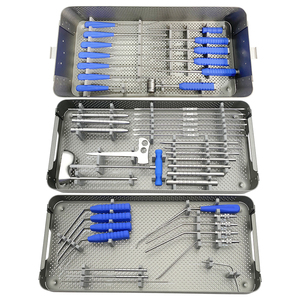
Yes. We specialize in assembling tailored surgical sets (such as FESS Sets, Maxillofacial Trauma Sets, Orthognathic Surgery Sets, and Cosmetic Facelift Sets) packed in custom-perforated aluminum sterilization containers with silicone positioning mats.
How do you prevent corrosion on instruments stored in Sri Lanka's humid coastal climate?
All instruments undergo an advanced multi-stage electro-polishing and chemical nitric acid passivation treatment conforming to ASTM F86. This forms a protective chromium oxide oxide layer ($Cr_2O_3$) on the surface, preventing atmospheric oxidation, rust staining, and pitting during autoclaving.
What are your minimum order quantities (MOQ) for Sri Lankan distributors?
We support growing medical distributors in Sri Lanka by offering low MOQs for initial evaluation orders. While standard OEM manufacturing runs have small minimums per SKU, sample sets and tender evaluation samples can be dispatched promptly for clinical review.
Do you offer private label logo laser etching for local Sri Lankan brands?
Absolutly. We provide high-precision fiber laser etching services. We can etch your brand logo, company name, catalog reference code, and QR/matrix codes directly onto the instrument shank without breaking the passivated surface.
What is the typical shipping lead time to Colombo, Sri Lanka?
Air freight orders via Bandaranaike International Airport (CMB) take approximately 5 to 7 business days from dispatch. Commercial sea freight shipments to Colombo Port take roughly 14 to 20 days depending on shipping line schedules.
What warranty terms do you provide against manufacturing defects?
We provide a comprehensive 5-year replacement warranty against manufacturing defects, material flaws, or premature corrosion under standard clinical and CSSD sterilization conditions. Any verified defective unit is replaced free of charge in your subsequent shipment.
Partner with Sialkot's Premier Surgical Instrument Factory
Supply your Sri Lankan hospital network or medical dealership with certified, German-steel maxillofacial and surgical tools direct from the manufacturer. Contact our B2B export engineering team today for technical pricing and catalog access.
Get a Quote