Executive White Paper: Minimally Invasive & Laparoscopic Instrument Sourcing in Egypt
The Arab Republic of Egypt stands as one of the fastest-growing medical technology hubs across the Middle East and North Africa (MENA) region. Driven by the expansion of the Egyptian Ministry of Health and Population (MOHP) initiatives, the rollout of the Universal Health Insurance System (UHIS) across governorates such as Port Said, Luxor, Ismailia, and Aswan, and the rapid modernization of private hospital groups in Cairo and Alexandria, the demand for precision laparoscopic surgical instruments has reached unprecedented heights.
However, navigating the procurement landscape for laparoscopic instruments requires a nuanced understanding of local clinical requirements, regulatory frameworks governed by the Egyptian Drug Authority (EDA), economic realities surrounding currency liquidity, and the vital operational balance between single-use disposables and high-durability reusable surgical tools. This white paper serves as an authoritative guide for hospital procurement committees, biomedical engineering departments, and medical device importers across Egypt seeking direct factory partnerships with established international manufacturers.
Key Strategic Takeaway for Egyptian Buyers: Direct factory partnerships with certified OEMs eliminate distributor markups by 30% to 45%, ensure complete batch traceability under ISO 13485 standards, and provide custom modification capabilities tailored to local sterilization infrastructure.
1. The Egyptian Healthcare Landscape & Laparoscopic Trends
Egypt’s healthcare system is undergoing a profound structural transformation. Minimal Access Surgery (MAS) and Minimally Invasive Surgery (MIS) are no longer confined to top-tier university hospitals like Cairo University Kasr Al-Ainy or Ain Shams University Hospitals; they have become the standard of care for general surgery, gynecology, urology, and pediatric interventions nationwide.
A. Bariatric and Metabolic Surgery Boom in Urban Centers
Egypt currently ranks among the countries with the highest clinical demand for bariatric procedures, including laparoscopic sleeve gastrectomy (LSG) and Roux-en-Y gastric bypass (RYGB). Surgical centers in Greater Cairo, Alexandria, and Mansoura require specialized laparoscopic instrumentation engineered to withstand higher mechanical torque during tissue retraction, prolonged electrosurgical thermal exposure, and heavy operating room turnaround times. Key tools include heavy-duty 10mm non-ratcheted laparoscopic graspers, reinforced liver retractors (Nathanson and Fan retractors), and high-articulation needle holders with tungsten carbide jaw inserts.
B. Public Sector Modernization & Reusable Tool Economics
While private clinical networks often lean toward disposable single-use trocars and staplers, public university hospitals and MOHP facilities are heavily prioritizing high-grade reusable laparoscopic instrument sets. With fluctuating exchange rates affecting the Egyptian Pound (EGP), purchasing single-use disposables for thousands of routine laparoscopic cholecystectomies creates severe operational budget strain. Reusable laparoscopic instruments—manufactured from Japanese AISI 420 and German X20Cr13 stainless steel—can endure over 500 steam autoclave cycles at 134°C without jaw misalignment, insulation breakdown, or surface pitting, delivering superior lifetime ROI for hospital budgeting.
EDA Compliance Ready
Full technical dossiers, ISO 13485 certificates, and Declaration of Conformity provided for smooth Egyptian Drug Authority clearing.
Tropical Environment Alloys
Passivated stainless steel resistant to saline corrosion, high ambient humidity, and aggressive chemical sterilants.
5000V Dielectric Safety
PEEK and medical-grade PFA insulation coatings thoroughly tested to prevent intraoperative electrosurgical stray energy burns.
2. Technical Excellence & Metallurgy in Laparoscopy Tool Manufacturing
Laparoscopic surgical tools operate under extreme mechanical advantage. A standard 5mm shaft measuring 330mm to 450mm in length translates hand actuation forces at the handle into mechanical clamping, cutting, or grasping action at the distal tip. Any compromise in metallurgical composition or machining tolerance leads to shaft flexing, jaw misalignment, or rapid dulling of laparoscopic scissors.
A. Raw Material Selection: German & Japanese Stainless Steel
At Rigor Instruments, our manufacturing facility in Sialkot, Pakistan leverages over four decades of metallurgical mastery. We source surgical-grade stainless steel bars exclusively from certified German and Japanese foundries:
- AISI 420 (X20Cr13 / X30Cr13): High-martensitic steel hardened through precise heat treatment to 50-54 HRC on the Rockwell scale. Used for laparoscopic Metzenbaum scissors, hook scissors, and biopsy punches to ensure razor-sharp cutting edges that maintain sharpness over extended procedures.
- AISI 316L (X2CrNiMo17-12-2): Austenitic surgical steel featuring molybdenum additives for extreme corrosion resistance. Used for instrument handles, sheath tubes, and non-cutting components subjected to harsh enzymatic washing and autoclaving.
- Tungsten Carbide (TC) Inserts: High-density TC plates vacuum-brazed onto the jaws of laparoscopic needle holders (Koh, Hegar, and Mathieu styles) to prevent needle slipping during complex intraperitoneal suturing.
B. Insulation Integrity & Electrosurgical Safety
Bipolar and monopolar laparoscopic instruments (such as J-Hooks, L-Hooks, spatulas, and monopolar scissors) must feature zero-defect insulation to protect adjacent patient tissue from thermal injury. Our factory implements high-voltage spark testing up to 5,000V DC on 100% of insulated shafts. The specialized fluoropolymer outer sheathing is shrink-fitted seamlessly over the stainless steel tube, ensuring moisture cannot penetrate between the insulation layer and the metal core during cleaning.
Factory Overview: Rigor Instruments Manufacturing Heritage
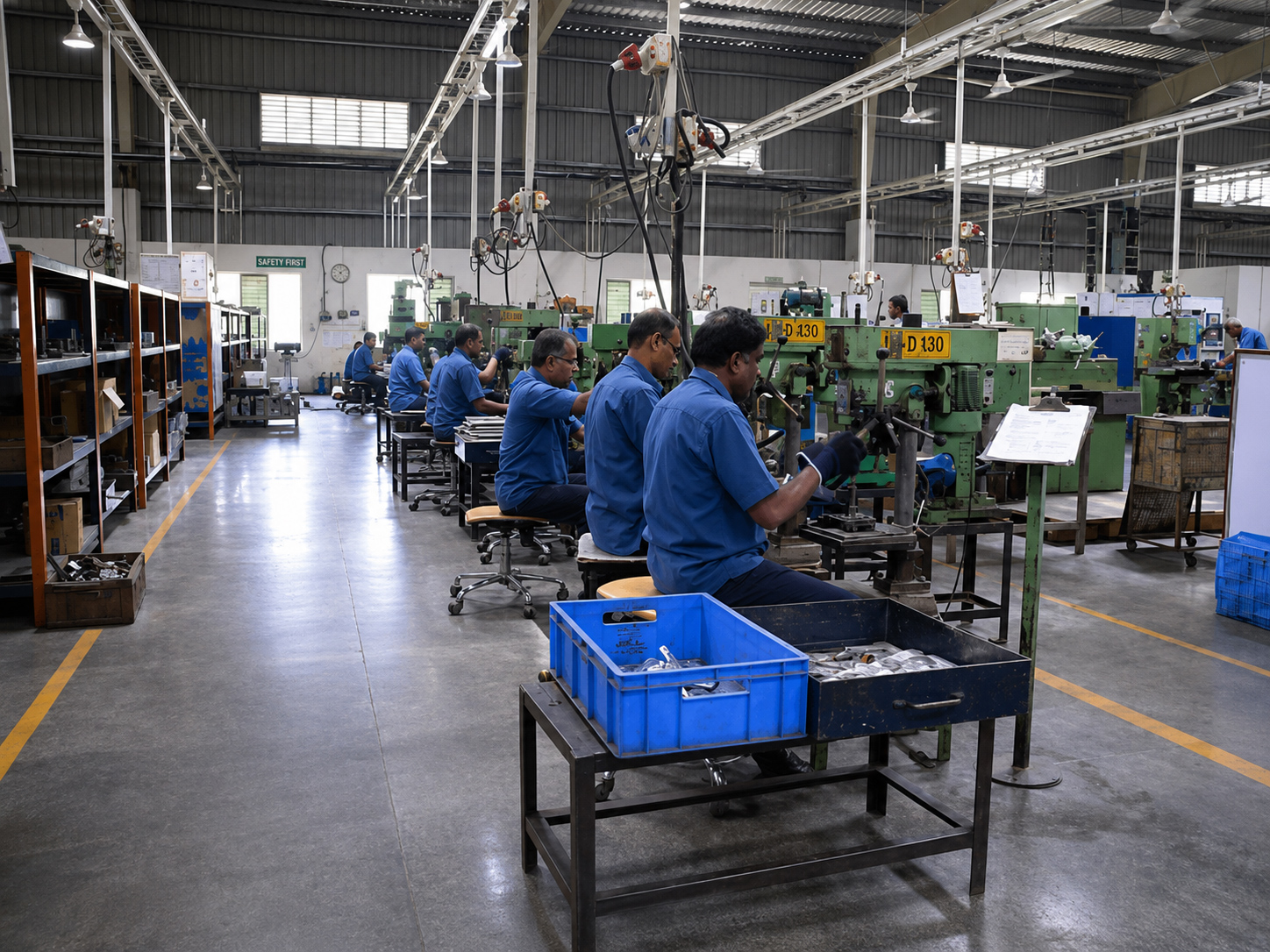
Based in Sialkot, Pakistan—the world's historic epicenter of precision surgical metalwork—Rigor Instruments is a second-generation, family-owned manufacturer exporting to over 50 countries worldwide. Our facility spans comprehensive forging, CNC micro-milling, hand-crafting, electropolishing, and cleanroom assembly operations.
We work directly with Egyptian medical device importers, tenders, and hospital networks to provide OEM, ODM, and white-label manufacturing services. Whether you require custom laser branding with your company logo, bespoke catalog numbering, or custom instrument modifications, our engineering team works from technical CAD drawings to meet your exact specifications.
ISO 9001:2015
ISO 13485 Certified
CE Mark Compliant
FDA Registered
3. Localized Application Scenarios Across Egyptian Healthcare Facilities
To maximize clinical efficiency and procurement value, instrument configurations must align with the specific surgical specialties practiced across Egypt's medical institutions:
Scenario 1: High-Volume General Surgery in Public & University Hospitals
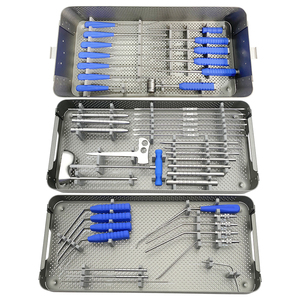
In high-throughput facilities such as Kasr Al-Ainy (Cairo) and El Shatby Hospital (Alexandria), surgical suites perform continuous streams of laparoscopic cholecystectomies, appendectomies, and hernia repairs. Equipment longevity is paramount. Our recommended 30-piece Modular Laparoscopy General Set features fully detachable 3-piece instruments (handle, insulated shaft, and inner jaw insert). This modular design allows sterile processing departments (CSSD) to dismantle, flush, and autoclave instruments thoroughly, preventing bioburden accumulation while enabling cost-effective single-part replacement rather than discarding the entire tool.
Scenario 2: Advanced Gynecological & Pelvic Surgery in Private Clinics
Leading private hospitals (such as Dar Al Fouad, As-Salam International, and Alameda Healthcare group clinics) demand high-precision gynecological laparoscopic instruments for total laparoscopic hysterectomy (TLH), myomectomy, and deep infiltrating endometriosis resection. Rigor Instruments supplies specialized 5mm and 10mm laparoscopic claw forceps, Tenaculum graspers, Cohen uterine manipulators, and laparoscopic suction-irrigation systems featuring dual-valve ergonomic handles that minimize surgeon hand fatigue during 4-hour complex pelvic reconstructions.
Scenario 3: Spinal & ENT Endoscopic Innovations (UBE & FESS)
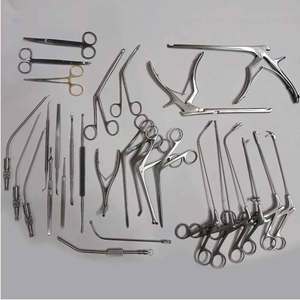
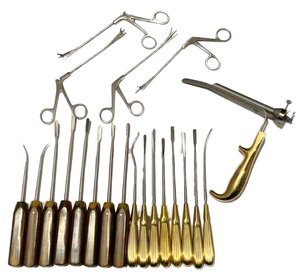
Orthopedic spine surgery across major Egyptian surgical centers is rapidly adopting Unilateral Biportal Endoscopy (UBE) for lumbar discectomy and spinal canal decompression. Concurrently, ENT departments rely on specialized 30-piece Functional Endoscopic Sinus Surgery (FESS) instrument sets. Rigor Instruments produces specialized UBE Kerrison rongeurs, curettes, and sinus forceps with ultra-precise jaw bite mechanisms crafted from German stainless steel, giving Egyptian spine and ENT surgeons micro-control inside narrow anatomical spaces.
4. Egyptian Market Regulatory Compliance (EDA) & Import Strategy
Importing medical devices and surgical instruments into the Arab Republic of Egypt is regulated strictly by the Egyptian Drug Authority (EDA). Sourcing from a manufacturer with complete technical documentation is crucial to avoiding port delays at Alexandria Port, Port Said, or Cairo International Airport Cargo Terminals.
Rigor Instruments supports Egyptian importers by providing complete regulatory technical files:
- ISO 13485:2016 Certification: Demonstrating an international quality management system specific to medical devices.
- CE Certificates & Declarations of Conformity: Ensuring conformity with European Medical Device Directives (MDD 93/42/EEC) and EU MDR compliance.
- Free Sale Certificates (FSC): Legalized and authenticated technical paperwork for seamless EDA registration filing.
- Biocompatibility & Material Analysis Reports: Chemical composition test sheets verifying non-toxic, non-hemolytic metal components.