Discover the latest industry trends, regulatory guidelines, manufacturing standards, and clinical instrument guides from Rigor Instruments.
OEM & Quality Knowledge
Precision Manufacturing & Standards
In-depth guides on ISO certifications, surgical stainless steel grades, and custom tool engineering.
Global Healthcare Insights
Medical Export & Regulatory Guides
Stay informed about international health authority regulations, import standards, and clinic equipment requirements.
Laparoscopic Scissors Suppliers & Exporters Serving the Argentina Market
Industry Whitepaper on Medical-Grade Monopolar Metzenbaum & Curved Scissors: Metallurgical Standards, ANMAT Regulatory Integration, and Procurement Dynamics for Argentine Hospitals & Surgical Centers
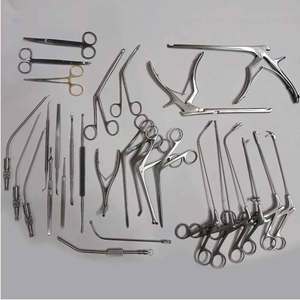
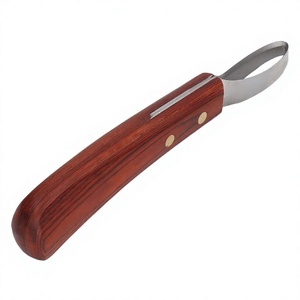
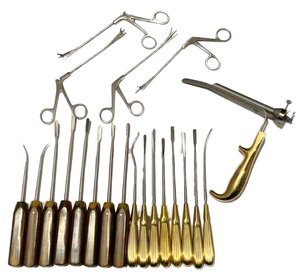
Featured Endoscopic & Laparoscopic Instrument Catalog
Precision-engineered surgical tools forged from German and Japanese stainless steel, manufactured under strict ISO 13485:2016 certifications to meet the clinical requirements of healthcare providers across Argentina.
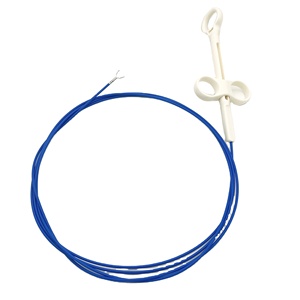
Gastroenterology Rotatable Disposable Endoscopic Hemoclip With Claw Angle 135
Technical Whitepaper: Engineering & Metallurgical Standards of Laparoscopic Scissors
Minimally Invasive Surgery (MIS) relies fundamentally on instrument responsiveness, tactile feedback, and structural integrity. Within laparoscopic procedures, the laparoscopic scissor is arguably the most critically operated dynamic tool. Used continuously for precision dissection, tissue transection, thermal coagulation (monopolar cautery), and delicate structure mobilization, the mechanical tolerance of laparoscopic scissors directly impacts intraoperative efficiency, hemostasis control, and patient outcomes.
Key Engineering Requirement: High-frequency monopolar electrocautery demands a dielectric insulation layer capable of resisting breakdown voltages in excess of 5,000V AC. Our laparoscopic scissor shafts utilize medical-grade PEEK (Polyether ether ketone) and heat-shrink fluoropolymer coatings to guarantee zero stray current leakage during thermal tissue division.
German & Japanese Stainless Steel
Constructed using premium AISI 420J2 and 440C martensitic stainless steel grades. Heat-treated to achieve a Rockwell hardness of 54-58 HRC on cutting edges, ensuring long-term edge retention without micro-chipping during tough fascial tissue transection.
Micro-Serrated Shear Geometry
One blade features precision micro-serrations to securely hold slippery target tissues (e.g., peritoneum, arterial pedicles) while the opposing blade delivers a razor-sharp Supercut action, eliminating tissue slipping and reducing hand fatigue.
360° Fingertip Rotation & Ergonomics
Integrated low-friction rotation knobs allow seamless 360-degree axial blade positioning with one finger. Designed with lightweight double-action handles for precise sensory transmission and reduced surgeon hand strain during prolonged procedures.
Argentina Medical Ecosystem & Localized Application Scenarios
Argentina represents one of Latin America's most sophisticated yet highly demanding healthcare markets. The surgical ecosystem is bifurcated into a robust public network (Ministry of Health / MSAL, PAMI) and a highly competitive private healthcare tier led by institutions such as Hospital Italiano de Buenos Aires, Hospital Universitario Austral, Sanatorio Guëmes, and corporate prepaid networks (OSDE, Swiss Medical, Galeno).
Across major healthcare centers in Buenos Aires, Córdoba, Rosario, Mendoza, and Tucumán, the adoption of laparoscopic instrumentation has transitioned from high-end specialized suites to standard-of-care across general surgery, gynecology, and urology.
1. Bariatric & Metabolic Surgery (Buenos Aires & Hubs)
With Argentina experiencing a surge in minimally invasive obesity treatments (Roux-en-Y gastric bypass and sleeve gastrectomy), surgical teams require extended-length laparoscopic scissors (450mm shaft variant). These instruments must navigate thick adipose layers while retaining rigidity and precise monopolar coagulation control during mesenterial windows creation.
In advanced pelvic surgeries for endometriosis excision and laparoscopic supracervical hysterectomies, curved Metzenbaum laparoscopic scissors are indispensable. The subtle curve of the 5mm jaw provides optimal visibility around uterine ligaments while protecting adjacent bladder and bowel tissues from collateral thermal injury.
Public hospital procurement committees prioritizing high turn-around, autoclave-resilient instruments require reusable laparoscopic scissors that withstand hundreds of steam sterilization cycles (134°C) without shaft degradation, insulation pitting, or loss of mechanical tension at the pivot screw.
Pediatric surgical centers, such as Hospital Garrahan, demand 3mm mini-laparoscopic scissors featuring ultra-fine tips. These tools allow micro-dissection in tiny anatomical cavities where precise tactile resistance is paramount.
Market Dynamics, ANMAT Compliance & Import Protocols in Argentina
Navigating the medical device market in Argentina requires strict compliance with national regulatory bodies and economic frameworks. The **ANMAT (Administración Nacional de Medicamentos, Alimentos y Tecnología Médica)** governs the commercialization and importation of surgical devices under Disposición ANMAT 3266/13 and international Good Manufacturing Practices (GMP).
ANMAT Technical Dossier & Registration
Laparoscopic scissors fall under Class II or Class III medical device categories depending on single-use or reusable monopolar electrocautery classification. Overseas exporters must partner with a licensed local **AADI / Importer of Record** in Argentina. Rigor Instruments provides complete technical documentation packages, including:
ISO 13485:2016 Certified Quality Management Certificates
CE Certificates of Conformity (Class IIa/IIb)
Biocompatibility Test Reports (ISO 10993) & Electrical Safety (IEC 60601-2-2)
Raw material mill test certificates (German 1.4116 / AISI 420 steel grade validation)
Import Mechanics & Supply Chain Resilience
Recent economic reforms in Argentina (transitioning from SIRA to SEDI system) have streamlined import authorization processes for critical healthcare hardware. Importers and distributors require suppliers who offer:
Flexible commercial terms (FOB, CIF Buenos Aires, Ezeiza Air Cargo)
Robust protective packaging resistant to transatlantic transit moisture
Custom laser etching for localized serial tracking and hospital asset management
Consolidated shipment structures to optimize import tariff overheads
Reusable vs. Single-Use Laparoscopic Scissors: Economic Analysis for Argentina
A comparative evaluation tailored for hospital procurement boards weighing Total Cost of Ownership (TCO) against clinical preference in the Argentine market.
Evaluation Criteria
Premium Reusable Monopolar Scissors
Single-Use Disposable Scissors
Modular Take-Apart 3-Piece System
Initial Capital Outlay
Moderate to High
Low per unit / High cumulatively
Optimal balance
Per-Procedure Cost (100+ uses)
Low (~$1.50 USD / procedure after sterilizing)
Fixed High ($25 - $45 USD / procedure)
Very Low ($2.00 USD / procedure)
ANMAT Registration Complexity
Class II Reusable Device Dossier
Class II Single-Use Sterile Dossier
Class II Modular Device Registration
Environmental & Waste Impact
Minimal medical waste output
High plastic/metal medical waste volume
Minimal (only replace insert when dull)
Autoclave Resilience
>200 cycles at 134°C steam pressure
Non-autoclavable (Single procedure only)
Shaft & Handle >300 cycles; blade replaced as needed
Clinical Sharpness Consistency
Requires periodic blade re-sharpening
100% factory-fresh sharpness every case
Factory-fresh insert replacement
Frequently Asked Questions by Argentine Procurement & Biomedical Engineers
What documentation is provided to support ANMAT medical device registration?
Rigor Instruments furnishes a complete regulatory dossier including ISO 13485:2016 certificates, CE Mark declarations of conformity, free sale certificates (FSC) legalized by apostille, product technical specification sheets, biocompatibility testing (ISO 10993), and electrical safety validation for monopolar HF connections.
What shaft diameters and working lengths are available for export to Argentina?
We manufacture standard 5mm diameter laparoscopic scissors in 330mm working length for general surgery and gynecology, extended 450mm shafts for bariatric procedures, and 3mm mini-laparoscopic versions in 200mm-260mm lengths for pediatric surgery. Custom lengths are available upon request.
Are your laparoscopic scissors compatible with existing electrosurgical units (ESUs)?
Yes. All our monopolar laparoscopic scissors feature standard 4mm male HF connector posts compatible with major global electrosurgical generators (Erbe, ValleyLab, Bowa, Martin) utilized throughout Argentine operating rooms.
Can we request OEM private labeling or custom brand etching for the Argentine market?
Absolutely. We offer direct laser marking of your distributor logo, custom article code, and lot numbers on the handle or shaft insulation. We also provide customized box packaging suited to local brand identification.
What are the lead times and shipping modes for bulk orders to Buenos Aires?
Standard manufacturing lead time is 3 to 4 weeks depending on order volume. Air freight shipping to Ministro Pistarini International Airport (Ezeiza) takes 5-7 business days, while ocean freight to the Port of Buenos Aires typically takes 30-40 days.
Enterprise Advantages: Why Leading Exporters & Hospitals Choose Rigor Instruments
40+ Years of Precision Manufacturing Craftsmanship
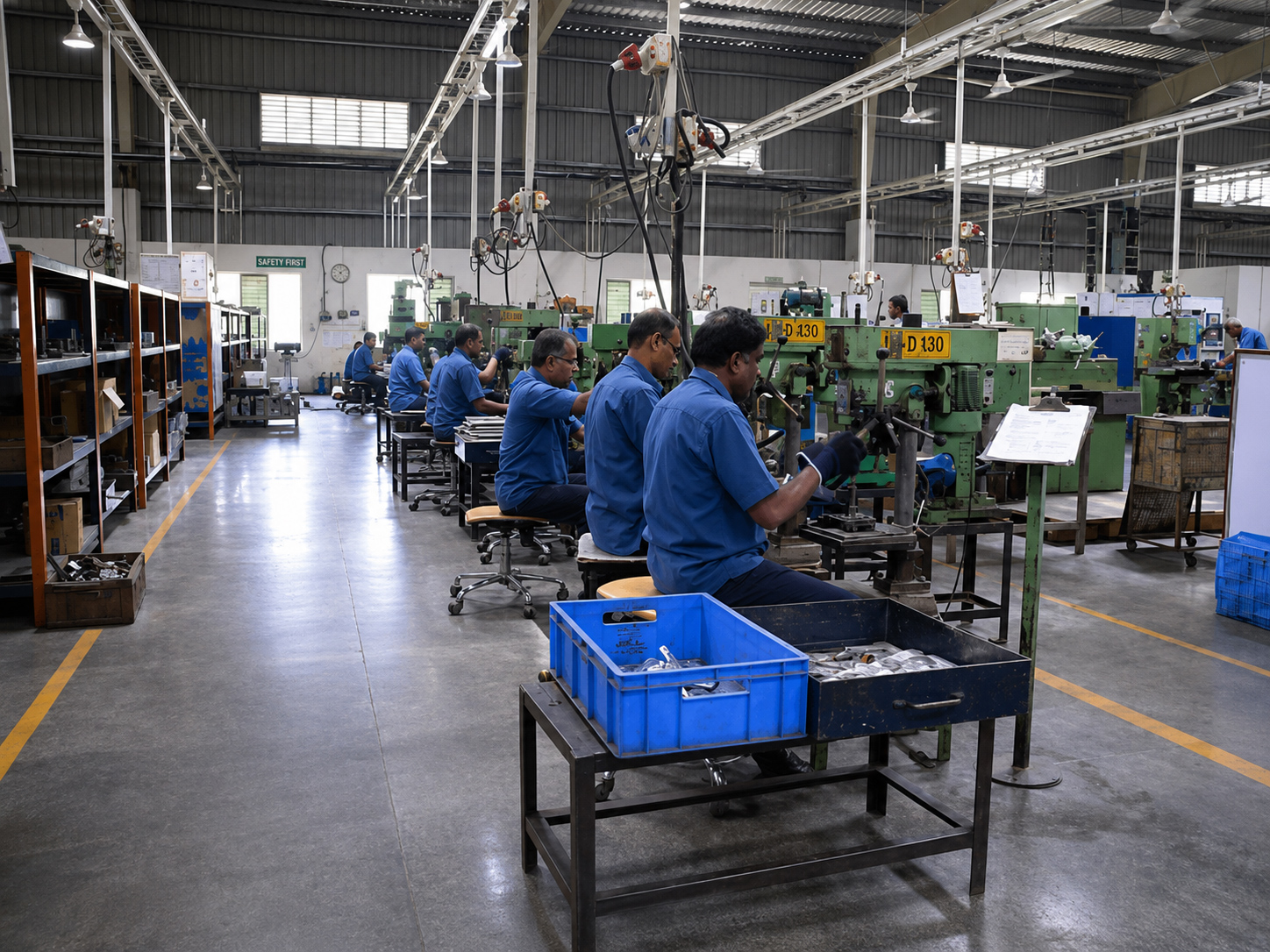
Rigor Instruments operates a state-of-the-art manufacturing facility in Sialkot, Pakistan — the global historic hub for surgical metalwork. For over four decades, our family-owned enterprise has engineered and exported over 5,000 instrument lines across 28 medical specialties to distributors and hospital networks in more than 50 countries.
Forged from Premium German & Japanese Alloys: Vacuum-treated stainless steel ensuring corrosion resistance, structural rigidity, and razor-sharp edge retention.
Certified Quality Systems: Fully accredited under ISO 9001:2015, ISO 13485:2016, CE Mark (MDD/MDR compliant), and FDA registered.
Rigorously Inspected & Autoclave Tested: Every laparoscopic instrument undergoes individual hand-finishing, jaw alignment inspection, dielectric electrical testing, and steam autoclave validation prior to dispatch.
Direct OEM & ODM Manufacturing: Private-label custom production without intermediaries, ensuring total price competitiveness and direct engineering control.
Partner with a Trusted Global Laparoscopic Scissor Manufacturer
Expand your product portfolio in Argentina with medical-grade laparoscopic scissors engineered for precision, durability, and full ANMAT compliance. Contact our technical sales engineering team today for catalog quotes, product samples, and OEM distribution terms.