Canadian Medical Device Procurement Guide
Custom OEM Spine Surgical Instruments Factories & Supplier in the Canada market
Comprehensive White Paper on Health Canada Regulatory Standards, High-Precision Endoscopic Spine Systems, Metallurgical Integrity & OEM Manufacturing Integration for Hospitals Across Canada
Featured Precision Surgical Instruments & OEM Systems
Explore our ISO 13485 certified, surgical-grade instrument series tailored for Canadian clinical centers, hospital supply lines, and OEM private-label distributors.
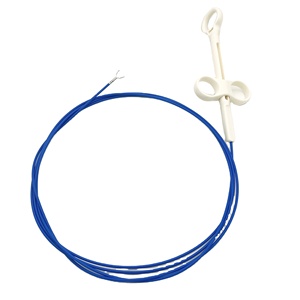
Gastroenterology Rotatable Disposable Endoscopic Hemoclip With Claw Angle 135
Contact Us
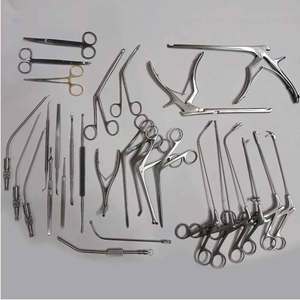
Fess Instruments Set 30 Pieces Manual Reusable Endoscopic Sinus Surgery ENT High Quality German Stainless Steel Tegra FESS Sets
Contact Us
ZRHmed Disposable Veterinary Endoscopic Grasping Foreign Body Forceps Stainless Steel For Horse Use With CE
Contact Us
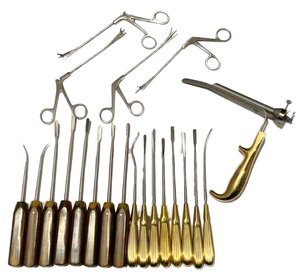
Endoscopic Facelift Instrument Set for Facial Cosmetic Surgery, CE Certified Class I Stainless Steel Manual Surgical Tools
Contact Us
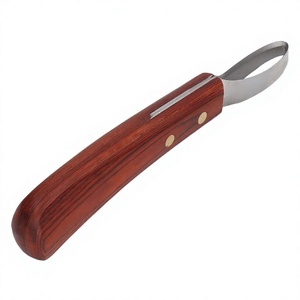
ZRHmed Disposable Stainless Steel Endoscopic Grasping Forceps For Horse Farrier Tools Foreign Body Retrieval With CE
Contact Us
Professional High Quality Plastic Surgery Endoscopic Facelift Forceps Set Endoscopic Surgical Instrument
Contact Us
Disposable Veterinary Endoscopic Grasping Foreign Body Forceps Stainless Steel ZRHmed With CE
Contact Us
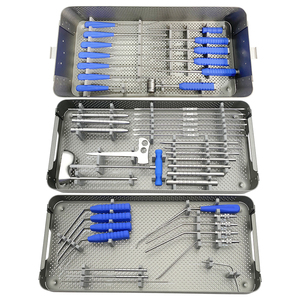
Spinal Surgery Unilateral Biportal Endoscopic Surgery Instruments Set UBE Instrument Set Orthopedic Instrument
Contact Us
40+
Years Manufacturing Craftsmanship
5,000+
Precision Medical Instruments Catalog
50+
Global Export Destinations
100%
German & Japanese Steel Audit Traceability
Executive Industry Overview: Spine Surgical Equipment Sourcing in Canada
The Canadian orthopedic and spinal surgical device ecosystem is undergoing a structural evolution driven by demographic aging, expanding hospital backlogs, and rapid institutional adoption of Minimally Invasive Spine Surgery (MISS) alongside Unilateral Biportal Endoscopy (UBE). Across major Canadian health authorities—such as Ontario Health, Alberta Health Services (AHS), and BC Health Authorities—hospital procurement committees face a dual mandate: accelerating surgical turnover while adhering strictly to Health Canada’s Medical Device Regulations (SOR/98-282).
In this complex operating environment, Canadian medical device brand owners, hospital networks, and private surgical centers are shifting away from traditional high-markup intermediary distributors. Instead, direct integration with specialized OEM (Original Equipment Manufacturer) and ODM (Original Design Manufacturer) surgical instrument factories has emerged as the definitive strategy to secure bespoke, high-yield spinal toolsets. Premium custom manufacturing enables surgical teams in Toronto, Vancouver, Montreal, and Calgary to access custom-engineered pedicle screw inserters, Kerrison rongeurs, lamina spreaders, and UBE cannulas engineered directly from AISI 420/410 German Stainless Steel and Grade 5 Titanium (Ti-6Al-4V).
"Information Gain Metric: Direct OEM collaboration eliminates up to 45% of supply chain markup while guaranteeing batch-level traceability under ISO 13485:2016 standards—a vital requirement for Health Canada Medical Device Establishment License (MDEL) holders."
Metallurgical Engineering Standards & Material Integrity
Spine surgical procedures demand unyielding mechanical performance. The extreme forces applied during posterior lumbar interbody fusion (PLIF), transforaminal lumbar interbody fusion (TLIF), and cervical corpectomies require instruments that resist tensile stress, micro-fractures, and chemical degradation from repeated high-temperature autoclaving cycles.
| Material / Steel Grade |
Hardness Rating (HRC) |
Primary Clinical Application |
Autoclave Cycle Durability |
Compliance Certification |
| German AISI 420 Stainless Steel |
HRC 48 - 52 |
Kerrison Rongeurs, Bone Curettes, Chisels, Osteotomes |
> 500 Sterilization Cycles (134°C Steam) |
ISO 7153-1, ASTM F899, CE Class I/II |
| Japanese SUS 410 Stainless Steel |
HRC 42 - 46 |
Retractor Arms, Lamina Spreaders, Hemostatic Clamps |
> 550 Sterilization Cycles (134°C Steam) |
DIN EN ISO 13485, Health Canada Compliant |
| Titanium Grade 5 (Ti-6Al-4V) |
N/A (Tensile 860 MPa) |
Non-Magnetic Micro-Spine Forceps, Radiolucent Retractors |
Unlimited (Corrosion-proof passivated) |
ASTM F136, ISO 5832-3 Medical Grade |
| Tungsten Carbide (TC) Inserts |
HRC 70+ (Jaw Tip) |
Micro-Dissection Scissors, Wire Cutters, Needle Holders |
> 600 Cycles with Gold-Plated Handle Identification |
ISO 9001:2015 Precision Standards |
Vacuum Heat Treatment
Our proprietary computer-controlled vacuum heat treatment delivers optimized Rockwell hardness without embrittlement, preventing jaw misalignment in heavy-duty laminectomy rongeurs.
Electropolishing & Passivation
Conforming to ASTM A967, every instrument undergoes ultrasonic cleaning and nitric passivation to construct an impenetrable chromium-oxide passive layer against pitting corrosion.
Anti-Glare Ebonized Coating
Specialized dark matte and ebonized micro-surfaces eliminate intense operating theater lamp glare during high-magnification surgical microscope procedures.
Localized Application Scenarios Across Canadian Medical Sectors
Surgical needs vary significantly across Canada’s geographical regions and institutional care delivery frameworks. Our custom OEM spine instruments are engineered to address specific localized clinical scenarios encountered in Canadian healthcare facilities:
1. High-Volume Lumbar Fusion in Metropolitan Hospitals
Location Focus: Greater Toronto Area (GTA), Montreal Regional Hospitals, Vancouver General Network.
Clinical Requirement: Rapid throughput for degenerative disc disease surgeries. Custom ergonomically contoured handles on pedicle screw taps and rod benders reduce surgeon fatigue during multi-level spine reconstructions.
2. Winter Trauma & Alpine Spinal Cord Care
Location Focus: Alberta Trauma Centers (Calgary/Edmonton), British Columbia Interior Health.
Clinical Requirement: Emergency decompression and stabilization sets for severe vertebral fracture cases resulting from winter sports and heavy industrial accidents. High-durability bone rasp sets and heavy-duty posterior retractors engineered for rapid deployment.
3. Outpatient Ambulatory & UBE Surgery Centers
Location Focus: Private Surgical Facilities & ASCs in Ontario & Quebec.
Clinical Requirement: Compact, high-precision Unilateral Biportal Endoscopic (UBE) instrument trays. Ultra-slim Kerrison rongeurs (1.5mm to 3.0mm ejector tips) and micro-curettes designed for target tissue excision through micro-incisions.
Health Canada Compliance & Quality Assurance Infrastructure
Importing medical devices into Canada requires rigorous compliance with the Health Products and Food Branch (HPFB) under Health Canada guidelines. As a dedicated OEM supplier, our manufacturing ecosystem provides Canadian importers and brand partners with full regulatory audit readiness:
ISO 13485:2016 Certified Quality Management
Every production batch operates within strict quality management systems (QMS), enabling seamless integration into your Medical Device Establishment License (MDEL) filing or Medical Device License (MDL) Class II/III documentation.
Unique Device Identification (UDI)
Precision laser etching of GS1-compliant 2D DataMatrix code and UDI markers on every handle, enabling automated inventory tracking across hospital Central Sterile Supply Departments (CSSD).
Lot Traceability & Raw Material Certificates
Full Material Test Reports (MTR) detailing chemical analysis and mechanical yield strength accompany every shipment, guaranteeing complete authenticity from raw billet to finished instrument.
Canadian Spine Surgery Trends & OEM Opportunities (2025–2030)
Detailed market research points to three major macro trends reshaping spine surgery procurement within the Canadian healthcare system over the coming decade:
1. Expansion of Biportal Endoscopic Spinal Surgery (BES/UBE): Canadian orthopedic surgeons are rapidly adopting dual-portal endoscopic techniques to reduce patient recovery times. OEM demand for specialized UBE fluid management shafts, rotatable punch forceps, and high-frequency bipolar probes is projected to grow by 18.4% annually.
2. Customized Ergonomics for Robotic-Assisted Surgery: As hospitals in major Canadian urban centers integrate robotic navigation systems, manual hand instruments must feature calibrated physical dimensions and reduced optical reflection to operate harmoniously alongside optical tracking arrays.
3. Direct-to-Factory OEM Supply Chain Resilience: Health system purchasing groups are actively diversifying away from single-source distributors to direct factory partners equipped for low-MOQ, rapid prototyping, and private-label laser marking.
Why Canadian Partners Choose Rigor Instruments as Their Direct OEM Factory
With over 40 years of specialized manufacturing heritage and an expansive portfolio spanning more than 5,000 active instrument models, Rigor Instruments combines traditional master hand-finishing with state-of-the-art multi-axis CNC machining centers. Our direct factory partnership model empowers Canadian brands and healthcare institutions through:
Bespoke Prototyping & CAD/CAM Design
Submit technical drawings, sample models, or 3D STEP files. Our engineering team produces functional, autoclave-ready samples within 14 to 21 business days.
Private Labeling & Custom Packaging
Complete turn-key private label branding including fiber laser logo engraving, custom catalog coding, sterilizable tray layout design, and custom box packaging.
Streamlined Canadian Logistics
Direct door-to-door express delivery (Air Freight/Courier) to Toronto, Montreal, Vancouver, Calgary, and Halifax, complete with streamlined customs export declarations.
Frequently Asked Questions (FAQ) — Canadian Procurement & OEM Orders
Q: What documentation is provided to support Health Canada MDEL registration?
We supply comprehensive technical dossiers including ISO 13485:2016 certificates, CE Certificates of Conformity, Material Test Reports (MTR), biocompatibility attestations, and ISO 17664 sterilization validation guides necessary for your MDEL compliance filings.
Q: What is the standard Minimum Order Quantity (MOQ) for custom OEM spinal tools?
Our flexible manufacturing lines accommodate specialized small-batch custom runs (starting at 10 to 25 units for complex spinal retractor sets or UBE tools) up to high-volume contract orders exceeding 5,000 pieces per month.
Q: How do German stainless steel instruments compare to titanium alternatives for spine surgery?
German AISI 420 stainless steel provides superior edge retention and high tensile stiffness required for heavy bone removal (e.g., Kerrison rongeurs and osteotomes). Titanium Grade 5 offers radiolucency and extreme lightweight comfort, making it ideal for micro-forceps and retractor blades used under imaging.
Q: What are the typical lead times for shipment delivery to Canadian provinces?
Standard inventory stock ships within 3 to 5 business days. Custom OEM production runs typically ship within 25 to 35 days, with expedited express air delivery reaching Canadian facilities within 4 to 7 business days.
Q: Can custom catalog numbers and clinic logos be laser-engraved on individual tools?
Yes, our high-precision fiber laser markers apply indelible UDI DataMatrix codes, custom hospital branding, catalog identifiers, and batch numbers directly onto instrument handles without breaching passivation integrity.
Q: How are warranty claims and quality evaluations handled for Canadian clients?
Every instrument comes backed by a lifetime warranty against material and manufacturing defects. We offer sample evaluation kits prior to mass production to guarantee 100% alignment with surgeon specifications.
Partner with a Trusted OEM Spine Instrument Manufacturer Today
Accelerate your medical brand’s market expansion in Canada with direct factory pricing, ISO 13485 certified quality, and tailored spine surgery instrumentation. Contact our engineering team for instant technical consultations and price quotations.
Contact Us