1. The Maxillofacial & Cranio-Maxillofacial (CMF) Instrument Manufacturing Ecosystem Serving Brazil
The Brazilian healthcare ecosystem represents the largest medical device market in Latin America, characterized by an accelerating demand for specialized Cranio-Maxillofacial (CMF), orthognathic, and facial trauma reconstruction instrumentation. As surgical procedures transition toward minimally invasive endoscopic interventions, high-precision bone benders, osteotomes, micro-retractors, and custom titanium fixation tools have become indispensable assets for operating rooms across São Paulo, Rio de Janeiro, and regional healthcare hubs.
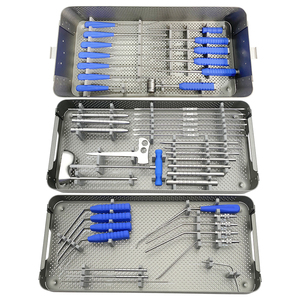
Operating as a certified OEM (Original Equipment Manufacturer) and ODM (Original Design Manufacturer) facility based in Sialkot—the world-renowned epicenter of surgical instrument metallurgy—our enterprise combines four decades of hand-finished forging heritage with modern CNC 5-axis machining, micro-laser welding, and automated passivation technology. We supply leading Brazilian importers, private-label hospital networks, and medical device brands with fully compliant, sterilization-ready maxillofacial surgical sets designed to withstand rigorous, high-cycle surgical environments.
To navigate the stringent regulatory framework governed by Brazil's National Health Surveillance Agency (ANVISA - Agência Nacional de Vigilância Sanitária), our OEM production lines strictly adhere to RDC 665/2022 (Good Manufacturing Practices for Medical Devices) and international quality standards including ISO 13485:2016 and ISO 9001:2015. Every batch of surgical steel—sourced exclusively from certified German (DIN 1.4117 / AISI 420) and Japanese (SUS 420J2) foundries—undergoes spectrographic verification to guarantee non-corrosive performance, structural rigidity, and optimal mechanical springback during delicate mandibular and zygomatic procedures.
German & Japanese Metallurgy
Forged from high-tensile AISI 420 and 316L surgical stainless steel, offering superior Rockwell hardness (HRC 50-54) for perpetual edge retention and anti-glare satin finishes.
ANVISA RDC 665/2022 Ready
Complete technical dossiers (DMR/DHF), material test reports (MTR), biocompatibility data (ISO 10993), and full batch traceability tailored for seamless ANVISA registration.
Bespoke OEM/ODM Prototyping
Custom fiber-optic light channel integrations, ergonomic silicone handle moldings, deep micro-laser branding, and bespoke instrument geometry based on CAD/CAM specifications.
2. Information Gain: OEM Specification Benchmark Matrix
When selecting an OEM maxillofacial instrument supplier for the Brazilian market, hospital clinical engineers and procurement executives must evaluate metallurgical properties, sterilization life cycles, and manufacturing tolerances. Below is a comparative technical analysis contrasting our high-grade OEM medical instruments with standardized commercial alternatives:
| Engineering Specification |
Rigor OEM Maxillofacial Standard |
Standard Commercial Importer Grade |
Clinical Impact for Surgeons |
| Raw Material Provenance |
German DIN 1.4117 / Japanese SUS 420J2 |
Generic Recycled 300-Series Steel |
Eliminates micro-pitting, rust transfer, and fatigue fractures during high-load bone cutting. |
| Surface Passivation & Polish |
ASTM A967 Ultrasonic Nitric Acid Passivation |
Basic Mechanical Polishing Only |
Ensures 100% resistance to corrosive tropical cleaning reagents and repeated autoclave cycles. |
| Hardness Index (Rockwell C) |
HRC 50 – 54 (Osteotomes) / HRC 42 - 46 (Forceps) |
HRC 38 – 42 (Variable across batches) |
Maintains ultra-sharp cutting edges for osteotomy blades without bending or blunting tip edges. |
| Dimensional Tolerance |
CNC Machined to ±0.01mm micro-precision |
Manual Stamping to ±0.15mm tolerance |
Guarantees exact fitting for mini-plate benders, screws, and micro-vascular needle holders. |
| Traceability & Marking |
Fiber Laser UDI (Unique Device Identifier) |
Ink Stamping or Unmarked |
Fulfills ANVISA RDC 665/2022 compliance for medical device recall and inventory auditing. |
3. Localized Application Scenarios Across Brazil's Healthcare Networks
Brazil’s healthcare landscape operates through a dual system comprising the public system (Sistema Único de Saúde - SUS) and a sophisticated private hospital sector (Rede D'Or São Luiz, Hospital Israelita Albert Einstein, Hospital Sírio-Libanês). Each sector exhibits unique operational priorities that directly shape procurement requirements for maxillofacial surgical instruments:
A. Facial Trauma & Emergency Reconstruction (SUS & Public Trauma Centers)
In high-volume public trauma centers across metropolitan areas such as São Paulo, Rio de Janeiro, Belo Horizonte, and Salvador, maxillofacial surgical sets must withstand relentless emergency room utilization. High-impact fractures involving the zygomaticomaxillary complex, Le Fort I/II/III osteotomies, and comminuted mandibular trauma require robust bone-holding forceps, titanium plate benders, and heavy-duty wire-twisting instruments. Our OEM tools feature reinforced box locks and ergonomic handles designed to minimize hand fatigue during prolonged, complex trauma reconstructions.
B. Elective Orthognathic & Aesthetic CMF Procedures (Private Specialty Clinics)
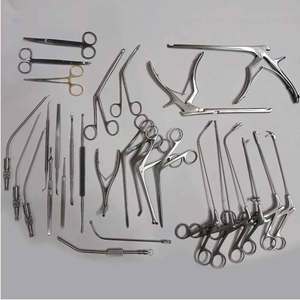
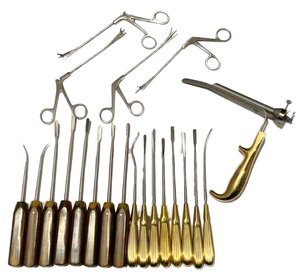
Brazil is a world leader in facial plastic surgery, orthognathic correction, and cosmetic CMF procedures. Private surgical centers demand specialized tools such as Tessier elevator sets, Obwegeser maxillary retractors, Hargis bone strikers, and fiber-optic lighted retractors. Our custom facelift and facial plastic instrument kits allow Brazilian surgeons to perform endoscopic subperiosteal dissections with minimal tissue trauma and clear intraoperative visualization.
C. Microvascular Free-Flap & Oncological Reconstruction
Major cancer research centers across Brazil—such as INCA (Instituto Nacional de Câncer) and A.C.Camargo Cancer Center—perform sophisticated head and neck oncological resections requiring micro-vascular needle holders, vascular clamps, and delicate CMF dissectors. Our micro-instruments feature tungsten carbide (TC) inserts welded via micro-laser technology, delivering flawless needle gripping without fraying delicate sutures.
4. Macroeconomic & Regulatory Trends Driving Brazil's OEM Supply Chain
Navigating the Brazilian medical equipment market requires a strategic understanding of regional supply chain dynamics, tariff structures, and regulatory evolution:
- ANVISA Regulatory Modernization: ANVISA’s ongoing alignment with the International Medical Device Regulators Forum (IMDRF) has heightened scrutiny over technical documentation. Importers require OEM partners capable of delivering validated sterilization parameters, ISO 10993 cytotoxicity test certificates, and comprehensive Device Master Records (DMR).
- Mercosur Tariff Considerations & Import Tax Optimization: Medical instruments imported under NCM code 9018.90 (Surgical Instruments & Appliances) are subject to Mercosur Common External Tariffs (AEC) and local duties (IPI, PIS/COFINS). Partnering with a direct OEM manufacturer eliminates intermediary markup, giving Brazilian distributors competitive pricing power despite currency fluctuations (BRL/USD).
- Growth of OEM Private Labeling: Established Brazilian medical distributors are increasingly transitioning from importing branded Western equipment to developing their proprietary private-label lines. Our factory provides turnkey OEM solutions—from custom laser-etched logos and localized Portuguese packaging to custom-molded surgical trays.
5. Frequently Asked Questions (FAQ) for Brazilian Procurement Directors
Below are authoritative answers to common inquiries raised by B2B importers, hospital procurement officers, and regulatory managers in Brazil regarding our custom OEM maxillofacial instrument manufacturing capabilities:
Q:
How do your OEM manufacturing standards align with ANVISA RDC 665/2022 registration?
Our manufacturing facility operates under an integrated ISO 13485:2016 quality management system. We provide full technical dossier support, including raw material spectrographic certificates (EN 10204 3.1), biocompatibility data, cleaning/sterilization validation protocols (ISO 17664), and UDI-compliant laser marking required by ANVISA for Class I and Class II medical device registrations in Brazil.
Q:
What surgical stainless steel grades are utilized for CMF osteotomes and plate benders?
We use premium German DIN 1.4117 / AISI 420 for cutting instruments (such as bone chisels, osteotomes, and bone shears) to achieve an optimal Rockwell hardness of HRC 52–54. Non-cutting structural instruments, retractors, and plate benders are crafted from AISI 304 or 316L stainless steel, ensuring flexibility, stress-crack resistance, and maximum corrosion protection.
Q:
Can you manufacture custom orthognathic and CMF instrument sets based on sample patterns or CAD models?
Yes. Our engineering division specializes in reverse engineering and custom CAD/CAM tooling. Importers or clinical networks in Brazil can provide technical drawings, 3D STEP files, or physical master samples. We produce pre-production prototypes within 14 business days for dimensional and metallurgical evaluation.
Q:
What is the typical Minimum Order Quantity (MOQ) and lead time for shipments to Brazilian ports?
For standard catalog SKUs, our flexible OEM MOQ starts as low as 10 to 25 units per instrument pattern. For custom private-label surgical sets with custom branding, minimum orders typically start at 50 sets. Lead times average 3 to 4 weeks for production, followed by fast airfreight dispatch directly to Santos (SSZ), Guarulhos (GRU), or Rio de Janeiro (GIG).
Q:
How are the instruments protected against tropical humidity and transit corrosion during maritime/air transport to South America?
Every instrument undergoes automated passivation according to ASTM A967 standards, creating a resilient chrome-oxide passive layer. Following final quality inspection, instruments are vacuum-sealed in moisture-impermeable medical-grade pouching with silica desiccant, ensuring 100% rust-free arrival at Brazilian destination warehouses.
6. Enterprise OEM Capabilities: Engineering Precision for Global Healthcare
For over 40 years, our family-owned manufacturing plant has stood at the forefront of surgical instrument craftsmanship. By combining generations of artisan hand-finishing with advanced CNC wire-EDM cutting, micro-polishing, and computerized dimensional inspection, we bridge the gap between traditional surgical metalworking and modern bio-engineering.
Our global footprint spans over 50 countries, partnering with regional distributors, hospital groups, and original equipment brands across North America, Europe, and Latin America. We invite Brazilian medical device importers, regulatory agents, and procurement managers to consult with our technical engineering team to build high-performance, cost-effective maxillofacial instrument lines tailored to the evolving demands of Brazil's surgical market.