Executive Industry Report: Arthroscopic Instrument Manufacturing & Tokyo Procurement Dynamics
The healthcare infrastructure of Greater Tokyo—spanning world-renowned university hospitals in Bunkyo Ward, specialized orthopedic centers in Shinjuku, and private outpatient sports medicine clinics across Minato and Shibuya—represents one of the world's most sophisticated markets for minimally invasive surgery (MIS). As Japan navigates a unique demographic landscape characterized by an active aging population (the Chouju Shakai or super-longevity society), the demand for joint preservation procedures has surged exponentially over the past decade.
Arthroscopy has evolved from a diagnostic modality into an intricate therapeutic discipline requiring extreme metallurgical integrity, micro-engineering precision, and absolute sterilization reliability. For Tokyo-based medical device importers, hospital procurement officers, and surgical equipment distributors, identifying OEM manufacturing partners who understand the rigid regulatory standards established by the Ministry of Health, Labour and Welfare (MHLW) and the Pharmaceuticals and Medical Devices Agency (PMDA) is paramount.
Key Market Insight for Tokyo Importers: Tokyo surgical teams prioritize tactile feedback (kankaku), instrument balance, and anti-reflective surface coatings to maximize optical clarity under high-definition 4K and 3D arthroscopic camera visualization. Sourcing directly from certified original equipment manufacturers (OEM) eliminates distributor markups while ensuring strict compliance with Japanese Medical Device Nomenclature (JMDN) classification protocols.
Information Gain Analysis: Metallurgical Integrity & Precision Craftsmanship
In arthroscopic interventions—such as subacromial decompression, anterior cruciate ligament (ACL) reconstruction, meniscal repair, and hip labral refixation—the structural integrity of hand instruments cannot be compromised. Under high rotational torque or repetitive clamping force within narrow intra-articular joint capsules (such as the glenohumeral or radiocarpal joints), sub-standard stainless steel is susceptible to micro-fractures, jaw misalignment, and premature pitting corrosion.
1. Premium Raw Material Selection (AISI 420 & 316L Stainless Steel)
Every arthroscopic punch, micro-forceps, and elevator manufactured in our facility utilizes certified surgical-grade German and Japanese stainless steel alloys. Martensitic stainless steel (AISI 420/420B) is deployed for cutting blades and punch tips due to its high carbon content, providing exceptional Rockwell hardness (50-54 HRC) and long-lasting edge retention. For structural shafts, handles, and irrigation cannulas, Austenitic AISI 316L steel delivers superior corrosion resistance against aggressive enzymatic detergents and high-pressure steam autoclaving cycles at 134°C.
2. Micro-Passivation & Non-Glare Matte Surface Engineering
Standard bright-polished surgical tools present a severe operational handicap during arthroscopic procedures. Operating under intense fiber-optic illumination inside liquid-distended joint cavities, mirror surfaces create specular glare that impairs the surgeon's visual acuity on high-resolution display monitors. Our instruments undergo specialized bead-blasting and micro-passivation treatments, producing an anti-glare satin/matte finish that absorbs light scattering while creating an oxide barrier against chemical oxidation and pitting.
3. Zero-Drift Jaw Alignment & Ergonomic Handle Dynamics
Precision hand-finishing by master artisans ensures that punch jaws close with zero lateral drift. Whether deploying a basket punch for meniscectomy or a grasping forceps for loose body retrieval, the tactile force transmission from handle to tip remains linear and smooth. Ergonomics are tailored to reduce fatigue during prolonged arthroscopic cases, incorporating lightweight hollow-handle designs or textured knurling for slip-free control even when surgical gloves are wet.
Technical Specification & Clinical Application Matrix
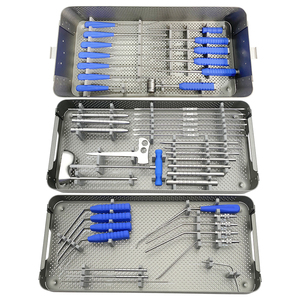
The following technical data matrix highlights the structural properties, tip configurations, and clinical indications across our primary arthroscopic and endoscopic instrument lines engineered for global and Tokyo procurement standards:
| Instrument Category |
Material Composition |
Surface Finish |
Jaw / Tip Configuration |
PMDA / ISO Class |
Primary Clinical Indication |
| Arthroscopic Basket Punches |
German AISI 420 Martensitic Steel |
Satin Anti-Glare Bead-Blasted |
Straight, 90° Right/Left, Duckbill, Scoop |
Class I / ISO 13485 |
Knee Meniscectomy & Shoulder Labral Trimming |
| Grasping & Tissue Forceps |
AISI 316L Stainless Steel |
Passivated Matte Finish |
Serrated, Cupped, 2x3 Tooth, Self-Retaining |
Class I / ISO 13485 |
Intra-articular Loose Body Retrieval & Soft Tissue Holding |
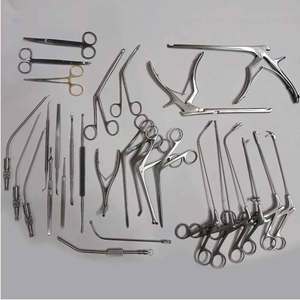
| Sinus & FESS Sets (30 Pc) |
German Stainless Steel |
High-Mirror / Satin Dual Finish |
Rotating Blakesley, Cutting Forceps, Curettes |
Class I / CE Certified |
Functional Endoscopic Sinus Surgery (ENT) |
| Unilateral Biportal (UBE) Sets |
Japanese & German Surgical Steel |
Electropolished Electro-Passivated |
Spinal Kerrison Punches, Pituitary Forceps |
Class IIa Equivalent |
Minimally Invasive Lumbar Discectomy & Decompression |
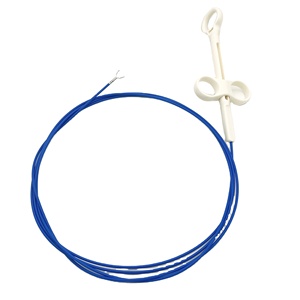
| Rotatable Hemoclips (135°) |
Medical-Grade Alloy & Biocompatible Polymer |
Sterile Single-Use Packaging |
360° Rotatable Claw Angle 135° |
Class II / CE Marked |
Gastrointestinal Endoscopic Hemostasis & Mucosal Closure |
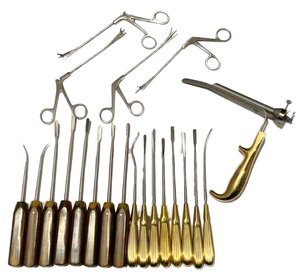
| Cosmetic Endoscopic Facelift Set |
Lightweight Titanium & 316L Steel |
Anodized Anti-Reflective |
Dissectors, Periosteal Elevators, Retractors |
Class I / CE Class I |
Facial Aesthetic Surgery & Subperiosteal Forehead Lifts |
Localized Trends & Emerging Technologies in Tokyo’s Arthroscopy Sector
To successfully penetrate and scale within Tokyo’s competitive medical device market, manufacturers and distributors must align with specific clinical trends and hospital purchasing patterns unique to Japan:
Rise of Unilateral Biportal Endoscopy (UBE)
Tokyo spine centers are rapidly adopting UBE techniques for spinal stenosis and disc herniation. UBE uses standard arthroscopic equipment alongside specialized spinal tools, creating high demand for hybrid UBE instrument sets that combine arthroscopic visibility with spinal nibbling power.
Strict PMDA Regulatory Compliance
Japanese medical device import laws require foreign manufacturing facilities to hold ISO 13485 certification and adhere strictly to Good Manufacturing Practice (GMP). Fully traceable batch codes, serial numbers, and material test certificates are essential for seamless clearance through Tokyo customs.
Outpatient Sports Clinic Expansion
Dedicated sports surgery centers in areas such as Roppongi, Shinagawa, and Ginza focus heavily on rapid patient recovery. This drives demand for low-profile cannulas, precision micro-punches (1.5mm–2.7mm), and specialized pediatric/small-joint arthroscopy instruments for wrist and ankle procedures.
Furthermore, Tokyo hospital central sterile supply departments (CSSD) enforce rigorous decontamination workflows. Reusable instruments must withstand repeated automated washing cycles, ultrasonic bath cavitation, and high-temperature steam sterilization without experiencing discoloration, hinge stiffness, or micro-cracking. Rigor Instruments’ proprietary heat-treatment and passivation processes ensure long-term durability under standard Japanese CSSD protocols.
Enterprise Strengths: Why OEM Partners & Tokyo Distributors Trust Rigor Instruments
With over 40 years of direct manufacturing lineage based in Sialkot—the international epicenter of surgical instrument craftsmanship—Rigor Instruments seamlessly fuses traditional hand-forge artistry with high-precision CNC multi-axis machining and automated laser technologies. Our factory-direct framework offers unparalleled advantages for Tokyo medical brands:
Direct Factory-Direct Sourcing
By eliminating trading intermediaries, we offer direct access to factory pricing, allowing Tokyo distributors to achieve competitive profit margins while providing hospitals with premium-tier instruments crafted from German and Japanese steel.
Custom OEM / ODM & Laser Etching
We provide full private-label manufacturing. Custom company logos, part numbers, Japanese barcode symbology (GS1-128), and specialized tip geometries can be manufactured according to client technical drawings or sample prototypes.
100% Quality Inspection & Traceability
Every single instrument undergoes rigorous multi-stage quality checks: dimensional verification under optical comparators, corrosion testing via boiling water and copper sulfate immersion, and functional tactile testing prior to export packing.
Frequently Asked Questions by Tokyo Medical Procurement & Distributors
Addressing core inquiries regarding regulatory compliance, ordering procedures, customization, and logistics for the Japanese healthcare market:
Q1: Are your manufacturing processes compliant with Japan's PMDA requirements?
Yes. Rigor Instruments operates under full ISO 13485:2016 and ISO 9001:2015 certified Quality Management Systems. Our production processes, raw material traceability, and sterilization validation protocols align with international standards, facilitating PMDA registration and JMDN classification by Japanese medical device importers (MAH - Marketing Authorization Holders).
Q2: What steel grades are used for your arthroscopic cutting and grasping tools?
We utilize high-grade imported German AISI 420 martensitic stainless steel for cutting edges, punch jaws, and scissors to ensure maximum hardness and long-term sharpness. For handles, shafts, and outer sheaths, we use AISI 316L austenitic steel due to its high ductility and superior resistance against chemical corrosion during Japanese hospital CSSD wash cycles.
Q3: Can we request private labeling and custom laser etching for the Tokyo market?
Absoluely. We provide comprehensive OEM/ODM services. We can precision laser-etch your brand name, logo, custom SKU codes, and GS1 DataMatrix barcodes directly onto the instrument body without compromising surface passivation or biocompatibility.
Q4: What is the typical lead time for bulk shipments to Tokyo / Yokohama ports or Haneda Airport?
Standard catalog items in stock ship within 7–10 business days. For customized OEM orders or comprehensive surgical kit fabrications, typical production lead time ranges between 3 to 5 weeks. Express air freight to Narita (NRT) or Haneda (HND) airports ensures rapid transit and minimal supply chain disruption.
Q5: How do your instruments prevent optical glare under 4K arthroscopic cameras?
All our arthroscopic and endoscopic hand tools receive a proprietary satin matte or electro-passivated dark surface treatment. This micro-textured finish eliminates high-intensity light reflections under 4K UHD fiber-optic light sources, ensuring maximum contrast and clear visual field definition for operating surgeons.