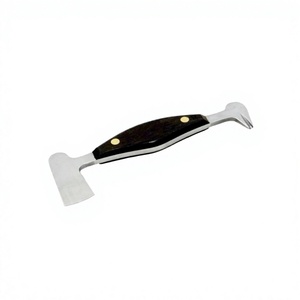
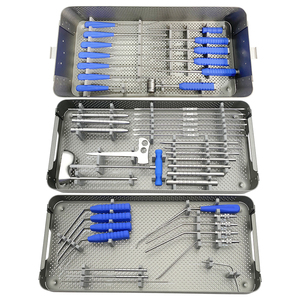
Featured Surgical Dilators & Specialty Endoscopic Instrumentation
Browse our featured surgical instruments engineered for high-precision tactile feedback, durability, and strict international sterilization compliance. Designed for endoscopic dilations, minimally invasive access, and complex specialty surgical procedures.
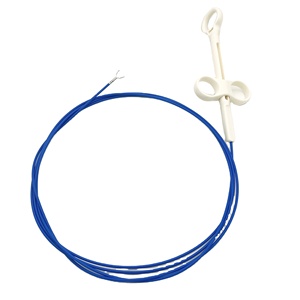
Rotatable Endoscopic Hemoclip (135° Claw Angle)
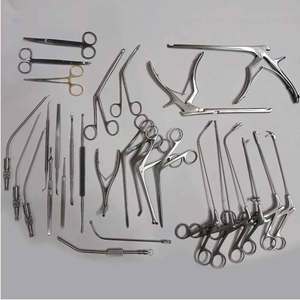
FESS Sinus Surgery Instrument Set (30 Pcs)
Veterinary Endoscopic Foreign Body Forceps
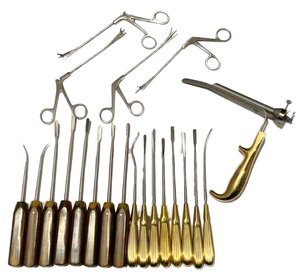
Endoscopic Facelift Instrument Set
Stainless Steel Endoscopic Retrieval Forceps
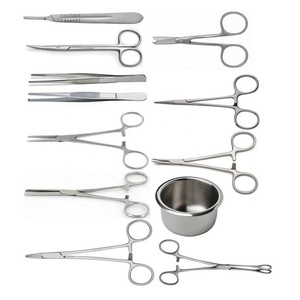
Professional Facelift Forceps & Dilator Kit
Precision Stainless Steel Retrieval Grasper
Unilateral Biportal Endoscopic (UBE) Spinal Set
Executive Summary: Technical Evolution & Market Dynamics of Surgical Dilators
Surgical dilators represent a critical cornerstone of modern interventional and surgical procedures. Designed to gradually enlarge bodily lumens, strictures, orifices, or surgical access tracks, these precision medical instruments are indispensable across multiple clinical disciplines, including urology, gastroenterology, gynecology, vascular surgery, and cardiovascular interventions. The global market for surgical dilators has transitioned from traditional rigid metallic rods to sophisticated, surface-engineered devices offering optimal radial force, minimal axial shear stress, and biocompatible slip-coatings.
According to clinical supply chain analyses, the global demand for high-grade stainless steel and balloon-assisted dilators is expanding at a compound annual growth rate (CAGR) of over 6.2%. This growth is primarily fueled by the accelerating worldwide shift toward Minimally Invasive Surgery (MIS), increasing prevalence of chronic gastrointestinal and urological strictures, and strict hospital purchasing criteria that prioritize zero-defect instrument integrity and long-term autoclave endurance.
Key Information Gain Insight: Modern clinical protocols require surgical dilators to maintain strict dimensional tolerance (within ±0.02 mm) and exceptional surface polish (Ra < 0.1 µm) to prevent mucosal micro-trauma, reduce mechanical friction, and eliminate tissue tearing during rapid sequential dilation.
As hospital procurement committees and B2B medical device distributors navigate an increasingly complex supplier landscape, identifying verified manufacturers capable of delivering consistent metallurgical purity, ISO 13485 certification, and comprehensive OEM/ODM customization has become a strategic priority. Sialkot, Pakistan, alongside specialized European manufacturing hubs, remains the central engine for surgical instrument forging, blending decades of manual artisan mastery with computer-controlled CNC machining and laser-guided quality verification.
Surgical Dilator Taxonomy & Engineering Specifications Matrix
Surgical dilators are engineered in diverse geometric profiles, material compositions, and flexural rigidities tailored to the anatomical requirements of specific organ systems. The table below delineates the primary technical classifications, clinical applications, material grades, and regulatory benchmarks governing leading global export lines.
| Dilator Category |
Primary Clinical Application |
Material / Metallurgy |
Size Range & French Scale |
Sterilization & Reuse |
| Hegar & Pratt Dilators |
Gynecology, Cervical Canal Dilation |
AISI 420 German Stainless Steel |
1 mm to 26 mm (3 Fr - 78 Fr) |
Reusable / Autoclavable 134°C |
| Van Buren & Amplatz Dilators |
Urology, Urethral & Percutaneous Nephrostomy |
Stainless Steel / PTFE Coated Polyurethane |
8 Fr to 30 Fr (Sequential Kits) |
Both Reusable & Single-Use Options |
| Savary-Gilliard & Bougie Dilators |
Gastroenterology, Esophageal Strictures |
Medical-Grade Flexible Silicone / Polyvinyl |
15 Fr to 60 Fr (Wire-Guided) |
Reusable (High-Level Disinfection) |
| Vascular & Vessel Dilators |
Cardiovascular Access & Arteriotomy |
316L Surgical Steel / Hydrophilic PE |
1 Fr to 12 Fr (Tapered Micro-Tip) |
Single-Use ETO Sterilized |
| Bakri & Balloon Dilators |
Obstetrics, Postpartum & Gastro Balloon Dilation |
Medical-Grade Silicone / PET Balloon |
Custom Volume (24 Fr - 50 Fr) |
Single-Use Sterile Pack |
Mechanical Strength & Ductility
Forged from high-tensile AISI 420 and 316L stainless steel, surgical dilators undergo precise vacuum heat treatment to achieve optimal Rockwell Hardness (45-52 HRC), preventing tip distortion or structural failure under lateral bending stress.
Biocompatibility & Surface Finish
Electropolished to a mirror finish or coated with hydrophobic/hydrophilic PTFE polymer layers, our dilators reduce tissue drag coefficient by up to 65%, significantly diminishing patient pain and trauma during entry.
Dimensional Calibration Accuracy
Every dilator set is micro-calibrated along the standard French (Charrière) scale. Laser-engraved sizing markings ensure immediate visual identification during high-pressure operating room procedures.
Next-Generation Procurement Trends in Surgical Dilator Manufacturing
The international medical procurement sector is undergoing a profound transformation driven by technological innovation, stringent infection control standards, and sustainable supply chain imperatives. Hospital procurement directors and medical device importers must adapt to several emerging trends that are redefining surgical dilator design and manufacturing standards through 2026 and beyond.
Hydrophilic & Smart Coatings
Incorporation of cross-linked hydrophilic polymer coatings that activate upon contact with sterile saline, creating an ultra-low friction film that practically eliminates mucosal trauma during complex stricture dilation.
Pressure-Feedback Sensors
Emergence of balloon dilators integrated with micro-piezoelectric sensors. These provide real-time digital radial pressure feedback to the surgeon's console, preventing accidental luminal wall rupture.
Shift to Hybrid Sets
Hospitals are replacing individual instrument ordering with modular, specialty-specific hybrid dilator sets containing both rigid guidance rods and flexible dilation bougies in custom sterilizing trays.
Strict Traceability Laws
Global regulations (such as US FDA UDI and EU MDR) now mandate direct part marking (DPM) laser matrix codes on reusable steel dilators to ensure 100% lifecycle traceability across CSSD decontamination cycles.
Manufacturing Excellence: Rigor Instruments Sialkot Legacy
For over four decades, Rigor Instruments has stood at the forefront of surgical instrument manufacturing in Sialkot, Pakistan—the globally recognized hub producing over 70% of the world's hand-crafted surgical metalwork. Operating a second-generation family-owned facility certified to ISO 9001:2015 and ISO 13485 standards, we bridge traditional metallurgical craftsmanship with state-of-the-art automated manufacturing.
Our surgical dilators and endoscopic sets are crafted using raw German and Japanese stainless steel alloys. Each instrument undergoes a rigorous multi-stage quality control process: precision drop-forging, CNC profiling, manual tip shaping, chemical passivation to prevent corrosion, and rigorous ultrasonic washing. Every single dilator is visually inspected under high magnification and subjected to dimensional verification before packaging.
OEM & ODM Customization
We provide end-to-end private label manufacturing for global healthcare brands. From custom French scale taper lengths to laser-engraved hospital logos and bespoke packaging solutions, our engineering team translates technical drawings into mass production.
Passivation & Corrosion Resistance
Utilizing advanced nitric and citric acid passivation according to ASTM A967 standards, our steel dilators resist pitting, oxidation, and surface degradation across hundreds of high-temperature steam autoclave cycles (134°C).
Global Regulatory Clearance
All our manufacturing processes fully align with CE Mark Class I & II requirements, ISO 13485 Quality Management Systems, and FDA registration guidelines, facilitating seamless customs clearance across European, American, and Middle Eastern ports.
B2B Sourcing Guide: How to Evaluate High-Quality Surgical Dilator Suppliers
Procuring surgical instruments on an international scale requires rigorous risk mitigation to avoid sub-standard metal alloys, inconsistent French dimensions, or non-compliant sterilization packaging. Medical procurement managers should utilize the following 5-point audit protocol when vetting prospective surgical dilator suppliers and exporters:
Pro-Tip for Importers: Always request Mill Test Certificates (MTC) verifying AISI 420 or 316L steel grade composition along with Third-Party Autoclave Validation Reports prior to placing bulk OEM purchase orders.
1
Verify Metallurgical Provenance
Ensure the manufacturer uses authenticated German or Japanese steel billets. Low-grade steel leads to burrs, micro-fractures, and rust spots after minimal autoclave cycles.
2
Inspect Tip Geometry & Polish
Request physical samples to audit tip atraumatic curvature. Taper transitions must be seamless, with zero sharpness or surface roughness that could tear delicate organ tissue.
3
Audit Quality Management System
Confirm valid ISO 13485 and ISO 9001 certifications issued by accredited notified bodies (e.g., SGS, TÜV, BSI), ensuring batch-to-batch consistency and raw material traceability.
4
Review Packaging & Labeling
Verify compliance with international labeling standards including GS1 DataMatrix barcodes, expiration dates, clear French size indicators, and sterile barrier packaging integrity.
5
Assess Export Experience
Partner with established exporters who handle complete shipping documentation (Certificate of Origin, Form E, Commercial Invoice, Certificate of Analysis) to prevent customs delays.
✓
Factory Direct Advantage
Direct factory sourcing eliminates distributor markups, allowing hospital chains to achieve up to 35-45% cost savings while maintaining premium tier-1 instrument quality.
Frequently Asked Questions (FAQ) — Surgical Dilators Procurement
Q1: What materials are most recommended for reusable surgical dilators versus single-use dilators?
Reusable surgical dilators (such as Hegar, Pratt, or Van Buren dilators) are primarily manufactured from martensitic AISI 420 or austenitic 316L surgical-grade stainless steel due to their high mechanical strength and resistance to thermal degradation during steam autoclaving. Single-use dilators, such as balloon catheters or flexible vascular introducers, utilize medical-grade polyurethane, silicone, or PTFE (Teflon) with hydrophilic coatings for smooth insertion without sterilization reprocessing requirements.
Q2: How is sizing standardized across different types of surgical dilators?
Surgical dilators are standardized according to the French gauge system (abbreviated as Fr, FG, or Ch). One French unit equals exactly 1/3 of a millimeter (0.33 mm). For example, a 30 Fr dilator has an outer diameter of exactly 10.0 mm. Hegar dilators are also frequently sized directly in millimeter increments representing the tip diameter, with dual-ended models indicating both tip measurements (e.g., 3mm/4mm).
Q3: What quality management certifications should a reputable surgical instrument supplier possess?
A reliable manufacturer must hold ISO 13485 (Medical Devices Quality Management Systems) and ISO 9001:2015 certifications. Additionally, for global distribution, products must carry the CE Mark for European market entry and be registered/listed with the US FDA. Rigor Instruments holds full compliance across ISO, CE, and FDA regulatory frameworks.
Q4: How does passivating surgical steel dilators extend their operational lifespan?
Passivation is a chemical surface treatment process (utilizing nitric or citric acid solutions) that removes free iron from the stainless steel surface and forms a continuous, protective chromium oxide passive layer. This invisible shield renders the dilator highly resistant to corrosion, pitting, and staining during exposure to saline solutions, bodily fluids, and harsh chemical sterilization agents.
Q5: Can Rigor Instruments manufacture custom or OEM surgical dilator sets with private labeling?
Yes. Rigor Instruments provides comprehensive OEM and ODM services. We manufacture bespoke dilator geometries, non-standard French sizes, specialized surface finishes, and complete instrument sets. We offer precise fiber-laser logo marking, custom catalog numbering, and custom-molded sterilizing trays or pouches for private-label brands and medical distributors worldwide.
Q6: What is the typical lead time and minimum order quantity (MOQ) for bulk wholesale surgical dilators?
Standard catalog items generally ship within 2 to 3 weeks, while custom OEM production orders take approximately 4 to 6 weeks depending on volume and specification complexity. Flexible MOQs are available for established distributors and medical equipment procurement contracts. Contact our sales department directly to receive a tailored quotation.
Partner with a Leading Surgical Instruments Exporter Today
Whether you are stocking hospital inventory, building customized surgical kits, or launching a private-label medical line, Rigor Instruments delivers uncompromised German & Japanese steel precision directly from Sialkot to your door.