MIS Podiatry & Endoscopy
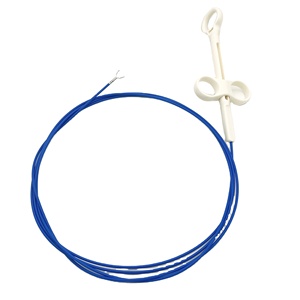
Rotatable Disposable Endoscopic Hemoclip (135° Angle)
360° rotational control for precise vascular hemostasis in endoscopic foot and ankle soft tissue repairs.
Contact Us
Forged from premium AIS 420 & 316L surgical stainless steel, engineered to exceed international ISO 7153-1 specifications for tensile strength, edge retention, and repeated autoclave cycles.
360° rotational control for precise vascular hemostasis in endoscopic foot and ankle soft tissue repairs.
Contact Us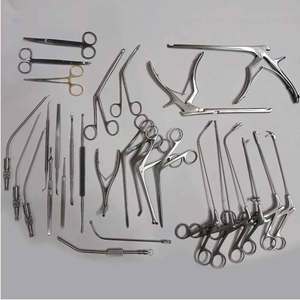
German stainless steel micro-gouges, osteotomes, and bone rasps for delicate forefoot reconstruction.
Contact Us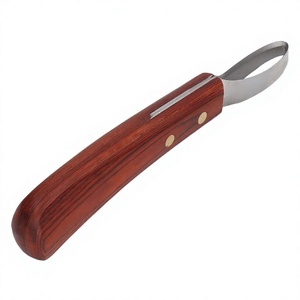
CE-marked stainless steel ratcheted forceps designed for minimally invasive joint debridement and tissue sampling.
Contact Us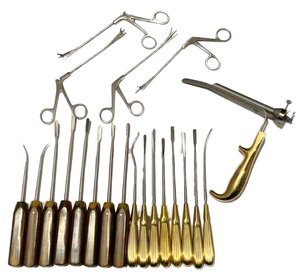
Class I CE certified surgical tools optimized for cosmetic podiatry, tendon lengthening, and soft-tissue release.
Contact Us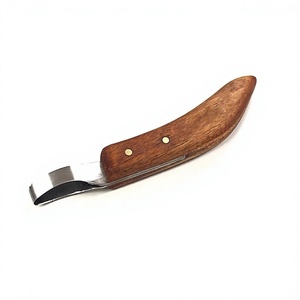
High-leverage ergonomic construction for bone fragment retrieval, hoof/foot reconstruction, and debridement.
Contact Us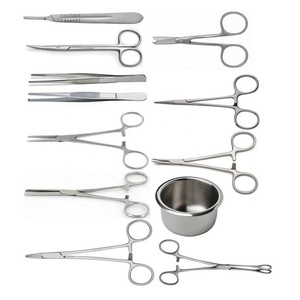
Ultra-fine tips engineered for plantar fasciotomy, Morton's neuroma decompression, and intermetatarsal nerve isolation.
Contact Us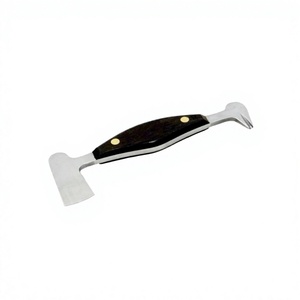
Corrosion-resistant medical grade alloy with anti-slip handle grip, fully autoclavable and CE compliant.
Contact Us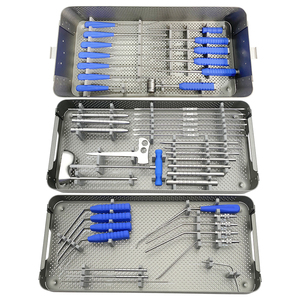
Comprehensive surgical kit including specialized curettes, bone rongeurs, and retractors for lower limb orthopedics.
Contact UsIn modern lower extremity orthopedics and podiatric surgery, the margin for error is razor-thin. Surgeries involving bone cut alignment (osteotomies), joint arthrodesis, hallux valgus correction, and delicate plantar fascia releases demand high-yield, ergonomic, and metallurgically superior instruments. As a world-class podiatry surgical instruments manufacturer and factory rooted in Sialkot, Pakistan—the premier international cluster for medical device forging—our company leverages over 40 years of metallurgical heritage combined with modern CNC Swiss machining, laser welding, and automated chemical passivation.
Podiatric surgeons frequently encounter clinical challenges such as rapid instrument dulness during cortical bone resection, tissue snagging from micro-burrs on scissor edges, and stress corrosion cracking resulting from harsh hospital autoclave sterilization cycles. To overcome these persistent obstacles, our engineering team adheres strictly to E-E-A-T (Experience, Expertise, Authoritativeness, and Trustworthiness) principles across every manufacturing workflow. By sourcing vacuum-melted German AISI 420 and Japanese SUS 440C stainless steel bars, we ensure each tissue forceps, nail avulsion elevator, osteotome, and bone rongeur achieves an optimal balance between Rockwell C hardness (HRC 48–54) and ductility.
Furthermore, our facility operates under rigorous Quality Management Systems audited for ISO 9001:2015 and ISO 13485:2016 compliance. Every batch of podiatry instruments undergoes 100% visual micro-inspection under 40x magnification, boil testing for free iron particles, and ultrasonic cleaning to guarantee biocompatibility and sterilizability before global export to hospital networks, outpatient surgery centers (ASCs), and medical distributors across 50+ nations.
| Steel Grade Standard | Chemical Composition Key Elements | Hardness Rating (HRC) | Primary Clinical Application | Sterilization Resilience |
|---|---|---|---|---|
| German AISI 420A / 420B | Cr 12.0-14.0%, C 0.15-0.35%, Mn ≤ 1.0% | 48 - 52 HRC | Tissue Scissors, Hemostatic Forceps, Retractors | Excellent (500+ Autoclave Cycles) |
| Japanese SUS 440C | Cr 16.0-18.0%, C 0.95-1.20%, Mo 0.75% | 54 - 58 HRC | Micro Osteotomes, Bone Chisels, Shannon Burs | Superior Edge Retention & High Hardness |
| Tungsten Carbide (TC) Inlays | WC-Co Matrix (94% Tungsten Carbide) | 70+ HRC (Inlay Tip) | Needle Holders, Wire Cutters, Bone Rasps | Ultra-Long Life (5x standard steel durability) |
| AISI 316L Austenitic | Cr 16-18%, Ni 10-14%, Mo 2-3% | Non-Hardenable (High Ductility) | Sterilization Trays, Cannulated Guides, Suction Tubes | Maximum Chemical & Pitting Resistance |
Driven by advancements in outpatient foot surgery and patient demand for reduced recovery periods, podiatric surgical instrumentation is undergoing rapid technological evolution. As a forward-thinking manufacturing factory, we invest heavily in R&D to incorporate these key trends directly into our standard and OEM product catalogs:
Development of specialized micro-burrs, Shannon cutters, and 2.0mm osteotomes designed for percutaneous hallux valgus and hammertoe corrections through sub-centimeter skin incisions.
Application of Physical Vapor Deposition (PVD) Titanium Nitride and Diamond-Like Carbon (DLC) matte coatings to eliminate light reflection under intense high-intensity operating room lighting.
Hollow-core design and customized knurling patterns engineered to shift the center of gravity toward the surgeon's palm, reducing wrist strain during lengthy hindfoot reconstruction procedures.
Precision vacuum silver-brazing of TC micro-serrations onto bone rasps, tissue nibblers, and needle holders to provide unmatched durability and 5x longer cutting edge retention.
Custom aluminum anodized sterilization containers featuring slotted silicone brackets customized for complete hallux valgus, nail avulsion, or foot trauma procedures.
Transitioning from manual acid baths to computerized citric and nitric acid passivation chambers, ensuring a uniform chromium-oxide protective barrier that prevents pitting corrosion.
Procurement managers, hospital supply chain executives, and regional medical equipment distributors face escalating price pressures, supply chain disruptions, and stringent regulatory oversight. Moving into 2026 and beyond, sourcing strategies for surgical instruments are shifting away from high-markup regional intermediaries toward direct factory OEM relationships:
Distributors are increasingly bypassing third-party traders to partner directly with certified original equipment manufacturers in Sialkot, Pakistan. Factory-direct procurement delivers a 30% to 50% cost advantage while enabling custom laser marking, private label packaging, and bespoke catalog number etching tailored to hospital contracts.
With the global rollout of Unique Device Identification (UDI) requirements by the US FDA and the European Union’s Medical Device Regulation (EU MDR 2017/745), procurement teams require suppliers who can provide complete raw material heat traceability certificates, chemical batch analysis, and direct fiber laser matrix code marking on individual instruments.
While reusable German stainless steel instruments remain the gold standard for bone osteotomies and major reconstruction, healthcare systems are adopting high-precision single-use disposable tools (such as endoscopic hemoclips, sterile scalpels, and biopsy forceps) for outpatient clinic care to reduce central sterile processing (SPD) overhead and eliminate cross-contamination risks.
Global buyers are negotiating long-term framework agreements with qualified factories that maintain raw steel reserves and offer scheduled rolling production runs. This guarantees consistent 30-day fulfillment windows even during peak healthcare purchasing cycles.
As a premier podiatry surgical instruments manufacturer, our facility combines four decades of hand craftsmanship with advanced manufacturing infrastructure. We provide full-turnkey manufacturing solutions for global healthcare brands, clinical chains, and wholesale distributors:
We exclusively forge using certified German AISI 420, 440C, and Japanese SUS stainless steel. Mill test certificates (MTC) accompanying every batch guarantee zero lead, cadmium, or structural impurities.
Our production floor integrates 5-axis CNC machining center precision with second-generation surgical artisans who perform micro-filing, hand-alignment, and edge sharpening for ultimate tactile feel.
From initial CAD blueprinting and 3D prototype printing to custom die forging, branding, and customized blister packaging, we turn complex clinical concepts into market-ready medical devices.
Every podiatric instrument undergoes a rigorous 7-stage quality protocol: forging inspection, hardness verification, passivation dip testing, ultrasonic cleaning, visual alignment, boil corrosion test, and final autoclave simulation.
Situated near international shipping hubs in Sialkot, Pakistan, we maintain streamlined export documentation, customs clearance handling, and expedited courier delivery for urgent hospital procurement orders.
By operating directly out of Pakistan’s primary surgical manufacturing district without middleman markup, we deliver tier-1 European quality at highly competitive wholesale manufacturer pricing.
Find authoritative answers to common technical, regulatory, and commercial questions asked by medical purchasing directors and wholesale importers:
For cutting instruments such as bone chisels, osteotomes, Shannon burs, and nail cutters, high-carbon martensitic stainless steel such as German AISI 420 (X20Cr13) or Japanese SUS 440C is recommended due to its high Rockwell C hardness (HRC 50–56) and sharp edge retention. For grasping forceps, retractors, and speculums, AISI 304 or AISI 410 offers superior flexibility, tensile strength, and high corrosion resistance during repeated steam sterilization cycles.
Our quality control operations follow a documented Quality Management System (QMS) certified to ISO 13485:2016 and ISO 9001:2015. All medical devices produced carry CE mark declaration of conformity and comply with FDA Class I/II requirements. We maintain complete batch traceability from raw ingot heat numbers to final sterile packaging, including documented passivation, hardness testing, and dimensional inspection reports for full regulatory audit readiness.
Yes. As an authentic OEM/ODM manufacturer, we provide full private labeling services. We can precision-etch your brand logo, custom catalog numbers, and UDI matrix codes using fiber laser marking. Furthermore, we accept technical CAD drawings or physical sample prototypes to engineer custom podiatric tools tailored specifically to your clinical requirements, complete with retail or hospital sterile packaging.
For standard catalog items (e.g., standard podiatric nippers, bone raspers, retractor sets), our minimum order quantity is typically 15 to 25 units per SKU. For custom OEM forging development, MOQ varies based on tooling requirements. Standard production lead time is 25 to 35 days from sample approval. We also maintain buffer stock for high-demand clinical lines to support rapid 7-day dispatch for established distributors.
Every lot of manufactured instruments undergoes chemical passivation in accordance with ASTM F1089 / ISO 13402 standards. We perform rigorous boil testing (immersion in boiling distilled water for 30 minutes followed by 24-hour air drying) to detect any unpassivated free iron. Furthermore, sample units undergo 100+ continuous steam autoclave cycles at 134°C (273°F) to verify joint integrity, spring tension retention, and surface resistance against pitting and discoloration.
Absolutely. We encourage medical procurement teams and clinical evaluators to audit our craftsmanship firsthand. Pre-production samples can be manufactured and dispatched via DHL/FedEx within 7 to 10 business days, allowing your surgical committee to assess weight, balance, surface finish, and cutting precision prior to contract finalization.
Whether you require wholesale hospital supply, custom OEM development, or contract manufacturing, our engineering team is ready to deliver certified precision directly from our factory floor.
Contact Us