1. Executive Sourcing Guide: Evaluating Top China Laparoscopic Clip Appliers Manufacturers & Suppliers
In modern minimally invasive surgery (MIS), the reliability of vascular ligation and tissue occlusion is paramount. Surgical procurement teams, medical device distributors, and hospital purchasing directors globally face a complex landscape when sourcing high-precision endoscopic tools. As a leading manufacturer with over four decades of metallurgical mastery, operating under strict ISO 9001:2015, ISO 13485, and CE Mark compliance, our production infrastructure bridges the gap between cost efficiency and surgical safety.
When searching for the top China laparoscopic clip appliers factory and suppliers, procurement managers must evaluate factors far beyond unit price. The mechanical architecture of a clip applier—including jaw closing force, shaft rotation smoothly operating under 360 degrees, ratchet tactile feedback, and material compatibility with titanium or polymer Hem-o-lok clips—directly influences intraoperative outcomes. OEM suppliers must demonstrate rigorous raw material traceability, utilizing premium German (X20Cr13 / 1.4116) and Japanese (SUS420J2 / SUS316L) stainless steel to prevent jaw splay, mechanical jamming, or premature material fatigue during repetitive clamping cycles.
Key Technical Assessment Criteria for Hospital Procurement Directors:
To eliminate supply chain vulnerability and guarantee surgeon satisfaction, clinical evaluation should focus on three core pillars:
Jaw Occlusion Accuracy & Anti-Splay Metallurgy
Applier jaws must exhibit micro-machined precision tolerances (<0.02mm) to ensure uniform pressure distribution across titanium and polymer clips, preventing scissoring or partial ligation.
Ergonomic Handle Dynamics & Tactile Feedback
Hand-finished spring ratchets and low-friction internal drive rods minimize surgeon hand fatigue during prolonged laparoscopic cholecystectomy, colectomy, or bariatric procedures.
2. Technical Deep-Dive: Material Specifications & Mechanical Comparison Matrix
Understanding the engineering distinction between various laparoscopic ligation mechanisms allows procurement teams to optimize inventory SKU selection. Below is an authoritative technical comparison matrix evaluating standard single-fire reusable clip appliers, automatic multi-fire appliers, gastroenterology endoscopic hemoclips, and specialized UBE/ENT sets.
Single-Fire Reusable Appliers (10mm / 5mm)
- Material: German 1.4116 Stainless Steel
- Sterilization: Autoclave 134°C (>500 cycles)
- Shaft Design: 360° Rotatable, Flushable Port
- Clip Compatibility: Medium-Large / Large Titanium
- Target Clinical Use: General Laparoscopy & Urology
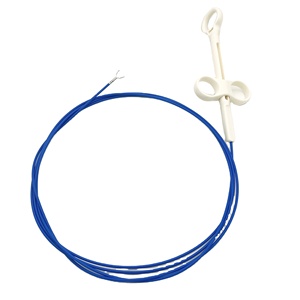
Disposable Endoscopic Hemoclips (135° Claw)
- Material: Medical-Grade Nitinol & SUS316L
- Mechanism: Rotatable 360°, Re-openable
- Jaw Span: 9mm to 16mm Opening Width
- Deployment: Single-Use ETO Sterilized
- Target Clinical Use: GI Bleeding Hemostasis
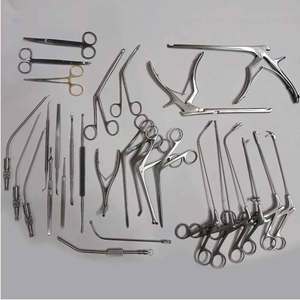
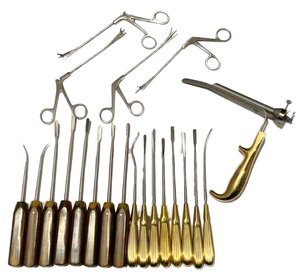
Specialized Endoscopic Sets (FESS / UBE)
- Material: High-Tenacity Surgical Alloy
- Surface Treatment: Satin Non-Glare / Titanium Nitride
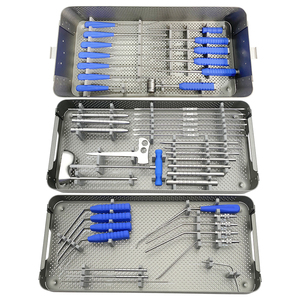
- Configuration: 30-Piece Modular Tray Systems
- Precision: Hand-Grounded Artisanal Cutting Edges
- Target Clinical Use: ENT Sinus & Spine UBE Surgery
As shown in the comparative analysis, material selection directly impacts structural longevity. Cheap alternative metals often experience stress corrosion cracking after repeated exposure to alkaline enzymatic detergents and high-pressure steam sterilization. Our factory utilizes vacuum heat treatment processes that yield a Rockwell Hardness of HRc 48–52 for jaw components, ensuring long-term shape memory and firm tactile feedback.
3. Future Procurement Trends in Global Laparoscopic & Surgical Instrument Sourcing
The global surgical instrument marketplace is undergoing a profound paradigm shift driven by stringent regulatory frameworks, cost-containment pressures in healthcare systems, and rapid technological advancements in minimally invasive surgery. B2B buyers must align their procurement strategies with four key industry trends:
Trend 1: Accelerated Shift toward Polymer Ligation (Hem-o-lok) Systems
While traditional titanium clips remain widely used for small vessel closure, non-absorbable polymer ligation clips have seen explosive growth in renal, colorectal, and gynecological procedures. Polymer clips offer superior radiolucency—eliminating CT and MRI artifacts during post-operative cancer surveillance. Furthermore, their locking mechanism provides a distinct acoustic click and tactile feedback, reassuring surgeons of full closure around vessel bundles up to 16mm in diameter. Supply chain managers are increasingly demanding multi-size polymer appliers (ML, L, XL) engineered with specialized latch grooves that prevent clip displacement prior to firing.
Trend 2: Rigorous Enforcement of EU MDR 2017/745 & Unique Device Identification (UDI)
Regulatory compliance is no longer an afterthought; it is a prerequisite for market entry. The transition from the MDD to the European Union Medical Device Regulation (EU MDR 2017/745) has elevated requirements for clinical evaluation, post-market surveillance, and supply chain traceability. Top Chinese suppliers are investing heavily in automated laser etching technology to apply 2D Data Matrix codes directly onto instrument handles. This enables full device tracking from raw ingot forging to the operating room cleaning workflow.
Trend 3: Hybrid Instrument Ecosystems (Combining Reusable Handles with Single-Use Shafts)
Hospitals are increasingly adopting hybrid instrument strategies to balance environmental sustainability with infection control. Fully disposable laparoscopic instruments generate considerable biohazard waste and recurring expenses, whereas 100% reusable instruments present reprocessing challenges in complex lumens. The emergence of modular, quick-connect clip appliers—featuring a durable ergonomic reusable titanium/stainless handle coupled with a sterile single-use insulated shaft—represents the future equilibrium for hospital purchasing committees.
Trend 4: Rise of Bariatric & Extended-Length Ergonomic Appliers
With obesity rates rising globally, laparoscopic procedures in deep abdominal cavities require extended-length shafts (450mm vs standard 330mm). Factories equipped with advanced deep-hole drilling and precision wire EDM (Electrical Discharge Machining) capabilities are better positioned to supply these specialized, high-margin SKUs to international distributors.
4. Minimally Invasive Product Development & Technological Innovation Trends
The engineering behind laparoscopic ligation tools has progressed rapidly beyond basic mechanical forceps. Leading R&D teams are focusing on micro-mechanical optimizations that directly impact patient outcomes and surgical workflow efficiency.
Automated Multi-Fire Feed Mechanisms
Integrating continuous spring-loaded clip cartridges into a 10mm shaft enables rapid sequential firing of up to 20 clips without withdrawing the instrument from the cannula, drastically shortening intraoperative anesthesia time.
135° Dual-Action Rotatable Gastroenterology Hemoclips
Advanced endoscopic hemoclips now feature dual 135-degree claw angles and 360-degree synchronizable rotation cables. This allows gastroenterologists to accurately target arterial spurts in peptic ulcer bleeding even in challenging anatomical angles such as the duodenal bulb.
Unilateral Biportal Endoscopy (UBE) Integration
In spinal orthopedics, specialized UBE instrument sets are engineered with ultra-narrow profiles and specialized water-jet channels, accommodating high-pressure saline irrigation while ensuring micro-precision ligamentum flavum resection.
Advanced Surface Coatings & Anti-Glare Finish
Applying PVD (Physical Vapor Deposition) ceramic or black nitride coatings eliminates high-intensity reflection under modern 4K Ultra-HD endoscopic cameras, reducing surgeon eye strain and enhancing visual contrast in deep surgical fields.
5. Enterprise Advantages & Manufacturing Rigor
Our manufacturing facility stands out in the global market through a steadfast commitment to artisan hand-finishing combined with computerized high-precision CNC manufacturing. Inheriting over 40 years of metallurgical expertise rooted in historic surgical crafting hubs, we produce over 5,000 instrument SKUs spanning 28 surgical specialties—from general, orthopedic, and neurosurgery to ENT, plastic, and veterinary endoscopy.
Every single product—whether a single-use gastroenterology hemoclip or a 30-piece reusable FESS sinus surgery set—undergoes a rigorous 4-tier quality assurance protocol before export:
- Spectrometric Alloy Verification: X-ray fluorescence analysis verifying exact chromium, nickel, and carbon content in accordance with ASTM F899 standards.
- Dimensional Tolerance Inspection: Micro-laser gauge checks enforcing strict ±0.01mm tolerances across all moving jaw hinges and ratchet locks.
- Occlusion Force Load Testing: Mechanical tension testing verifying uniform clamping force to prevent clip slippage or tissue trauma.
- Autoclave Endurance Protocol: Accelerated 50-cycle steam autoclave testing on production samples to verify zero pitting, oxidation, or surface degradation.
Furthermore, our flexible OEM/ODM contract manufacturing solutions empower global healthcare brands to expand their catalog with zero friction. We offer custom laser branding, custom catalog numbering, bespoke jaw geometry engineering, and tailored sterile packaging solutions designed for turnkey global distribution.