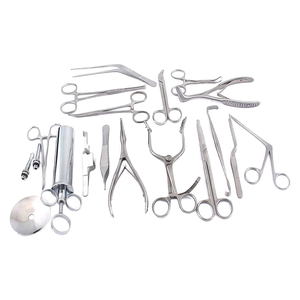
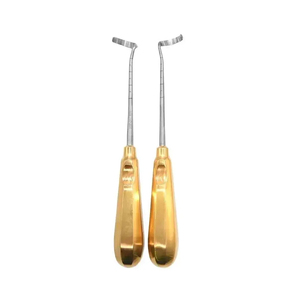
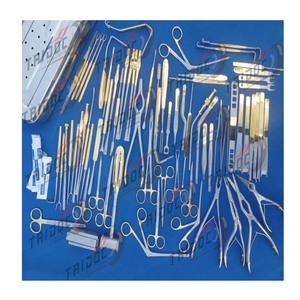
1. Executive Summary & Global Market Landscape
Rhinoplasty remains one of the most intricate, biomechanically demanding, and artfully nuanced procedures in plastic and reconstructive surgery. With global demand for both cosmetic nose reshaping and functional septorhinoplasty surging across North America, Europe, Asia-Pacific, and the Middle East, surgical facilities are under increasing pressure to standardize their operating rooms with ultra-precision instrumentation.
According to recent medical device procurement benchmark studies, the global rhinoplasty instruments market is expanding at a CAGR of 6.8%. Driven by advancements in Preservation Rhinoplasty, Structural Cartilage Grafting, and Piezoelectric vs. Precision Manual Osteotomy, procurement managers, hospital directors, and medical equipment distributors are shifting away from generic hand tools toward specialized, ergonomically balanced, high-durability instrument sets forged from premium medical-grade stainless steel.
Information Gain Insight: The efficacy of a rhinoplasty outcome relies heavily on micro-millimeter precision. Sub-standard metallurgical forging leads to jaw misalignment in nasal scissors, burring on osteotome edges, and premature pitting during autoclave sterilization cycles. High-precision manufacturing in hubs like Sialkot, Pakistan—integrating German & Japanese stainless steel—offers an optimal balance of cost-efficiency and clinical reliability.
2. Metallurgy & Manufacturing Engineering Standards
To evaluate top-tier rhinoplasty instrument manufacturers, procurement directors must understand the technical material specifications required for long-term surgical performance. Not all stainless steels perform equally under repeating mechanical stress and harsh chemical sterilization.
AISI 420 Martensitic Steel
Utilized primarily for cutting tools, nasal osteotomes, and cartilage chisels. Offers extreme hardness (50-54 HRC), exceptional edge retention, and high tensile strength.
Tungsten Carbide (TC) Gold Handles
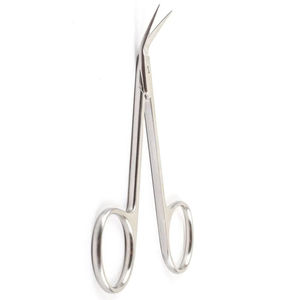
Tungsten carbide inserts silver-soldered onto needle holders and nasal scissors deliver up to 5x longer cutting sharp life and slip-free suture control in dense nasal tissues.
Passivation & Electropolishing
Chemical dipping processes remove free iron from instrument surfaces, creating a chrome-oxide protective passive layer that prevents rust and pitting during steam autoclaving.
When selecting a manufacturer or exporter, ensure their quality management system includes chemical spectro-analysis of raw metal billets, ultrasonic cleaning prior to assembly, hand-honing by master artisans, and 100% visual and tactile calibration checks under magnification.
3. Comparative Analysis: Top 10 Rhinoplasty Instruments Manufacturers & Exporters
The global supply chain for facial plastic surgery instruments comprises specialized manufacturing clusters, OEM brand owners, and direct-factory exporters. Below is an objective benchmark matrix evaluating the world's leading procurement hubs and manufacturing centers based on material sourcing, quality certifications, OEM capability, and total cost of ownership (TCO).
| Manufacturer / Hub Category |
Primary Region |
Key Specialty |
Quality Standards |
B2B Cost Efficiency |
| Rigor Instruments (Pakistani Artisan Hub) |
Sialkot, Pakistan |
Custom Rhinoplasty Sets, Cartilage Tools, OEM/ODM |
ISO 13485 / CE / FDA |
Direct Factory High Value |
| Tuttlingen Precision Manufacturers |
Baden-Württemberg, Germany |
Legacy Ultra-Premium Single Instruments |
ISO 13485 / CE Marked |
High Premium Premium Pricing |
| US Medical Supply OEMs |
North America |
Branded Surgical Kits & Distribution |
FDA Registered / ISO 13485 |
High Overhead Distribution Costs |
| Japanese Precision Tooling Facilities |
Tokyo / Seki, Japan |
Micro-Scissors & Fine Dissecting Tooling |
JIS / ISO 13485 Compliant |
Moderate to High Premium |
| European Specialized Exporters |
Switzerland / Italy |
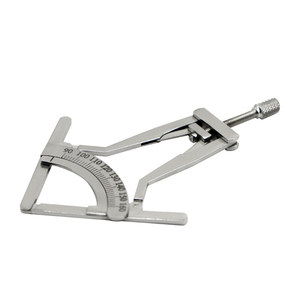
Titanium & Micro-Rhinoplasty Calipers |
CE / ISO Certified |
High Tier Luxury Pricing |
| Sialkot OEM Export Group |
Pakistan Hub |
Wholesale Bulk Surgical Tool Manufacturing |
ISO 9001:2015 / ISO 13485 |
Optimal B2B Wholesale |
| Asian Regional Distributors |
Singapore / HK |
Multi-Brand Sourcing & Logistics Hubs |
Regional ISO Compliance |
Middleman Margin Added |
| Latin American Surgical Distributors |
Brazil / Mexico |
Cosmetic Kit Assembly & Regional Supply |
ANVISA / ISO Compliant |
Import Tariff Inflated |
| Middle East Supply Specialists |
UAE / Qatar |
Turnkey Hospital Surgical Instrument Supply |
MoPH / ISO Compliance |
Imported Finished Goods |
| International Private-Label Suppliers |
Global Networks |
Custom Branded Surgical Kits with Laser Engraving |
ISO 13485 Certified |
Scalable OEM Pricing |
4. Key Procurement Trends & Innovations (2026–2030)
As aesthetic surgery methodologies evolve toward minimally invasive techniques, procurement departments must adjust their purchasing specifications. Below are four key trends shaping the future of nasal surgery tooling:
A. Preservation Rhinoplasty Micro-Tooling
Modern surgeons are moving away from aggressive bony cap removal toward dorsal preservation. This requires ultra-fine micro-osteotomes (width 2mm to 3mm) equipped with lateral guards, smooth-edged rasps with diamond-like carbon (DLC) coating, and specialized cartilaginous elevate instruments that minimize soft tissue disruption.
B. Dedicated Costal Cartilage Harvesting Kits
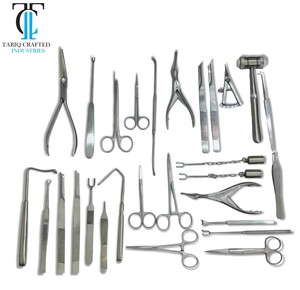
Revision rhinoplasty frequently requires rib cartilage autografts. Specialized 6-piece and 12-piece costal cartilage instrument sets—including curved cartilage gouges, cartilage slicers, dermatomes, and dual-action fiber-optic retractors—have become essential additions to standard plastic surgery operating rooms.
C. Ergonomic Weight-Balanced Handles & Matte Finish Anti-Glare
Operating room headlights and surgical microscope illumination can cause intense reflections on polished stainless steel, straining surgeon vision. Leading exporters now apply bead-blasted matte or satin finishes alongside hollow-core ergonomic handles to reduce fatigue during extended surgical procedures.
D. Comprehensive Modular Sterilization Trays
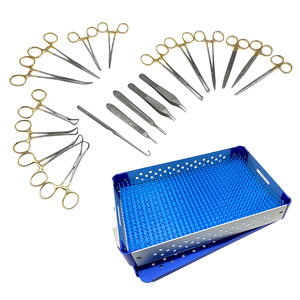
B2B hospital buyers increasingly prefer full rhinoplasty kits pre-fitted into anodized aluminum or medical-grade polymer sterilization trays with silicone insert clamps. This protects delicate instrument tips during transit, washing, and steam autoclaving cycles.
5. Enterprise Excellence: Rigor Instruments & Sialkot Manufacturing Heritage
Rooted in Sialkot, Pakistan—the world's renowned epicentre for high-grade surgical instrument craftsmanship—Rigor Instruments brings over 40 years of family-owned manufacturing tradition combined with modern aerospace-grade CNC machining technology.
Why Global Buyers Partner with Rigor Instruments
Providing international medical distributors, private cosmetic surgery clinics, and government health institutions with direct factory pricing without sacrificing clinical quality.
ISO 13485 & CE Compliance
Operating under certified Quality Management Systems compliant with ISO 9001:2015 and ISO 13485, with full CE marking and FDA listing readiness for smooth global custom clearance.
German & Japanese Raw Steel
Forged exclusively from imported AISI 410/420 stainless steel and tungsten carbide blocks to guarantee rust-free longevity, optimal sharpness, and heat tolerance.
OEM & ODM Private Labeling
Full custom manufacturing capability including custom jaw shapes, custom dimensions, laser logo engraving, and bespoke branded packaging for healthcare brands.
Direct Export to 50+ Nations
In-house export documentation, secure shockproof shipping boxes, and reliable worldwide freight logistics serving hospitals and distributors globally.
6. Comprehensive B2B Procurement FAQ
Addressing the critical technical, regulatory, and commercial inquiries raised by international medical equipment buyers and hospital supply chain officers:
What steel grades are recommended for rhinoplasty instruments?
We recommend AISI 420 martensitic stainless steel for cutting tools (scissors, osteotomes, rasps) due to its high hardness and edge retention. Non-cutting retractor handles and forceps frequently utilize AISI 304 or 410 steel for optimal flexibility and corrosion resistance.
Are instruments fully autoclavable and reusable?
Yes. All manual surgical instruments manufactured by certified facilities undergo passivation and electropolishing, making them fully compliant with standard steam autoclaving (134°C / 273°F) and chemical cold sterilization protocols without rusting or degrading.
Can we customize a 82-piece major rhinoplasty kit with our brand logo?
Absolutley. Direct manufacturers offer OEM laser marking capabilities, allowing healthcare distributors to etch catalog numbers, company logos, and lot numbers directly onto the instrument shanks and sterilization containers.
What is the difference between manual osteotomes and piezo tips?
While piezoelectric devices use ultrasonic vibration for bone cutting, high-precision manual osteotomes remain the preferred standard for tactile feedback, rapid execution, and cost efficiency in nasal bridge reshaping and lateral osteotomies.
How do TC Gold Handle instruments benefit plastic surgeons?
Gold-plated ring handles denote Tungsten Carbide (TC) jaws or cutting edges. TC inserts provide extreme wear resistance, keeping scissors sharp up to five times longer than standard steel and preventing needle slippage during micro-suturing.
What is the typical lead time for bulk export orders?
Standard catalog orders usually dispatch within 2 to 3 weeks. Custom OEM orders requiring bespoke forging dies or unique laser etching take approximately 4 to 6 weeks depending on quantity and tray configuration.