Featured Precision Surgical Instruments Catalog
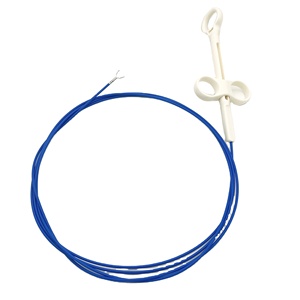
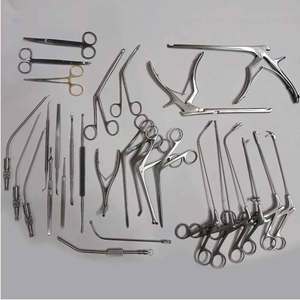
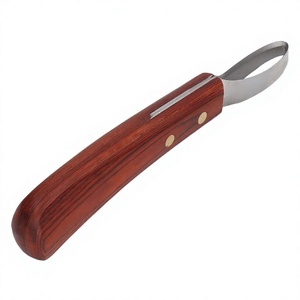
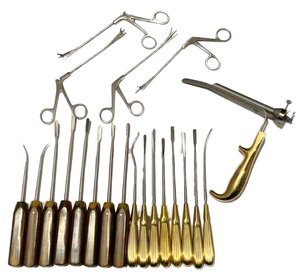
Factory-direct OEM/ODM surgical tools engineered from premium stainless steel grades. Explore our top recommended endoscopic, sinus, and thoracic-compatible surgical instruments.
40+
Years Manufacturing Heritage
5,000+
Specialized Surgical Tools
28
Medical Specialties Covered
Executive Overview: Strategic Sourcing of Thoracic & Endoscopic Instruments
In modern cardiothoracic and minimally invasive surgical suites, the operational efficacy of surgical procedures hinges directly on instrument geometry, metallurgic purity, and ergonomic stability. As surgical techniques transition rapidly from open thoracotomy toward Video-Assisted Thoracoscopic Surgery (VATS) and Robot-Assisted Thoracic Surgery (RATS), hospital procurement directors and medical equipment brand owners require OEM/ODM manufacturing partners capable of delivering microscopic precision alongside rigorous international compliance.
Operating out of historic manufacturing hubs with over 40 years of specialized metallurgical craftsmanship, our manufacturing facility (Rigor Instruments) serves as a cornerstone direct-factory source for healthcare organizations across 50+ countries. Combining second-generation hand-finishing mastery with automated 5-axis CNC machining, our enterprise produces over 5,000 surgical instruments spanning 28 clinical specialties—strictly operating within ISO 9001:2015, ISO 13485:2016, CE Mark, and US FDA listing parameters.
This comprehensive industry white paper details the engineering principles, material selection metrics, global regulatory landscapes, and procurement trends governing thoracic surgical instruments, offering procurement officers actionable information gain for strategic vendor evaluation.
Metallurgical Standards & Mechanical Integrity in Thoracic Tooling
Thoracic surgical instruments encounter continuous physical stress during rib resection, sternal retractor placement, bronchial clamping, and pulmonary tissue manipulation. Consequently, material selection represents the most vital baseline of surgical safety and instrument durability.
1. Surgical Stainless Steel Selection (AISI 420, 440A & German Martensitic Alloys)
Our factory utilizes premium German and Japanese surgical stainless steel stock, predominantly high-grade Martensitic steel (AISI 420 / DIN 1.4021) and Austenitic steel (AISI 304). Martensitic stainless steel contains higher carbon content (0.15% to 0.40%), allowing heat treatment up to a Rockwell Hardness of HRC 48-54. This hardness profile is indispensable for cutting edges such as Finochietto rib shears, Sauerbruch bone rongeurs, and Metzenbaum scissors, ensuring long-term edge retention without micro-chipping during high-load bone cutting.
2. Corrosion Resistance, Passivation, and Electropolishing
Repeated exposure to biological fluids, enzymatic detergents, and high-temperature steam sterilization (autoclaving at 134°C) demands superior corrosion defense. Every instrument manufactured in our facility undergoes chemical passivation in accordance with ASTM A967/ISO 16061 standards. The process removes free iron particles from the instrument surface, forming an invisible, self-healing Chromium Oxide (Cr₂O₃) protective film. Furthermore, specialized PVD (Physical Vapor Deposition) black ceramic coatings are applied to endoscopic graspers and VATS instruments to eliminate optical glare under high-intensity operating room lighting.
Material Properties & Application Matrix
| Steel Grade Standard |
Hardness Rating |
Primary Clinical Application |
Key Performance Attribute |
| AISI 420B / DIN 1.4028 |
HRC 50 - 54 |
Rib Shears, Bone Rongeurs, Scissors |
High yield strength, sharp cutting retention |
| AISI 410 / DIN 1.4006 |
HRC 42 - 46 |
DeBakey Forceps, Haemostatic Clamps |
Balanced flexibility, fatigue resistance |
| AISI 304 / Austenitic |
HRC 25 - 30 |
Chest Retractor Frames, Suction Tubes |
Maximum corrosion resistance, non-magnetic |
| Tungsten Carbide (TC) Inlays |
HRC 68 - 72 |
Needle Holders, Micro-Scissors Jaws |
Extreme wear resistance, 5x service life extension |
End-to-End OEM/ODM Contract Manufacturing Lifecycle
Building custom medical devices requires rigorous quality verification at every phase of contract manufacturing. As an established OEM/ODM factory partner, we transform technical drawings, CAD files, or physical prototypes into standardized, mass-producible, sterile-ready medical devices.
1. CAD/CAM Prototyping
3D SolidWorks drafting, Finite Element Analysis (FEA) for tension loads, and rapid prototype forging for clinical ergonomics testing.
2. Drop Forging & Machining
Hot drop-forging utilizing heavy friction presses, followed by 5-axis CNC wire-EDM cutting to achieve micro-tolerances within ±0.01mm.
3. Vacuum Heat Treatment
Computerized vacuum furnace heat treatment ensuring uniform molecular hardness, preventing structural embrittlement.
4. Artisan Hand Crafting
Second-generation craftsmen hand-set box locks, carefully align forceps tips, and hone scissors edges under high magnification.
5. Laser Engraving & UDI
Custom private-label logo laser marking, catalog coding, and GS1-compliant Unique Device Identification (UDI) matrix etching.
6. Cleanroom Passivation & QC
Ultrasonic cleaning, citric/nitric passivation, water-break testing, and 100% manual inspection prior to final export packaging.
Global Industry Development Trends in Thoracic Instrumentation
The global market for thoracic surgical instruments is experiencing a pivotal transformation driven by advancements in minimally invasive techniques, surgical ergonomics, and global healthcare regulatory harmonization. Sourcing managers must align their supply chains with the following key technology vectors:
1. The Shift Toward Single-Port VATS & Micro-Invasive Tooling
Traditional open thoracotomy procedures are increasingly replaced by Uniportal VATS, which utilizes a single 2-3 cm intercostal incision for scope and double-articulating endoscopic forceps. This clinical evolution requires instruments designed with curved shafts, narrow profiles, and dual-pivot hinges that provide high tactile feedback while avoiding intercostal nerve compression. OEM production lines must accommodate complex mechanical linkages capable of transmitting torque smoothly across flexible shafts.
2. Integration of Modular and Hybrid Instrument Systems
Hospitals are actively seeking modular surgical instrument kits that reduce tray weights and simplify sterilization cycles. By pairing reusable ergonomic handles made from Peek or Stainless Steel with detachable disposable tips (such as rotatable endoscopic hemoclips or articulating scissors), healthcare providers lower total cost of ownership (TCO) while maintaining sterile cutting precision.
3. Sustainability, Circular Sourcing & Reprocessing Optimization
With carbon footprint metrics entering public hospital tender requirements, reusable surgical steel instruments are undergoing design re-engineering for enhanced cleaning validation. Smooth box-lock joints, flushable lumened suction catheters, and quick-disassembly instruments reduce protein accumulation and accelerate central sterile supply department (CSSD) turnaround times.
Future Procurement Trends: B2B Sourcing Strategies (2026–2030)
Navigating international medical supply chains requires strategic foresight beyond simple per-unit pricing. Global distributors and hospital networks are refining their procurement methodologies based on regulatory strictures and supply chain resilience.
EU MDR (2017/745) Compliance
Strict verification of technical documentation, clinical evaluation reports (CER), and Post-Market Surveillance (PMS) systems is now compulsory for European market access.
Strategic Nearshoring & Buffer Inventories
Distributors are moving away from zero-inventory models toward holding 3-6 months of safety stock at key logistics hubs to cushion against global freight disruptions.
Direct Factory Contract Manufacturing
Eliminating intermediate trading companies to work directly with certified OEM factories guarantees material traceability, lower lead times, and flexible batch customization.
Why Global Medical Brands Partner With Our Manufacturing Facility
With over four decades of dedicated metallurgical engineering, our Sialkot-based production complex merges legacy craftsmanship with modern automated quality management. We offer global buyers an uncompromised competitive edge in medical manufacturing:
Certified Quality System (ISO 13485 & ISO 9001)
Fully compliant with ISO 13485:2016 and ISO 9001:2015 quality standards, with complete material trace certificates for every heat lot.
CE Mark & US FDA Registered
All Class I and Class II surgical tools carry valid CE registration and US FDA listing, clearing frictionless import customs globally.
5,000+ Instrument Catalog Across 28 Specialties
From complex FESS sinus sets and UBE spine tools to specialized thoracic rib spreaders, our mold inventory covers full hospital demand.
Complete OEM/ODM Private Label Flexibility
Laser marking of custom logos, custom catalog reference numbers, bespoke tray packaging, and custom surface finishing options.
100% Inspection & Autoclave Verification
Every instrument undergoes manual tip alignment, tension testing, ultrasonic cleaning, and autoclave cycle testing prior to export dispatch.
Global Delivery to 50+ Countries
Established air/sea freight logistics supporting global healthcare networks, wholesale distributors, and government tender buyers.
Strategic Sourcing FAQ for Medical Procurement Officers
Answers to critical questions encountered by purchasing managers, brand owners, and hospital tender committees when evaluating OEM surgical factories.
Q1: What steel raw materials are utilized for thoracic and endoscopic surgical instruments?
We utilize medical-grade German and Japanese stainless steel alloys, primarily Martensitic AISI 420 (DIN 1.4021/1.4028) for cutting and clamping tools requiring heat-treated hardness, AISI 440 for ultra-sharp dissecting edges, and Austenitic AISI 304 for non-cutting structural components like retractor frames and lumened suction tubes. All steel batches are delivered with mill test certificates verifying chemical composition.
Q2: How does your factory handle OEM private labeling and custom logo branding?
We offer end-to-end OEM customization. Utilizing high-precision fiber laser marking systems, we engrave customer logos, unique part numbers, batch codes, and Data Matrix UDI barcodes directly onto the steel surface without breaching the passivated anti-corrosion layer. Custom color-coded handles and branded packaging boxes are also fully supported.
Q3: What quality control certifications do your surgical tools possess for export?
Our manufacturing facility operates under an auditing quality management system certified to ISO 13485:2016 and ISO 9001:2015. Our medical devices meet the safety standards of the European Medical Device Regulation (EU MDR 2017/745) carrying the CE Mark, and are listed with the United States FDA, enabling compliant commercial distribution across North America, Europe, the Middle East, and Asia-Pacific.
Q4: What is the Minimum Order Quantity (MOQ) for custom contract manufacturing?
For standard catalog items, we offer flexible low MOQs starting from 10–25 pieces per SKU to accommodate trial orders and distributor samples. For fully custom ODM instruments requiring new forging dies or CNC programming, MOQs are evaluated based on design complexity, typically ranging between 50 to 100 pieces per batch.
Q5: How do you guarantee corrosion resistance and steam sterilization durability?
All finished tools undergo a multi-stage automated cleaning and chemical passivation process compliant with ASTM A967. Every production batch undergoes rigorous quality assurance testing, including the Boiling Water Test (ASTM F1089) to verify freedom from iron contamination, and copper sulfate testing to guarantee zero surface corrosion after repeated 134°C autoclave cycles.
Q6: Can your factory replicate instruments from physical samples or technical drawings?
Yes. Our reverse-engineering team utilizes high-precision optical comparators and 3D laser scanners to create CAD schematics directly from customer-supplied physical samples. We provide pre-production prototype samples for clinical evaluation and surgeon approval prior to initiating full-scale manufacturing runs.
Q7: What are the standard production lead times for international wholesale orders?
Standard inventory catalog items ship within 15–20 business days. Custom OEM orders requiring forging, machining, heat treatment, and specialized hand-finishing generally feature a production cycle of 30–45 days, depending on batch volume and packaging specifications. Express air freight options are available for urgent hospital tenders.
Q8: How do you support government tenders and hospital procurement compliance?
We provide full tender documentation packages, including Declarations of Conformity (DoC), ISO certificates, Certificate of Origin (COO), material chemical analysis reports, and sterilizability validation documentation required by international health authorities and hospital procurement boards.
Partner With a Certified Surgical Instruments Manufacturer Today
Whether you require private-label manufacturing, custom surgical tool prototyping, or direct wholesale pricing for hospital tenders, our engineering team is ready to assist your organization.
Inquire Now