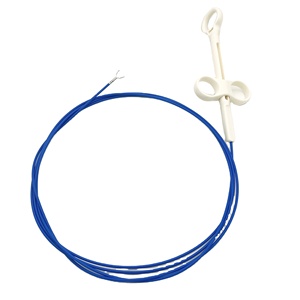
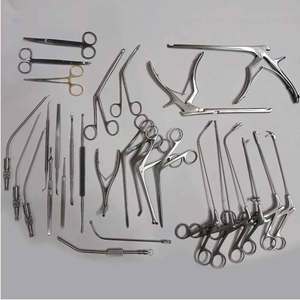
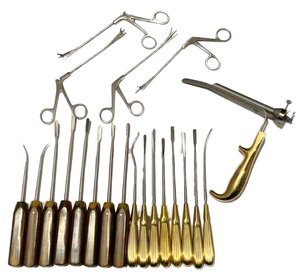
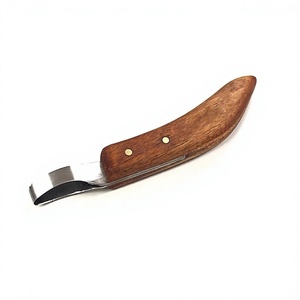
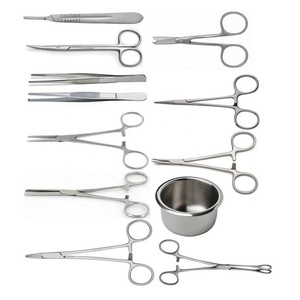
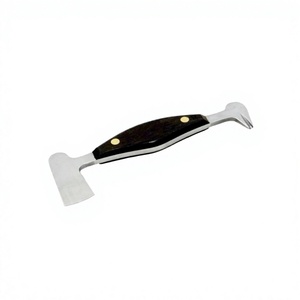
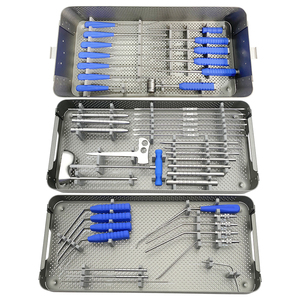
In modern spinal, neurosurgical, and orthopedic surgical procedures, surgical rongeurs (including Kerrison punches, Luer-Friedman, Beyer, and Stille-Luer rongeurs) represent the pinnacle of manual hand-instrument engineering. Designed to gouge, excise, and cut tough osseous tissue and cartilage near delicate neural or vascular structures, the margin for mechanical deviation is zero. As an established OEM/ODM surgical rongeur supplier and exporter, Rigor Surgical Instruments combines four decades of forging tradition in Sialkot, Pakistan, with advanced CNC micro-machining to produce instruments that exceed international clinical requirements.
1. Metallurgical Composition and Hardness Optimization
The mechanical performance of a surgical rongeur relies directly on the chemical composition and thermal treatment of its steel substrate. Surgical-grade rongeurs must maintain sharp cutting edges under severe mechanical shear forces while withstanding thousands of repetitive autoclave sterilization cycles without suffering stress-corrosion cracking or edge embrittlement.
At Rigor Instruments, we source forged blanks manufactured exclusively from premium German (DIN 1.4117 / X38CrMoV15) and Japanese (SUS 420J2 and SUS 440C) martensitic stainless steels. Our proprietary vacuum heat treatment protocol achieves precise Rockwell Hardness (HRC) zoning across the instrument body:
- Cutting Jaws & Bite Edges: Hardened to HRC 54–58 to prevent micro-chipping and preserve keen razor sharpness over prolonged clinical usage.
- Main Shaft & Fulcrum Box Joint: Tempered to HRC 44–48 to ensure high structural tensile strength and flexibility without brittle fracture under high levered forces.
- Spring Mechanism & Handles: Engineered from 301/304 stainless steel or specialized spring alloys to guarantee consistent tactile feedback and mechanical recoil.
Information Gain Insight (E-E-A-T): Traditional 300-series stainless steel cannot achieve the cutting edge hardness required for dense cortical bone excision. True surgical rongeurs utilize high-carbon martensitic steel with molybdenum and vanadium additives, followed by double-tempering to prevent micro-pitting under steam sterilization.
2. Kinetic Force Transmission & Jaw Geometry Mechanics
Surgical rongeurs are classified mechanically into single-action and double-action lever systems, as well as specialized Kerrison sliding-shaft punches. The engineering goal is to maximize force conversion ratio from surgeon grip to cutting jaw while maintaining ergonomic comfort.
- Single-Action Mechanisms: Feature a single fulcrum pin. Ideal for delicate micro-neurosurgical applications (e.g., Lempert or micro-Luer rongeurs) where precise tactile sensitivity is paramount.
- Double-Action Mechanisms: Incorporate dual pivot joints that double the lever advantage. This enables surgeons to exert up to 300% greater cutting pressure on thick bone structures (such as the iliac crest or femur) with minimal hand strain.
- Kerrison Punch Mechanics: Utilize a fixed lower footplate and a sliding upper jaw driven by a precision box-joint lever. Jaw bite angles are meticulously machined at 40° (up-biting or down-biting), 90° standard, or forward-slanting configurations to accommodate precise anatomical access in spinal laminectomies.
The global market for orthopedic and spinal surgical instruments is undergoing a rapid evolution driven by minimally invasive surgical (MIS) techniques, heightened regulatory scrutiny under the EU Medical Device Regulation (MDR 2017/745), and the demand for reusable instruments that feature simplified decontamination pathways.
1. Rise of Detachable Clean-Out & Take-Apart Kerrison Rongeurs
Hospital Central Sterile Supply Departments (CSSD) face increasing challenges when cleaning traditional fixed Kerrison punches. Bio-burden accumulation inside the internal sliding channel of a non-detachable punch can result in cross-contamination risk or premature mechanical binding. Future procurement contracts increasingly mandate Take-Apart (Detachable) Kerrison Rongeurs that allow sterile processing technicians to disassemble the sliding top rail without tools in seconds, exposing 100% of the internal shaft to enzymatic ultrasonic washing and steam exposure.
2. Diamond-Like Carbon (DLC) & Ceramic Surface Thin-Films
While standard stainless steel instruments perform reliably, surgical teams performing high-volume endoscopic spinal procedures (such as Unilateral Biportal Endoscopy, or UBE) report significant advantages when using friction-reducing ceramic thin-film coatings. DLC coatings reduce the coefficient of friction on sliding Kerrison rails by up to 70%, yielding smoother cutting motion, reduced surgeon thumb fatigue, and extreme abrasion resistance that extends cutting edge sharpness up to 300% longer than uncoated steel.
3. Sustainability, Circular Sourcing, and Total Cost of Ownership (TCO)
While single-use disposable items gained temporary momentum, hospitals worldwide are shifting back toward high-durability, reusable surgical instruments to achieve carbon reduction targets and reduce clinical waste volume. High-quality reusable rongeurs manufactured from premium forged German steel deliver a dramatically lower Total Cost of Ownership (TCO) per procedure over a 10-year lifespan when compared to single-use alternatives, provided they undergo periodic maintenance, re-sharpening, and proper passivation.