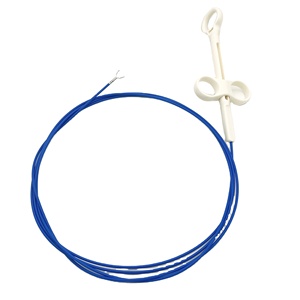
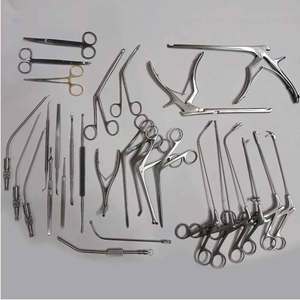
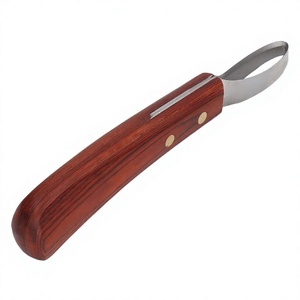
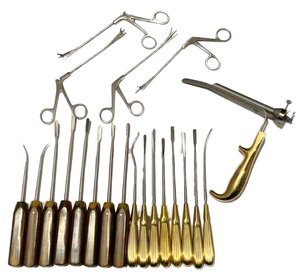
1. Executive Summary & Industry Landscape: OEM/ODM Monopolar Forceps
In modern minimally invasive surgery (MIS), laparoscopy, gastroenterology, and open surgical procedures, monopolar electrosurgical forceps represent a critical cornerstone of surgical intervention. Operating at high radiofrequency (RF) currents, monopolar instruments deliver controlled thermal energy directly through an active electrode tip to achieve targeted tissue cutting, fulguration, and desiccation. As surgical techniques evolve toward micro-dissection and tissue preservation, hospital procurement teams, original equipment manufacturers (OEM), and medical device distributors demand unprecedented precision, thermal insulation integrity, and strict adherence to international safety metrics.
This technical whitepaper serves as an exhaustive guide for international B2B buyers evaluating OEM/ODM Monopolar Forceps Manufacturers and Suppliers. Sourced from over four decades of precision metallurgical engineering in Sialkot, Pakistan—the global epicenter for surgical metalwork—our manufacturing framework integrates traditional forging craftsmanship with advanced CNC automated milling, micro-plasma welding, and high-voltage dielectric fluoropolymer coating technologies.
Information Gain Insight: Unlike standard bipolar forceps which pass electrical current exclusively between two adjacent tips, monopolar forceps channel high-frequency electrical energy from the active tip through the patient’s body to a remotely placed neutral return electrode pad. Consequently, dielectric breakdown resistance across the instrument shaft is the single most critical safety parameter preventing accidental lateral thermal burns or stray voltage channeling.
2. Technical Architecture & Engineering Fundamentals of Monopolar Forceps
To evaluate a prospective OEM partner, procurement officers must understand the mechanical and electrical anatomy of high-performance monopolar forceps. Every surgical monopolar device consists of four core technical sub-assemblies:
1. Working Tip & Jaw Geometry
Precision-machined from German AISI 420 or Japanese SUS 440C stainless steel. Available in micro-blade, hook, spatula, tissue-grasping, and fenestrated configurations. Micro-toothed serrations are micro-milled to guarantee non-slip tissue grasping without shear trauma.
2. Dielectric Insulation Layer
Coated with medical-grade PTFE, polyolefin, or ceramic heat-shrink tubing. High-frequency monopolar currents require insulation capable of enduring peak voltages exceeding 3,000V to 5,000V AC without dielectric breakdown or micro-fissuring after multiple autoclave cycles.
3. Ergonomic Handle & Connector Pin
Constructed from lightweight, autoclavable PEEK, RADEL, or reinforced polyaramid polymers. Incorporates universal 4mm male pin connectors or gold-plated standard monopolar banana connectors compatible with all major electrosurgical generator units (ESUs).
Electrosurgical Physics: Thermal Dispersion vs. Current Density
The efficacy of monopolar electrosurgical forceps relies on localized current density. When high-frequency current is delivered to a narrow active tip, localized electrical impedance generates rapid intracellular thermal elevation. This thermal reaction vaporizes cellular moisture, causing precise tissue cutting. Conversely, applying lower current density over broader jaw surfaces produces thermal coagulation and hemostasis. OEM custom design must balance tip contact surface area against the electrosurgical generator's RF output curve to minimize lateral thermal spread to adjacent healthy vascular structures.
3. Comprehensive Material & Technical Specification Matrix
Selecting appropriate raw materials directly dictates surgical durability, corrosion resistance, and bio-compatibility under extreme sterilization environments. Below is a comparative specification matrix used by our contract manufacturing department:
| Component Part |
Material Grade |
Standard Specification |
Key Operational Benefit |
Testing & Compliance Metric |
| Active Jaw Tip |
AISI 420 / SUS 440C Stainless Steel |
ASTM F899 / ISO 7153-1 |
High hardness (Rockwell C 50-54), superior edge retention, corrosion resistant |
Passivation test per ASTM A967, Tensile & Hardness Verification |
| Shaft Insulation |
FEP / PTFE Fluoropolymer Shrink Tubing |
Medical Class VI Polyolefin |
Dielectric strength > 20 kV/mm, heat resistance up to 200°C, zero flaking |
100% Spark Testing at 5,000V AC, ISO 60601-2-2 Dielectric Proof Test |
| Handle Assembly |
Polyphenylsulfone (RADEL®) / PEEK |
ISO 10993 Bio-compatible |
Autoclave endurance > 500 cycles at 134°C, chemical resistance to enzymatic detergents |
Cytotoxicity testing, Gamma & Autoclave Steam Integrity Verification |
| Terminal Pin Connector |
Brass with Hard Gold Plating (0.5µm) |
DIN 42802 / US Standard 4mm |
Low contact resistance (< 5 mΩ), zero oxidation, seamless ESU coupling |
Salt spray corrosion test (96 hrs per ASTM B117), Contact Resistance Test |
| Internal Drive Wire |
316L High-Tensile Stainless Wire |
ASTM F138 |
Zero elongation under tensile load, smooth mechanical articulation |
Cyclic fatigue test (> 50,000 actuation cycles) |
4. OEM/ODM Contract Manufacturing Architecture & Capabilities
As a leading surgical instrument manufacturer in Sialkot, Pakistan, Rigor Instruments provides end-to-end OEM (Original Equipment Manufacturing) and ODM (Original Design Manufacturing) solutions. We transition conceptual napkin sketches and surgeon feedback into mass-producible, regulatory-compliant surgical instruments.
Step-by-Step OEM/ODM Manufacturing Pipeline
Our contract manufacturing methodology follows a rigid 6-stage engineering protocol:
- Stage 1: 3D CAD Modeling & FEA Simulation: Engineering initial 3D models using SolidWorks. Finite Element Analysis (FEA) is conducted to evaluate stress distribution along force points and electrical field distribution across insulation boundaries.
- Stage 2: Precision Tooling & CNC Machining: Utilizing 5-axis CNC Swiss lathes and Wire EDM (Electrical Discharge Machining) to produce complex jaw micro-serrations and handle mechanisms with tolerances within ±0.005mm.
- Stage 3: Metallurgical Heat Treatment & Passivation: Vacuum heat treatment ensures optimal martensitic grain structures, followed by ultrasonic cleaning and nitric acid passivation to establish an impermeable chromium oxide protective film.
- Stage 4: Automated Insulation Application: Precision heat-shrink application of fluoropolymer insulation sleeves using temperature-controlled convection chambers, eliminating micro-bubbles and structural thins.
- Stage 5: High-Voltage Dielectric Spark Testing: 100% inline testing where every insulated shaft passes through a high-voltage spark ring set to 5,000V AC to detect micro-pinholes or insulation voids.
- Stage 6: Laser Marking, Cleanroom Packaging & Sterilization: Fiber-laser etching of OEM brand logos, SKU catalog numbers, UDI (Unique Device Identification) barcodes, and cleanroom pouch sealing (ISO Class 7 cleanrooms).
5. Global Procurement Trends & Technological Innovations (2026–2030)
Procurement teams for hospital networks and device distributors must anticipate technological shifts shaping the monopolar electrosurgery market over the next decade. Key industry trends include:
Trend 1: Single-Use Disposable vs. High-Cycle Reusable Monopolar Forceps
While reusable surgical instruments offer historical cost amortizations, cross-contamination concerns, re-sterilization costs, and insulation degradation over repeated autoclave cycles have driven exponential growth in single-use disposable monopolar instruments. Hospital procurement analysis demonstrates that single-use endoscopic forceps remove hospital reprocessing overhead, eliminate central sterile supply department (CSSD) validation costs, and guarantee 100% pristine dielectric insulation for every surgical procedure.
Trend 2: Integrated Smoke Evacuation Monopolar Forceps
Surgical smoke generated during monopolar tissue electrosurgery contains toxic volatile organic compounds (VOCs), bio-aerosols, and cellular debris. Future-ready OEM monopolar forceps are increasingly incorporating low-profile smoke evacuation channels into the instrument handle or shaft, allowing immediate capture of surgical plume at the incision site without obstructing surgeon line-of-sight.
Trend 3: Smart Generator Recognition & RFID Integration
Next-generation electrosurgical units utilize RFID-enabled monopolar handpieces to auto-set power parameters, track usage counts, and instantly alert surgical staff if an instrument has reached its maximum validated sterilization cycle life.
6. Quality Assurance, Regulatory Compliance & E-E-A-T Enterprise Credentials
When sourcing surgical instrumentation internationally, establishing Experience, Expertise, Authoritativeness, and Trustworthiness (E-E-A-T) is paramount to risk mitigation. Rigor Instruments operates from Sialkot, Pakistan—a region renowned globally for its surgical instrument craft since the early 20th century. Our facility merges heritage metalworking mastery with modern ISO-certified quality management systems.
Why International Buyers Partner with Rigor Instruments
Over 40 years of precision surgical instrument engineering, supplying healthcare distributors across 50+ nations.
ISO 13485:2016 & ISO 9001 Certified
Full compliance with international medical device quality systems for manufacturing, design, and assembly.
CE Mark & FDA Compliance
Full technical documentation, batch traceability, and CE conformity declaration for smooth European and US regulatory entry.
German & Japanese Stainless Steel
Forged strictly using raw steel imported from certified mills in Germany and Japan for guaranteed corrosion and edge performance.
Factory Direct OEM Flexibility
Low MOQs for custom designs, rapid sample prototyping (14 days), custom packaging, laser etching, and private-label support.
7. Frequently Asked Questions (FAQ) for Sourcing Managers
Below are detailed answers to common technical and commercial queries raised by medical device buyers and OEM clients:
What is the dielectric insulation rating for your monopolar forceps shafts?
Our monopolar shafts are insulated with high-grade fluoropolymer (PTFE/FEP) sleeves rated to withstand electrical potentials up to 5,000V AC. Every single shaft undergoes 100% inline high-voltage spark testing prior to final assembly to ensure zero pinhole defects.
Can you produce custom jaw profiles according to proprietary surgeon drawings?
Yes. Our ODM engineering department works directly with 3D CAD step files, physical samples, or detailed technical drawings. We manufacture custom tooling in-house using 5-axis CNC machining and wire EDM to replicate complex jaw geometries with tolerances within ±0.005mm.
What is the Minimum Order Quantity (MOQ) for custom private-label OEM orders?
Our standard OEM MOQ starts at just 50 units for custom-engraved standard catalog items, and 100 units for fully bespoke instrument designs. We accommodate low-volume initial trial production to assist partners through regulatory sampling and market validation.
Are your reusable monopolar instruments validated for steam autoclave sterilization?
Yes. Reusable lines are engineered using high-grade PEEK handles and passivated 420/316L stainless steel. They are validated to withstand a minimum of 100 to 500 steam sterilization cycles at 134°C (273°F) for 18 minutes under standard CSSD protocols without material degradation.
What regulatory compliance documentation do you provide for European and US importation?
We provide full Technical Documentation packages including ISO 13485:2016 certificates, CE Declarations of Conformity under EU MDR 2017/745, FDA registration details, material batch test reports, biological evaluation reports (ISO 10993), and sterilization validation reports.
8. Strategic Procurement Roadmap: Partnering with Rigor Instruments
Securing a reliable OEM/ODM manufacturer for monopolar forceps and endoscopic instruments is critical to protecting brand reputation and patient safety. Rigor Instruments bridges the gap between cost-effective contract manufacturing and uncompromising international quality standards. Whether you require private-label single-use laparoscopic instruments, specialized veterinary forceps, or complete FESS endoscopic surgical sets, our engineering team in Sialkot, Pakistan stands ready to deliver factory-direct excellence.