Explore our export-ready titanium and stainless steel orthopedic instruments, bone screws, and specialized surgical sets manufactured for global distribution.
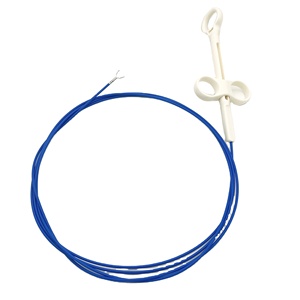
Gastroenterology Rotatable Disposable Endoscopic Hemoclip With Claw Angle 135
Precision micro-mechanical clipping mechanism; 135° claw angle; optimal rotational control for operative hemostasis and anatomical tissue anchor.
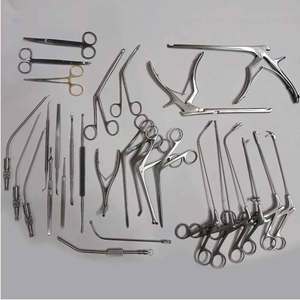
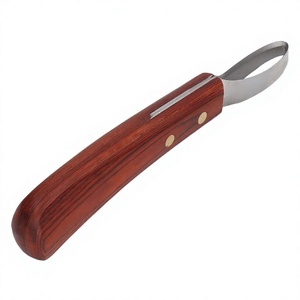
Disposable Veterinary Endoscopic Grasping Foreign Body Forceps Stainless Steel For Horse Use With CE
Veterinary surgical grade stainless steel; high shaft flexibility with reinforced jaw mechanism designed for large animal orthopedic and foreign body retrieval.
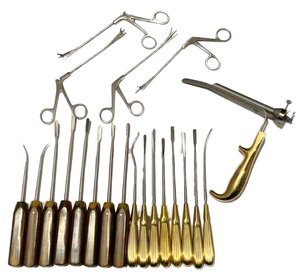
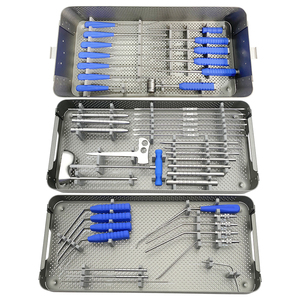
Spinal Surgery Unilateral Biportal Endoscopic Surgery Instruments Set UBE Instrument Set Orthopedic
Full UBE spinal decompression kit; specialized curettes, dilators, and bone rasps designed for minimally invasive spine instrumentation and screw site preparation.
Executive Overview: China Wholesale Orthopedic Bone Screws Manufacturing Ecosystem
In contemporary traumatology, spinal reconstruction, and craniomaxillofacial surgery, the mechanical reliability and biocompatibility of internal fixation devices determine patient recovery metrics and long-term implant survival rates. As global healthcare providers and medical device procurement entities seek cost-effective, high-precision supply chains, China has emerged as the premier hub for wholesale orthopedic bone screws manufacturing. Utilizing advanced 5-axis CNC Swiss screw machining, high-purity medical titanium alloys (Ti-6Al-4V ELI), and rigorous international quality governance (ISO 13485:2016, CE MDR, and US FDA 510(k)), top-tier Chinese manufacturers deliver clinical-grade implants that match or exceed Western OEM benchmarks while offering distinct economic advantages.
Information Gain Key Takeaway: Modern orthopedic bone screw procurement requires evaluating micro-structural thread geometry (pitch, lead angle, outer vs. core diameter), surface passivation dynamics (ASTM A967 and Type II Anodization), and biomechanical shear strength—moving beyond raw unit price to analyze total lifetime risk reduction and compliance security.
40+
Years Combined Mastery
±0.005mm
Swiss CNC Tolerance
50+
Export Nations
100%
Traceable Steel & Titanium
1. Metallurgical Engineering & Material Selection Science
The biomechanical efficacy of an orthopedic screw depends heavily on its raw material composition. Primary alloys must withstand cyclical physiological loading without undergoing fretting fatigue, galvanic corrosion, or bio-rejection. Chinese precision manufacturing facilities leverage high-purity raw materials validated via optical emission spectroscopy and certified mill test reports (MTR).
A. Medical-Grade Titanium Alloys (ASTM F136 Ti-6Al-4V ELI)
Titanium Grade 5 Extra Low Interstitial (ELI) is the undisputed standard for load-bearing permanent internal fixation and spinal pedicle screw systems. The ELI variant limits interstitial elements—such as oxygen, nitrogen, carbon, and iron—thereby significantly enhancing fracture toughness and fatigue resistance in high-stress physiological environments. Furthermore, Titanium's elastic modulus (~110 GPa) aligns closer to human cortical bone (~18–22 GPa) than stainless steel, reducing stress-shielding phenomena and promoting rapid osseointegration.
B. Implantable Stainless Steel (ASTM F138 316LVM)
Vacuum Arc Remelted (LVM) 316L stainless steel provides superior yield tensile strength and ductility. Preferred for temporary trauma reconstruction, fracture reduction plates, and pediatric surgical applications, 316LVM undergoes secondary vacuum remelting to eliminate non-metallic inclusions, maximizing fatigue life and resistance to pitting corrosion in saline-rich bodily fluids.
C. PEEK & Bio-resorbable Polymer Alloys
Polyether ether ketone (PEEK) screws, reinforced with radiolucent carbon fiber matrixes, are increasingly demanded for specialized oncological and arthroscopic procedures. Radiotransparency allows artifact-free post-operative CT and MRI diagnostic imaging. Concurrently, bio-absorbable screws composed of Poly-L-Lactic Acid (PLLA) and Poly(lactic-co-glycolic acid) (PLGA) offer progressive load transfer as bone healing occurs, eliminating secondary removal operations.
The primary mechanical objective of an orthopedic screw is to transform rotational torque into linear compressive stress across a fracture gap or implant interface. Bone screw failure modes—such as thread stripping, shank shearing, or post-operative pullout—are mitigated through meticulous micro-geometric design parameters.
Cortical Screws
Engineered with a fine pitch, shallow thread depth, and high core-to-outer diameter ratio (typically 0.7). Designed to grip dense cortical bone walls securely under high torsional loads.
Cancellous Screws
Characterized by a wide pitch, deep asymmetrical threads, and a lower core-to-outer diameter ratio (0.5). Maximizes tissue compaction within soft trabecular bone structures.
Cannulated Screws
Features a hollow central longitudinal lumen (0.9mm to 2.8mm ID) for precise Kirschner-wire (K-wire) guided percutaneous insertion in minimally invasive trauma procedures.
Locking Head Screws
Incorporates threaded screw heads that engage directly into matching threaded holes of locking compression plates (LCP), creating a rigid fixed-angle construct.
Self-Tapping Flutes
Precision-ground cutting flutes at the screw tip clear bone debris during insertion, eliminating pre-tapping steps and shortening operating room duration.
Star-Drive (Torx) Recess
Improves torque transmission efficiency by up to 35% compared to conventional hexagonal drives, minimizing cam-out risk and screwdriver slippage.
The mathematical determination of pullout strength ($F_{pullout}$) in cortical bone is calculated according to the shear strength of the bone material ($\tau$) and screw dimensional envelope:
3. China Factory Infrastructure & Quality Governance
Leading Chinese OEM/ODM contract manufacturers operate advanced precision machining centers tailored for medical devices. High-volume wholesale supply is rendered consistent through 5-axis Swiss-type CNC lathes (Citizen, Tornos, Star) capable of executing thread-whirling operations within micron-level tolerances.
ISO 13485:2016 Certified QMS: Full compliance with global Quality Management System frameworks for medical device manufacturing, ensuring lot-by-lot raw material traceability.
Automated Optical & Laser Inspection: Non-contact 3D optical comparators verify thread pitch uniformity, concentricity, and drive recess alignment across 100% of production batches.
Anodization & Surface Passivation: Chemical passivation per ASTM A967 removes free iron, while Type II Titanium Anodization provides biocompatible color-coding (gold, blue, green, magenta) for immediate operative size recognition.
Cleanroom Packaging (ISO Class 7): Implants are cleaned via multi-stage ultrasonic de-greasing, pre-washed with deionized water, and sealed inside double-pouch Tyvek packaging ready for Gamma or Autoclave sterilization.
As international distributors, hospital groups, and GPOs re-evaluate their supply chain resilience, several macro-trends are redefining the purchasing landscape for orthopedic hardware:
1. Additive Manufacturing & Porous Coatings
Hybrid production combining traditional CNC screw body machining with 3D-printed porous titanium thread roots. Accelerates early-stage osteoblast proliferation and mechanical lock.
2. Bio-Active Hydroxyapatite (HA) Spraying
Plasma-sprayed HA coatings on pedicle and cannulated screw threads significantly lower revision rates in osteoporotic patients by enhancing bone-to-implant contact (BIC).
3. Modular Single-Use Sterile Kits
Transition from bulk non-sterile screw trays to procedure-specific pre-sterilized single-use kits, reducing hospital reprocessing expenses and infection vectors.
5. Global Procurement FAQ (Frequently Asked Questions)
What certifications are required to import bone screws from China to the US or EU?
To import medical-grade bone screws into the European Union, manufacturers must hold ISO 13485 certification and CE MDR (Regulation EU 2017/745) conformity certificates. For importation into the United States, the manufacturing facility must be FDA registered, compliant with 21 CFR Part 820 (QSR), and have 510(k) clearance for Class II orthopedic implants.
How do Chinese manufacturers guarantee material authenticity and prevent counterfeit titanium?
Reputable manufacturers enforce strict raw material quarantine protocols. Every batch of titanium bar stock or stainless steel wire must be accompanied by Mill Test Certificates (MTC) matching ASTM F136 or ASTM F138 standards. Independent third-party spectrographic analysis and mechanical tensile testing (e.g., via SGS or TÜV) are performed before bar stock enters CNC production.
Can Chinese factories accommodate OEM custom logo engraving and private labeling?
Yes. Leading wholesale suppliers provide complete OEM/ODM capabilities, including fiber laser marking for catalog numbers, lot tracking codes, and client brand logos directly on the screw head rim. Custom sterile Tyvek pouch printing, box design, and customized IFUs (Instructions for Use) are standard offerings for volume contracts.
What are the typical Minimum Order Quantities (MOQs) for wholesale orthopedic screws?
Standard catalog items (such as 3.5mm cortical or 4.5mm cancellous screws) usually feature low MOQs ranging from 50 to 100 units per size specification. For custom engineered implant designs requiring bespoke CNC programming and tooling, initial MOQs generally start around 500 to 1,000 units.
How is screw fatigue and axial torque testing conducted?
Mechanical validation follows ASTM F543 (Standard Specification and Test Methods for Metallic Medical Bone Screws). Tests evaluate drive torque, insertion torque, removal torque, maximum torque-to-failure, axial pullout strength, and dynamic fatigue limits under multi-axis cyclical loading.
Rooted in over 40 years of precision surgical instrument craftsmanship and backed by modern high-volume manufacturing facilities, our production ecosystem represents the optimal bridge between rigorous engineering standards and competitive wholesale pricing. Supplying hospital networks and healthcare distributors across 50+ countries, our manufacturing philosophy centers on zero-defect quality governance.
End-to-End Traceability
From raw material ingot certification to final cleanroom sealing, every lot is indexed with a unique batch number, guaranteeing full liability protection and audit compliance.
Rapid Tooling & Prototyping
Dedicated R&D engineering units deliver functional prototype samples within 14 working days from CAD engineering blueprint approval.
Global Supply Chain Logistics
Full air and sea export documentation, customs clearance handling, and flexible DDP/FOB terms for seamless international transit.
Partner with a Leading China Wholesale Bone Screw Manufacturer
Consult with our biomedical engineering and international trade specialists to discuss customized OEM production, volume pricing tiers, or sample kit requests.