Comprehensive Industry Guide: Sourcing Titanium Bone Plates & Implants from China
In modern orthopedic reconstructive surgery, trauma management, and maxillofacial interventions, titanium bone plates represent the pinnacle of internal fixation technology. As surgical techniques evolve toward minimally invasive stabilization and personalized anatomical restoration, global medical device procurement directors, orthopedic distributors, and OEM buyers increasingly turn to top-tier Chinese manufacturers. China's biomedical ecosystem has shifted from high-volume, low-cost assembly to state-of-the-art precision engineering utilizing titanium alloys engineered for supreme biomechanical performance.
This technical whitepaper provides healthcare procurement professionals, biomedical engineers, and surgical distributors with exhaustive technical metrics, material science insights, regulatory compliance guidelines, and supply chain strategies necessary to evaluate China's leading titanium bone plate manufacturers and suppliers.
Executive Procurement Summary & Information Gain Insight
Unlike legacy stainless steel implants (such as 316L VM), Grade 5 Titanium (Ti-6Al-4V ELI) and Grade 4 Commercially Pure Titanium (CP Ti) exhibit a modulus of elasticity (approx. 110 GPa) significantly closer to human cortical bone (15–30 GPa). Sourcing titanium bone plates with specialized anodization (Type II Anodization) reduces stress-shielding, mitigates ion release, and enhances osseointegration, making raw material grade selection the single most critical audit factor for hospital supply chains.
Metallurgical Excellence: Material Selection in Titanium Plate Manufacturing
The biomechanical success of a bone plate depends heavily on the purity and microstructure of the titanium alloy. China’s tier-one medical implant manufacturers adhere strictly to international standards, primarily utilizing ASTM F136 (Ti-6Al-4V ELI) for high-load-bearing applications and ASTM F67 (Unalloyed Titanium) for anatomical adaptability in craniomaxillofacial (CMF) procedures.
| Titanium Grade & Specification |
Tensile Strength (MPa) |
Yield Strength (MPa) |
Modulus of Elasticity (GPa) |
Primary Clinical Indications |
| Ti-6Al-4V ELI (ASTM F136 / ISO 5832-3) |
≥ 860 MPa |
≥ 795 MPa |
~110 GPa |
Trauma Compression Plates, Femoral & Tibial LCP, Spine Fixation |
| Grade 4 CP Titanium (ASTM F67 / ISO 5832-2) |
≥ 550 MPa |
≥ 480 MPa |
~105 GPa |
Mandibular Plates, Midface Mesh, Mini-Fragment Hand & Foot Systems |
| Grade 3 CP Titanium (ASTM F67) |
≥ 450 MPa |
≥ 380 MPa |
~105 GPa |
Craniofacial Reconstruction, Pediatric Adaptable Fixation |
| 316L Implant Stainless Steel (Reference) |
≥ 860 MPa |
≥ 690 MPa |
~200 GPa |
Legacy Temporary Fixation (Higher Risk of Stress Shielding) |
Biomechanical Advantages of Ti-6Al-4V ELI in Trauma Fixation
ELI stands for "Extra Low Interstitials." By reducing interstitial elements like oxygen, nitrogen, carbon, and iron during vacuum arc remelting (VAR), Chinese forging facilities achieve superior fracture toughness and resistance to fatigue failure. In load-bearing constructs such as distal femoral locking compression plates (LCP), high fatigue resistance prevents plate breakage under cyclical biomechanical stress prior to complete bone union.
Why Partnering with China's Premier Titanium Implant Manufacturers Yields Competitive Edge
China's leading orthopedic manufacturers integrate advanced precision machining, rigorous cleanroom assembly, and global regulatory compliance. Evaluating a supplier requires examining their manufacturing technology, quality control systems, and custom OEM/ODM engineering bandwidth.
5-Axis Swiss CNC Machining
Simultaneous multi-axis milling ensures sub-micron dimensional accuracy for complex anatomical contouring, dynamic locking thread profiles, and burr-free screw holes.
Type II Electrochemical Anodization
Surface modification forms a hard, corrosion-resistant titanium oxide layer ($TiO_2$), reducing galling between plate and locking screws while improving biocompatibility.
Class 100,000 Cleanroom Packaging
Fully automated ultrasonic cleaning and EO/Gamma-sterilization-ready packaging compliant with ISO 11607 validation standards for sterile medical devices.
Comprehensive Product Recommendations & System Classifications
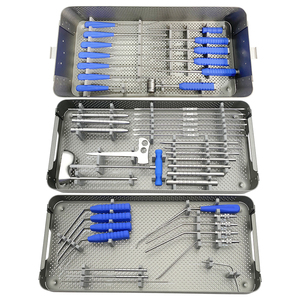
Modern orthopedic surgery relies on specialized plating systems tailored to specific anatomical structures, fracture patterns, and mechanical demands. When reviewing a manufacturer's product portfolio, ensure they produce standardized sets that align with international AO/ASIF instrument guidelines.
1. Locking Compression Plating (LCP) Systems
Locking plates represent the standard of care for complex comminuted fractures and osteoporotic bone. The combi-hole design allows surgeons to choose between conventional compression and angular-stable locking screw fixation. Leading Chinese suppliers offer pre-contoured anatomical plates for:
- Proximal & Distal Humerus Plates: Low-profile designs minimizing soft tissue irritation near the shoulder and elbow joints.
- Distal Radius Plating Systems: Volar locking plates featuring multi-directional locking screws for intra-articular articular reconstruction.
- Proximal Tibia & Distal Femur LCP: Heavy-duty Ti-6Al-4V ELI plates engineered to withstand high torsional and axial forces during early rehabilitation.
2. Micro & Mini-Fragment Titanium Systems (1.5mm / 2.0mm / 2.4mm)
Designed for small-bone reconstruction in hand, wrist, foot, and ankle procedures. High-precision manufacturing ensures that screw recesses flush seamlessly with the plate surface to prevent tendon friction and post-operative pain.
3. Craniomaxillofacial (CMF) & Mandibular Reconstruction Plates
Utilizing Grade 3 or Grade 4 CP Titanium, these plates offer optimal intraoperative malleability. Surgeons can easily contour plates to complex facial contours without sacrificing structural rigidity. Specialized dynamic fracture plates and 3D mesh matrices allow for complete orbital floor and cranial defect repair.
4. Spinal Fixation & Cervical Plating Systems
Anterior cervical discectomy and fusion (ACDF) titanium plates feature ultra-low profile geometries with integrated anti-backout locking mechanisms to prevent screw loosening adjacent to critical esophageal and vascular structures.
Future Procurement Trends in Titanium Implant Manufacturing (2025–2030)
The global orthopedic implant market is undergoing rapid technological transformation. Hospital procurement officers and medical brands must align with manufacturers investing in next-generation production modalities.
3D Printed Patient-Specific Implants (PSI)
Selective Laser Melting (SLM) and Electron Beam Melting (EBM) technology enable Chinese factories to produce porous titanium structures with trabecular-like lattice architectures, facilitating rapid bone ingrowth for oncological resections and revision arthroplasty.
Bioactive & Antibacterial Surface Coatings
Innovations such as Plasma Electrolytic Oxidation (PEO) enriched with hydroxyapatite (HA) or silver nanoparticles offer local antibiotic release, dramatically lowering surgical site infection (SSI) rates in emergency trauma cases.
Quality Assurance & Regulatory Compliance Audit Checklist for International Buyers
Importing medical devices requires thorough vetting to satisfy regional health authorities such as the US FDA, European Medicines Agency (MDR 2017/745), and Saudi Food and Drug Authority (SFDA). Buyers should ensure suppliers hold up-to-date documentation across five critical areas:
- ISO 13485:2016 Certification: Confirms the manufacturer's Quality Management System (QMS) meets strict medical device manufacturing standard requirements.
- CE Mark (MDR Compliance): Mandatory for European distribution, requiring comprehensive Technical Files and Clinical Evaluation Reports (CER).
- Raw Material Traceability: Every titanium batch must include a Certified Material Test Report (CMTR) matching ASTM F136/F67 standards, detailing chemical composition and mechanical stress testing.
- Cytotoxicity & Biocompatibility Validation: Full compliance with ISO 10993 standards (including system toxicity, sensitization, irritation, and hemocompatibility testing).
- Autoclave & Sterilization Validation: Sterility Assurance Level ($SAL = 10^{-6}$) documentation according to ISO 11135 (EtO) or ISO 11137 (Gamma Irradiation).