Discover the latest industry trends, regulatory guidelines, manufacturing standards, and clinical instrument guides from Rigor Instruments.
OEM & Quality Knowledge
Precision Manufacturing & Standards
In-depth guides on ISO certifications, surgical stainless steel grades, and custom tool engineering.
Global Healthcare Insights
Medical Export & Regulatory Guides
Stay informed about international health authority regulations, import standards, and clinic equipment requirements.
China Top Tissue Forceps Manufacturer & Factory
Whitepaper & Procurement Guide: Surgical-Grade Precision Engineering, Metallurgical Superiority, and OEM/ODM Manufacturing Dynamics in Modern Tissue Forceps Production
Featured Surgical Forceps & Endoscopic Instruments Portfolio
1. Metallurgical Excellence & Ergonomic Mechanics in Surgical Forceps Production
In modern clinical operative fields, surgical tissue forceps—ranging from fine micro-adson designs to robust traumatology holding clamps—represent the foundational bridge between a surgeon’s dexterity and patient tissue safety. As a recognized China Top Tissue Forceps Manufacturer & Factory, our manufacturing enterprise integrates decades of traditional forging heritage with state-of-the-art CNC micro-machining, electro-discharge machining (EDM), and computer-controlled passivation treatments. Surgical forceps are not merely simple hand tools; they are high-precision mechanical extension levers subject to immense mechanical fatigue, chemical sterilization stressors, and delicate physiological interactions.
The selection of raw material determines the mechanical longevity and corrosion resistance of tissue forceps. Our production facility exclusively utilizes high-grade imported German AISI 420 (X20Cr13 / 1.4021) and AISI 440A stainless steels for cutting and interlocking jaw components, alongside surgical grade AISI 304 and AISI 316L austenitic steels for flexible spring-action shafts. By maintaining strict control over chromium (12-18%), molybdenum (up to 1%), and carbon ratios, our metallurgical engineers achieve the ideal equilibrium between Rockwell C Hardness (HRC 42-48) and spring elasticity. This prevents premature tip alignment loss, stress corrosion cracking (SCC), and pitting during repeated high-temperature autoclave cycles.
Engineered utilizing DeBakey and Russian pattern serrations. Micro-machined to distribute clamping force evenly over soft vascular, intestinal, or neural tissue without causing ischemic necrosis or tissue tearing.
Laser Seamless Welding
Tungsten Carbide (TC) inserts are bonded to forceps tips using high-density laser welding under argon gas shielding. This eliminates micro-voids, crevice corrosion, and solder degradation.
ASTM A967 Passivation
Every instrument undergoes chemical passivation in nitric or citric acid baths to generate a self-healing, chromium-oxide enriched passive surface layer, offering maximum protection against saline corrosion.
2. Technical Taxonomy & Functional Classification of Tissue Forceps
To serve global medical equipment distributors, clinical procurement teams, and hospital central sterile supply departments (CSSD), a qualified manufacturer must maintain a vast catalog of specialized tissue forceps geometries. Tissue handling requirements vary widely across surgical specialties:
A. Micro-Surgical & Plastic Surgery Forceps (Adson, Iris, Castroviejo)
Characterized by delicate fine tips ranging from 0.3mm to 1.2mm in width. Adson Tissue Forceps (1x2 teeth) feature precise male-female interlocking tooth geometry, allowing surgeons to securely hold tough skin, fascia, and subcutaneous connective tissue with minimal compression pressure. Castroviejo and Bishop-Harmon micro-forceps feature delicate spring action designed for microsurgical vessel anastomosis and ophthalmic manipulation under high magnification operating microscopes.
B. Cardiovascular & Vascular Tissue Forceps (DeBakey Serration Geometry)
DeBakey tissue forceps represent the global gold standard for vascular and delicate organ handling. Unlike sharp 1x2 tooth forceps, DeBakey teeth utilize a patented rib-and-socket longitudinal serration pattern (typically 1.5mm, 2.0mm, or 2.5mm jaw widths). When closed, the parallel rows of fine, blunt teeth interlock without cutting or puncturing arterial walls or venous structures, ensuring absolute hemostatic integrity and zero tissue laceration.
C. General & Abdominal Traumatology Forceps (Rat-Tooth, Bonney, Russian Pattern)
Heavy tissue handling—such as holding dense fascia during laparotomy closure or orthopaedic muscle retraction—demands high-tensile forceps. Rat-Tooth Forceps (2x3 or 3x4 tooth configurations) provide intense mechanical leverage. Russian pattern forceps feature broad circular spoon-shaped tips lined with radial teeth, facilitating non-slip control when handling slippery dense parenchymal tissue or organ resection samples.
D. Endoscopic, Minimally Invasive & Laparoscopic Forceps
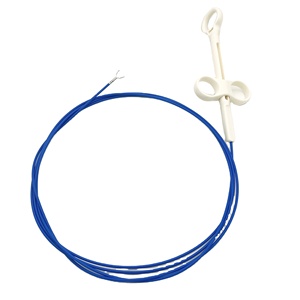
Modern surgical trends have shifted toward minimally invasive surgery (MIS). As seen in our product portfolio above, endoscopic grasping forceps feature 360-degree rotatable shafts, ergonomic double-articulating handles, and precise jaw linkages housed inside 3mm to 10mm outer diameter stainless steel or carbon polymer shafts. Applications include gastrointestinal hemostasis (Hemoclip series), equine veterinary retrieval, and unilateral biportal endoscopic (UBE) spinal surgery.
3. Global Procurement Trends & Market Evolution (2026–2030)
The international medical device procurement landscape is undergoing radical structural shifts driven by regulatory tightening, supply chain regionalization, cost-efficiency metrics, and infection control mandates. Buyers evaluating OEM/ODM partnerships with Chinese surgical factories must stay ahead of the following key procurement dynamics:
1. Hybrid Single-Use vs. Reusable Dynamics
While premium reusable German-steel forceps dominate hospital operating rooms in Western Europe and North America due to lower lifetime cost per procedure, ambulatory surgical centers (ASCs) and endoscopic clinics are accelerating adoption of high-precision single-use sterile forceps to eliminate hospital-acquired infection (HAI) risks and sterilization overhead.
2. Regulatory Stringency (MDR & FDA 510k)
The transition from EU MDD to EU MDR (Regulation 2017/745) requires stringent clinical evaluation, complete supply chain material traceability, and Unique Device Identification (UDI) laser marking on every reusable forceps. Leading Chinese factories have fully compliant ISO 13485 quality systems and technical documentation suites ready for CE and FDA registration.
3. Robotic-Assisted Surgery Ergonomic Tooling
The proliferation of robotic surgical platforms (e.g., da Vinci, Hugo RAS) has created new demand for specialized manual micro-forceps used by assistant surgeons at the bedside. These instruments feature ultra-lightweight titanium alloys, non-reflective PVD coatings, and micro-contoured handles for fatigue-free operation.
4. Direct OEM/ODM Private Labeling
Global healthcare brands are increasingly moving away from expensive European intermediaries, choosing instead to partner directly with tier-1 Chinese manufacturers capable of custom laser etching, customized sterile pouch packaging, customized box artwork, and flexible MOQ terms.
As a pioneer in surgical instrument production with over 40 years of manufacturing heritage, our factory combines deep bench craft expertise with advanced digital manufacturing infrastructure. Operating out of our specialized facilities in Sialkot and China export nodes, we provide end-to-end supply chain integration for hospital networks and global distributors in over 50 countries.
Why Global Buyers Partner With Our Factory
Dual-Certification ISO 9001:2015 & ISO 13485: Complete quality management systems covering raw material forging, heat treatment, polishing, assembly, testing, and cleanroom packaging.
Comprehensive Product Catalog (5,000+ SKUs): Full spectrum coverage across 28 surgical specialties, including General Surgery, Neuro, ENT, Ophthalmic, Orthopedics, Plastic Surgery, Cardiovascular, and Minimally Invasive Endoscopy.
German & Japanese Raw Material Sourcing: 100% metallurgical verification via optical emission spectroscopy (OES) testing prior to production, guaranteeing zero batch-to-batch alloy variations.
Sub-Micron Machining Tolerances: Multi-axis CNC milling and wire EDM cutting ensure forcep tips close with absolute zero-clearance alignment (jaw tolerance < 0.02mm).
Dedicated OEM/ODM Private Label Division: Complete customization options including custom catalog numbering, custom tip angles, laser logo marking, anti-glare satin/black ceramic finishes, and custom tray packaging.
100% Individual Autoclave & Functional QC Inspection: Every batch is subject to rigorous spring-tension testing, microscopic tip alignment checks, and boiling/autoclave corrosion tests before export release.
Custom OEM/ODM Manufacturing Workflow
Our streamlined manufacturing pipeline allows global clients to transition from initial concept CAD drawings to full-scale mass production within minimal lead times:
Workflow Phase
Technical Deliverables
Quality & Compliance Checkpoint
Estimated Timeline
1. Engineering CAD & Blueprinting
3D SolidWorks modeling, jaw serration geometry definition, spring tension calculation.
DFM (Design for Manufacturing) review and client sign-off.
3 - 5 Business Days
2. Prototype Die Forging & CNC
Precision drop forging die creation, CNC milling of prototype forceps shafts.
Dimension inspection via coordinate measuring machine (CMM).
Boil test & salt-spray corrosion resistance verification.
3 - 5 Business Days
5. Laser Marking & Cleanroom Packaging
Custom logo laser etching, UDI barcode engraving, pouch sealing (ISO Class 7 cleanroom).
Sterilization validation & seal strength testing (ISO 11607).
3 - 5 Business Days
5. Comprehensive Surgical Forceps Procurement FAQ
Q1: What grade of stainless steel is used in your tissue forceps, and how do you prevent rusting after repeated autoclaving?
We manufacture our reusable tissue forceps primarily using medical-grade German AISI 420 and 440A martensitic stainless steel for working tips, and AISI 304 austenitic steel for spring shafts. Corrosion resistance is guaranteed through a rigorous multi-stage chemical passivation process according to ASTM A967 standards. Passivation removes free iron from the metal surface, creating a continuous protective chromium oxide layer. Every production batch undergoes a 30-minute boiling water test and copper sulfate test to ensure 100% rust immunity prior to shipment.
Q2: How do your tissue forceps ensure trauma reduction during tissue manipulation?
Trauma reduction is achieved through micro-engineered jaw geometry. For delicate vascular tissues, our DeBakey pattern forceps feature rounded, interlocking longitudinal serrations that grip securely without tearing or puncturing tissue structures. For fine skin and plastic surgery, our Adson forceps feature hand-ground 1x2 teeth with micro-radiused edges, ensuring firm tissue holding with minimal squeeze pressure, preventing tissue crushing or focal necrosis.
Q3: Do you support custom OEM laser etching and private-label packaging for medical brand distributors?
Yes, we specialize in OEM/ODM manufacturing for international distributors. We offer fiber-laser logo etching, custom catalog number engraving, customized GS1-compliant UDI barcodes, and customized packaging options (including blister cards, individual pouches, surgical trays, and branded color boxes). Minimum order quantities (MOQs) for OEM private label orders are flexible, depending on the complexity of the instrument specification.
Q4: What regulatory certifications do your manufacturing facilities possess for global export?
Our manufacturing facility is fully certified under ISO 9001:2015 and ISO 13485:2016 (Medical Devices Quality Management Systems). Our products carry CE marks, comply fully with EU MDR 2017/745 regulations, and maintain active FDA product listings. Full technical files, material safety data sheets (MSDS), and certificates of origin are provided with every shipment.
Q5: What is the difference between standard stainless steel forceps and Gold-Handle Tungsten Carbide (TC) tissue forceps?
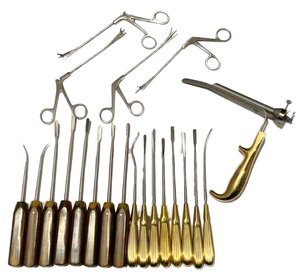
Gold-Handle forceps feature structural Tungsten Carbide (TC) inserts vacuum-brazed onto the gripping tips. Tungsten Carbide is significantly harder than standard stainless steel (Rockwell HRA 88-90 vs HRC 45), extending the gripping life of the forceps by up to 5 times. The gold-plated handles serve as an international clinical visual indicator designating premium TC-reinforced instrumentation.
Q6: How do you handle quality assurance and batch-level inspection before international shipment dispatch?
Our QA protocol involves a 100% 4-step inspection process: 1) Raw material chemical composition verification via spectrometer; 2) Micro-dimensional measurement of tip alignment under 20x optical magnification; 3) Spring tension force resistance calibration; and 4) Post-passivation corrosion testing. Inspection certificates (Acceptable Quality Limit AQL 1.0) are issued prior to container sealing.
Partner with China's Premier Tissue Forceps Manufacturer
Whether you are expanding a hospital procurement tender, launching a private-label medical brand, or sourcing specialized OEM endoscopic grasping tools, our engineering team is ready to support your technical specifications with factory-direct pricing, certified quality, and rapid sample prototyping.