1. Comprehensive Industry Overview: The Strategic Role of Surgical Suction Tubes in Modern Operating Rooms
Surgical suction tubes and fluid evacuation systems represent the foundational vascularity of surgical field management. In modern operative environments—ranging from trauma surgery, neurosurgery, and open cardiovascular procedures to minimally invasive endoscopic and laparoscopic surgery—unrestricted surgical site visualization is paramount. Surgical suction devices clear blood, tissue debris, bone fragments, irrigation fluids, and hazardous surgical smoke from the operative cavity, directly mitigating surgical risk, reducing operative duration, and protecting surrounding micro-anatomical structures.
As global surgical volumes continue to grow—exceeding 310 million major surgical procedures annually worldwide—the demand for ultra-precise, ergonomically calibrated, and bio-compatible suction cannulas has scaled exponentially. Enterprise procurement directors, hospital supply chain executives, and medical device distributors face an evolving marketplace where precision manufacturing standards dictate patient clinical outcomes. Evaluating suppliers based purely on unit pricing is no longer viable; modern healthcare ecosystems require certified manufacturing rigor, metallurgical purity, fluid dynamic optimization, and unyielding compliance with international regulatory frameworks including ISO 13485, CE Medical Device Regulation (MDR 2017/745), and US FDA Class I/II specifications.
Clinical Value Insight: Optimal surgical suction tube performance relies heavily on boundary layer fluid mechanics. Precision micro-finish surface polishing (Ra < 0.2 µm) prevents cellular adhesion, red blood cell hemolysis, and luminal clogging during high-flow intraoperative fluid aspiration.
2. Anatomical Classification & Engineering Specifications of Surgical Suction Cannulas
Different surgical disciplines impose drastically divergent physical and hydro-dynamic demands on suction cannulas. Selecting the proper tip geometry, lumen inner diameter (gauge size measured via the French scale, Fr 6 to Fr 18), shaft length, and vacuum control interface is essential for maintaining atraumatic tissue contact while ensuring continuous volume clearance.
2.1 Yankauer Suction Tubes
The Yankauer suction cannula remains the international gold standard for open chest, abdominal, and general surgical procedures. Featuring a bulbous head with multiple lateral relief ports, the Yankauer design distributes negative pressure across a broad surface area, effectively preventing visceral tissue invagination and organ trauma while aspirating high volumes of dense fluid and clots.
- Material Configuration: Surgical-grade SUS316L stainless steel (autoclavable reusable) or rigid medical-grade K-Resin / Polycarbonate (single-use disposable).
- Tip Geometry: Atraumatic crown-tip or smooth bulbous tip with 4 lateral anti-clogging eyes.
- Target Specialties: General surgery, thoracic procedures, emergency room trauma suction, oral/maxillofacial evacuation.
2.2 Poole Suction Tubes
Engineered specifically for deep abdominal cavity drainage and extensive lavage clearing, the Poole suction tube incorporates a outer perforated sheath over an inner suction lumen. This dual-action design distributes suction forces across dozens of small outer fenestrations, completely eliminating the risk of suctioning delicate omentum or bowel walls into the central suction stream.
- Mechanism: Outer removable perforated sleeve for deep intra-abdominal suctioning; removable inner cannula for pinpoint fluid removal.
- Standard Sizing: 16Fr to 30Fr shaft diameter, standard length 220mm to 280mm.
- Target Specialties: Laparotomy, gynecological oncological surgery, peritoneal lavage clearing.
2.3 Frazier / Ferguson Micro-Suction Tubes
Designed for delicate microsurgical, ENT, orthopedic, and neurosurgical procedures where physical spatial clearance is tightly restricted. Frazier suction cannulas feature a slim angled shaft with a built-in thumb control vent (vacuum control hole) at the proximal handle. By varying thumb coverage over the vent, surgeons modulate negative suction pressure with instantaneous physiological control.
- Milling Precision: Micro-gauge tubing ranging from 6Fr (2.0mm OD) to 14Fr (4.7mm OD) with graduated depth markers.
- Feature Integration: Stylet pin provided to clear occasional bone dust or tissue blockage during orthopaedic micro-drilling.
- Target Specialties: Neurosurgery, Otolaryngology (ENT FESS), plastic and facial cosmetic surgery, spinal biportal endoscopy (UBE).
Technical Specification Matrix: Suction Tube Categories
| Suction Tube Category |
Typical Size Range (Fr) |
Primary Material Grade |
Flow Velocity Rate |
Primary Clinical Application |
| Yankauer Standard |
18 Fr – 24 Fr |
AISI 316L Stainless / PC |
High (> 25 L/min) |
Open Abdominal, Oral, Trauma |
| Poole Deep Cavity |
20 Fr – 30 Fr |
AISI 304/316L Stainless |
Ultra-High (> 35 L/min) |
Peritoneal Lavage, Laparotomy |
| Frazier Micro-Cannula |
6 Fr – 14 Fr |
German Stainless Steel |
Controlled Low-Mid |
ENT FESS, Neurosurgery, Spine |
| Endoscopic / UBE Adaptors |
8 Fr – 12 Fr |
Medical Nitinol / Stainless |
Targeted Hydro-Stream |
Biportal Endoscopy, Joint Arthroscopy |
3. Future Procurement Trends in Global Healthcare (2025–2030)
The global market for surgical devices is undergoing a structural paradigm shift driven by technological innovations, stringent infection control policies, and sustainability mandates. Enterprise procurement teams must anticipate these long-term macro trends when establishing vendor relationships with Chinese OEMs and international exporters.
Integrated Smoke Evacuation Hybrids
Electrosurgical diathermy and laser ablation generate bio-hazardous surgical smoke containing toxic volatile organic compounds (VOCs) and viable viral particles. Modern suction tubes are transitioning into dual-lumen hybrid systems combining fluid evacuation with high-efficiency surgical plume capture.
Bi-Portal & Ultra-Minimally Invasive Adapters
With the rise of Unilateral Biportal Endoscopy (UBE) and micro-endoscopic discectomy, suction instruments require flexible memory-alloy shafts, insulated outer sleeves to prevent stray RF thermal injury, and rapid quick-connect luer locks.
Eco-Conscious Polymer Innovations
Single-use disposable suction sets are shifting from non-recyclable PVC to medical-grade, phthalate-free TPE, TPU, and bio-based polyolefins that reduce incineration toxic emissions while maintaining crystal-clear luminal visibility and kink-resistant memory.
Furthermore, hospital purchasing consortiums in North America and Western Europe are increasingly executing Total Cost of Ownership (TCO) models. While reusable stainless-steel suction tubes require rigorous Central Sterile Supply Department (CSSD) processing, ultrasonic cleaning, and steam sterilization validation, high-end single-use instruments eliminate cross-contamination risks and nosocomial healthcare-associated infections (HAIs).
4. Information Gain Deep-Dive: Material Science & Manufacturing Metallurgy
What distinguishes world-class surgical suction suppliers from low-tier fabricators is metallurgical integrity and automated manufacturing precision. Stainless steel utilized in surgical suction cannulas must balance tensile strength, corrosion resistance, fracture toughness, and ductility.
Metallurgical Breakdown: AISI 304 vs. AISI 316L Stainless Steel
AISI 304 Stainless Steel: Contains 18% Chromium and 8% Nickel. Offers excellent formability and high yield strength, making it ideal for outer shafts, handles, and rigid Poole sheaths.
AISI 316L Stainless Steel: Incorporates 2-3% Molybdenum and lower carbon content (< 0.03%). Molybdenum substantially increases resistance to pitting and crevice corrosion in chloride-rich environments (e.g., physiological saline, blood serum, enzymatic detergents). Preferred for fine Frazier micro-cannulas and reusable neurosurgical suction tools subject to repeated steam autoclaving cycles (134°C at 2.1 bar pressure).
Surface Passivation & Micro-Polishing Process Workflow
Raw steel tubing exhibits microscopic burrs, die marks, and crystalline irregularities. Leading Chinese manufacturers implement a multi-stage electrochemical finishing regimen:
- Internal Mechanical Honing: Smooths the inner cannula wall to remove micro-roughness.
- Electropolishing (EP): An electrochemical process that selectively removes surface ions, resulting in a mirror-like finish (Ra < 0.15 µm). Electropolishing removes embedded iron particles and forms a chromium-rich passive oxide layer ($Cr_2O_3$).
- Nitric Acid / Citric Acid Passivation (ASTM A967): Dissolves free iron from the surface, reinforcing the passive corrosion-barrier film and ensuring resistance against oxidation, rusting, and chemical staining during repeated hospital processing.
5. Enterprise Manufacturing Rigor & OEM/ODM Contract Manufacturing Capabilities
As a leading Chinese surgical instrument manufacturing hub, our facilities integrate traditional hand craftsmanship with state-of-the-art multi-axis CNC machinery, high-precision laser welding, and ISO Class 8 cleanroom assembly environments.
Core Enterprise Advantages:
- End-to-End Vertical Integration: From raw tube drawing, cold-bending, and laser fenestration to custom handle molding, laser etching, and sterile barrier packaging.
- Quality Management Systems: Full certification under ISO 9001:2015 and ISO 13485:2016. Complete lot-level raw material traceability with mill test certificates (MTC) provided for every batch.
- OEM Branding & Customization: Private label laser engraving of distributor logo, custom catalog SKU numbering, specialized shaft lengths (extra-long 300mm+ custom cannulas), and specialized surface coatings (such as black non-reflective e-coatings for laser surgery).
- Cleanroom Packaging: Automated Class 100,000 cleanroom thermoforming and ethylene oxide (EO) sterilization validation conforming to ISO 11135 standards.
6. Comprehensive Global Sourcing & Procurement Checklist
When evaluating Chinese suppliers for surgical suction tubes and complex surgical instrument sets, procurement officers should demand proof of the following key quality criteria:
| Evaluation Parameter |
Standard Requirement |
Verification Method |
| Regulatory Compliance |
CE Mark (MDR 2017/745), US FDA 510(k) or Exemption Listing |
Third-party Notified Body certificates (e.g., TÜV, SGS) |
| Biocompatibility |
ISO 10993-1, ISO 10993-5 (Cytotoxicity), ISO 10993-10 (Irritation) |
GLP Certified Laboratory Test Reports |
| Corrosion Resistance |
ASTM F1089 Standard Test Method for Corrosion of Surgical Instruments |
Boil test and copper sulfate testing documentation |
| Sterilization Integrity |
ISO 11137 (Gamma) or ISO 11135 (EtO) Sterilization Validation |
Sterility Assurance Level (SAL) $10^{-6}$ report |
7. Frequently Asked Questions (FAQ) for Global Buyers
Q1: What is the standard minimum order quantity (MOQ) for custom OEM surgical suction tubes?
Standard catalog models carry a low MOQ starting at 100 units. Custom OEM designs—featuring bespoke curvature, specialized handle laser etching, or unique gauge dimensions—typically require an MOQ of 500 to 1,000 units depending on raw material extrusion specifications.
Q2: Are your reusable stainless steel suction tubes compatible with standard hospital autoclaves?
Yes. All reusable surgical suction cannulas manufactured from AISI 316L/304 stainless steel are fully validated for repeated steam sterilization at 134°C for 18 minutes in compliance with ISO 17665 guidelines.
Q3: How do you guarantee clear luminal passage without internal flash or manufacturing debris?
Every single suction cannula undergoes 100% endoscopic luminal inspection and high-pressure ultrasonic bath flushing prior to final passivation and packaging, ensuring absolute cleanliness and flow continuity.
Q4: Can you supply complete surgical specialty sets alongside individual suction tubes?
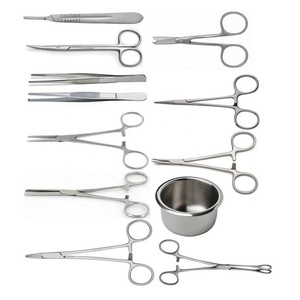
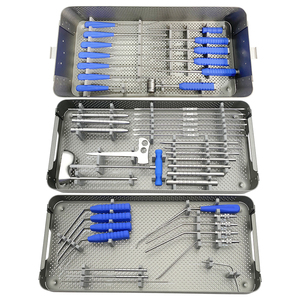
Absolutely. We specialize in assembling, organizing, and delivering complete specialty instrumentation trays—including ENT FESS sets, Endoscopic Facelift sets, UBE Spine Surgery sets, and General Laparotomy kits fitted in custom stainless steel or PPSU sterilization containers.
Q5: What leads time can international distributors expect for container-load exports?
Standard production lead times range between 15 to 30 business days post sample approval. Air express dispatch for urgent sample evaluations can be fulfilled within 5 to 7 days.
Q6: Do your disposable suction devices meet EU MDR compliance?
Yes, our complete range of sterile single-use disposable suction devices and endoscopic instruments holds valid CE certification under Regulation (EU) 2017/745, backed by comprehensive technical documentation (TD) and post-market surveillance (PMS) protocols.