Featured Certified Spinal Implants & Surgical Kits
Explore our factory-direct, high-precision spinal fixation systems, interbody fusion cages, and surgical instrumentation designed in strict compliance with ISO 13485 and CE regulatory benchmarks.
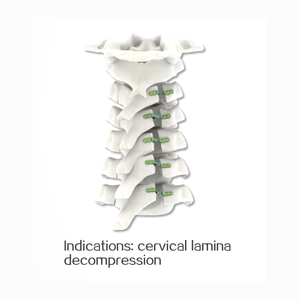
Implant Surgical Kit Orthopaedic Instrument LaminarShapping Plate Quality Management Certified Spinal Implants
Send an Inquiry
Canwell PEEK Lumbar Cage Spine PEEK CageLumbar Interbody Fusion Implant For Spinal OLIF PLIF XLIF Spine Implant OEM Manufacturer
Send an Inquiry
CE Certificate Orthopedic Spinal Implants ,Orthopedic implants forging,titanium orthopedic implants
Send an Inquiry
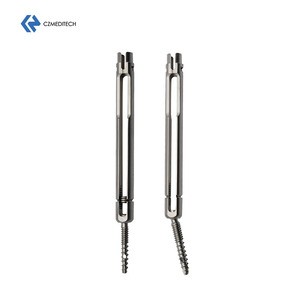
Orthopedic Surgical Spinal Implants 5.5 Titanium Minimally Invasive Monoplane Screw for Hospital Use
Send an Inquiry
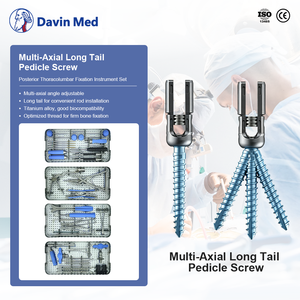
DavinMed Polyaxial Short-tail Pedicle Screw Titanium Alloy Spinal Implant for Orthopedic Surgery CE ISO
Send an Inquiry
Good Quality Medical Spine Titanium Orthopedic Implants Polyaxial Pedicle Screw Implant Kit
Send an Inquiry
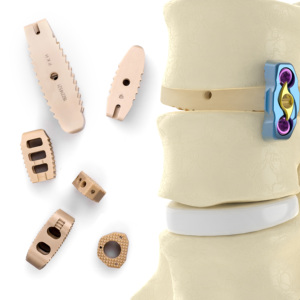
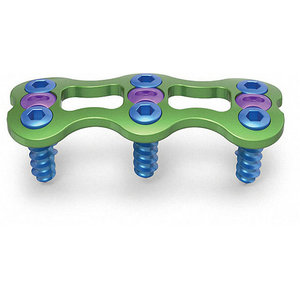
New Design Orthopedic Spinal Anterior Cervical Plate Implants
Send an Inquiry
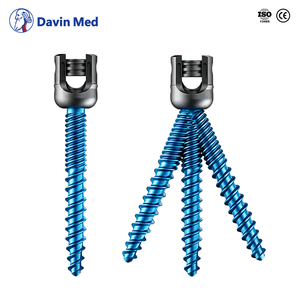
DavinMed CE ISO Polyaxial Pedicle Screw Titanium Alloy Spinal Fusion Implant for Orthopedic Surgery K5.5-1553 Factory Direct
Send an Inquiry
Global Industry Analysis: Sourcing Spinal Implants from Top-Tier Chinese Manufacturers
The global spine surgery domain is undergoing a profound paradigm shift driven by demographic aging, expanding access to healthcare in emerging economies, and rapid innovations in Minimally Invasive Surgery (MIS) and bio-integrative materials. As healthcare systems globally strive to reconcile clinical excellence with fiscal sustainability, China has emerged as the premier manufacturing superpower for medical devices, particularly in precision orthopedic and spinal implants.
Selecting a premier Chinese spinal implant manufacturer is no longer merely a cost-reduction strategy; it is a strategic decision to partner with high-tech biomedical engineering hubs capable of ultra-precision CNC Swiss machining, advanced plasma-sprayed titanium coatings, automated 3D-printing additive manufacturing, and rigorous compliance under ISO 13485:2016 and European Union CE MDR (Medical Device Regulation) frameworks.
40+
Years Combined Metallurgical Craftsmanship
ISO 13485
Certified Quality Management System
ASTM F136
Medical Grade Ti-6Al-4V ELI Raw Alloy
50+
Global Export Countries & Regions
Manufacturing Infrastructure & Technical Capabilities
Our state-of-the-art manufacturing facilities represent the pinnacle of modern orthopedic engineering. By combining decades of precision surgical instrument craftsmanship with cutting-edge German and Japanese multi-axis machining technology, we deliver spinal implants that match or exceed the fatigue strength, osseointegration capability, and biomechanical safety of leading tier-1 Western brands.
Advanced Metallurgy & Material Selection
We utilize exclusively high-purity medical-grade materials sourced from internationally accredited titanium suppliers. Our implants are forged from ASTM F136 / ISO 5832-3 Titanium Alloy (Ti-6Al-4V ELI), offering superior biocompatibility, minimal MRI artifact distortion, and high fatigue resistance. For interbody fusion cages, we incorporate genuine PEEK-OPTIMA® (polyetheretherketone), delivering a modulus of elasticity closely matching human trabecular bone.
Swiss-Type 5-Axis CNC & Forging
Our production floors feature ultra-precise DMG MORI and Citizen 5-axis CNC machines capable of executing intricate threads, polyaxial tulip heads, self-tapping flutes, and low-profile anterior cervical plates with sub-micron tolerances (±0.005mm). Automated cold and hot forging processes ensure ideal grain flow, preventing micro-fractures in structural components.
Class 10,000 Cleanroom & Sterilization
All finished spinal screws, rods, plates, and interbody cages undergo ultrasonic multi-stage washing, electrochemical passivation for corrosion resistance, and final primary packaging inside ISO Class 7 (Class 10,000) cleanrooms. Products are available in both non-sterile bulk packaging and ethylene oxide (EO) / Gamma sterilized double-blister sterile packaging ready for OR shelf deployment.
Strategic Whitepaper: Future Procurement & Technological Trends in Spinal Implants
As surgical methodologies evolve toward less invasive interventions and digitized intraoperative navigation, international medical device importers and hospital procurement departments must align their supply chains with key technological megatrends over the coming decade.
1. Additive Manufacturing & 3D-Printed Porous Titanium Cages
Traditional solid PEEK and smooth titanium cages are increasingly giving way to 3D-printed selective laser melting (SLM) porous titanium implants. Featuring open-pore structures resembling trabecular bone porosity (60-80% porosity, pore size 400-700 μm), these implants facilitate direct cellular in-growth, vascularization, and superior mechanical interlocking without the need for excessive autograft bone harvesting. Leading Chinese manufacturers are investing heavily in industrial-grade electron beam melting (EBM) platforms to produce standardized and patient-specific 3D cages at scale.
2. Minimally Invasive Surgery (MIS) & Percutaneous Pedicle Screw Systems
Patient outcomes heavily favor MIS procedures due to reduced blood loss, shorter hospital stays, and minimal paraspinal muscle destruction. Global procurement demands have shifted decisively toward extended-cannulated extension sleeve pedicle screws, self-in-line reduction screws, and specialized MIS retractors. Future supply contracts will prioritize manufacturers offering complete MIS instrument kits equipped with quick-connect rod inserters, radiolucent carbon-fiber towers, and integrated neuromonitoring compatibility.
3. Dynamic Stabilization & Motion Preservation Technologies
While rigid spinal fusion remains the gold standard for severe degenerative disc disease and spondylolisthesis, non-fusion alternative therapies are gaining market share. Products such as cervical artificial disc replacement (ADR) devices, dynamic interspinous process spacers, and flexible pedicle screw-rod systems allow controlled segmental mobility, reducing adjacent segment degeneration (ASD). Importers looking for competitive differentiation must diversify their portfolio with these advanced motion preservation lines.
4. Carbon Fiber-Reinforced PEEK (CFR-PEEK) Implants
For oncological spine surgery, standard metal implants create severe scatter artifacts during postoperative radiation therapy and CT/MRI surveillance. CFR-PEEK pedicle screws and fusion cages provide radiolucency, allowing oncologists to precisely map tumor radiation dosage while maintaining structural fatigue performance comparable to titanium alloys. Sourcing partnerships with Chinese OEMs who master CFR-PEEK compression molding represent a high-margin opportunity for specialty medical distributors.
Spinal Implant Mechanical Testing & Verification Standards
Ensuring patient safety and avoiding mechanical structural failures (such as screw breakage, rod pullout, or cage subsidence) requires rigorous compliance with international mechanical testing protocols. Premier Chinese exporters conduct comprehensive bench testing under validated ASTM and ISO protocols before commercial release:
- ASTM F1717 / ISO 12189: Standard Test Methods for Spinal Implant Constructs in a Vertebrectomy Model (Static Compression Bending, Cyclic Fatigue Bending, and Static Torsion Testing up to 5,000,000 cycles).
- ASTM F2077: Test Methods For Interbody Fusion Devices (Static and Dynamic Axial Compression, Shear, and Torsional Fatigue under simulated physiological loading).
- ASTM F2267: Standard Test Method for Measuring Load Induced Subsidence of an Interbody Spinal Fusion Device Under Static Axial Compression.
- ASTM F136 / ASTM F565: Chemical composition, tensile strength, microstructural phase verification, and surface finish passivity testing.
Frequently Asked Questions (FAQ) for Global Buyers
FAQ 1
What regulatory certifications do your spinal implants hold for international markets?
Our manufacturing facilities operate under a fully audited ISO 13485:2016 Quality Management System. Our key product lines hold European CE Marking under the Medical Device Regulation (EU 2017/745), US FDA 510(k) clearances for select pedicle screw constructs and PEEK cages, as well as NMPA Class III domestic registration in China. Full technical master files (DHF/DMR) are available for international distribution registration.
FAQ 2
Can you support OEM / ODM private labeling and custom surgical instrument design?
Yes, we specialize in OEM/ODM collaboration. We offer custom laser marking for distributor logos, custom catalog numbering, bespoke color anodization for titanium screws/rods (e.g., color-coding diameters), and customized tray layout designs for instrument kits. Our R&D engineering team can translate your CAD/CAM drawings or prototype samples into mass-produced ISO-compliant devices.
FAQ 3
What is the typical minimum order quantity (MOQ) and production lead time?
For standard spinal implants (pedicle screws, rods, cross-links, PEEK cages), our typical MOQ starts at 50 to 100 units per specification size. For customized OEM constructs or full surgical instrument sets, MOQs are negotiable based on tooling requirements. Standard delivery times range between 15 to 35 days depending on batch size, surface treatment requirements, and cleanroom packaging.
FAQ 4
How do you guarantee batch-to-batch consistency in thread quality and mechanical strength?
We employ a closed-loop quality assurance system. Every raw material lot undergoes spectroscopic chemical analysis and tensile testing. During machining, automated optical comparator inspections and CMM (Coordinate Measuring Machine) dimensional checks occur every 30 minutes. Finished batches undergo 100% optical sorting for thread integrity before cleanroom processing.
FAQ 5
What interbody fusion approaches (OLIF, PLIF, TLIF, XLIF, ALIF) are supported?
We manufacture a comprehensive array of interbody fusion devices matching all surgical approaches: Posterior Lumbar Interbody Fusion (PLIF), Transforaminal Lumbar Interbody Fusion (TLIF), Oblique Lumbar Interbody Fusion (OLIF), Extreme/Direct Lateral Interbody Fusion (XLIF/DLIF), and Anterior Lumbar Interbody Fusion (ALIF). Cages are available in both PEEK-OPTIMA and 3D Porous Titanium with expandable and fixed lordotic angles.
FAQ 6
Do you supply the matching reusable surgical instrument sets for implant deployment?
Absolutely. We supply ergonomic, autoclavable surgical instrument kits custom-engineered for each implant system. Sets include polyaxial drivers, rod benders, pedicle awls/taps, counter-torque wrenches, trial cages, and nerve retractors housed in hard-anodized aluminum sterilization containers with custom silicone inserts.
B2B Procurement Checklist: Selecting a Reliable Chinese Spine Manufacturer
When evaluating prospective supply partners in China, medical device importers should execute strict due diligence across these six core criteria:
1. Material Traceability
Require raw material mill certificates matching heat lot numbers for all ASTM F136 titanium rods and Invibio PEEK resin lots to verify biostability and mechanical purity.
2. Cleanroom Validation
Confirm that cleaning and packaging take place in certified ISO Class 7/8 cleanrooms with regular airborne particle count and bioburden monitoring reports.
3. Fatigue Test Reports
Inspect third-party lab fatigue testing reports (e.g., SGS, TÜV, Dekra) confirming 5,000,000 cycle run-outs without structural failure under ASTM F1717/F2077 standards.
4. Tooling & Modular Ergonomics
Test surgical instrument sets for tactile feedback, quick-release locking mechanism durability, and resistance to repeated steam autoclave sterilization cycles (134°C).
5. Regulatory Support
Ensure the factory provides complete Technical Files, Risk Management Files (ISO 14971), Biocompatibility Evaluation Reports (ISO 10993), and clinical evaluation data.
6. Global Logistics & Packaging
Verify export packaging robustness, including tamper-evident Tyvek-sealed double blister packs and shock-resistant international shipping cartons.
Partner with China's Leading Spinal Implant Exporter
Direct factory pricing, uncompromised ISO 13485 quality assurance, and complete OEM/ODM customization for global orthopedic brands, hospital networks, and medical distributors.