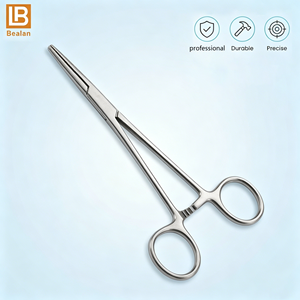
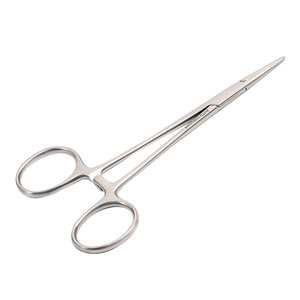
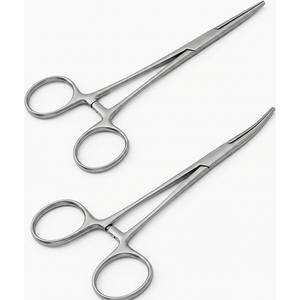
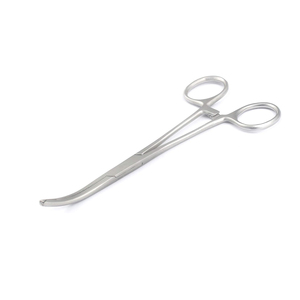
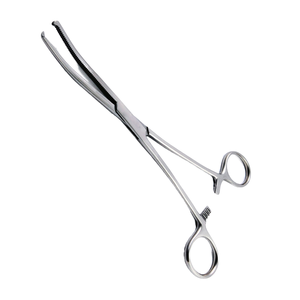
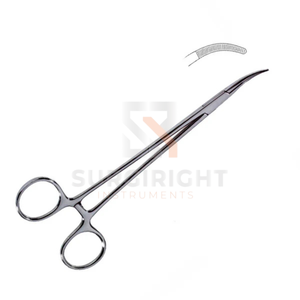
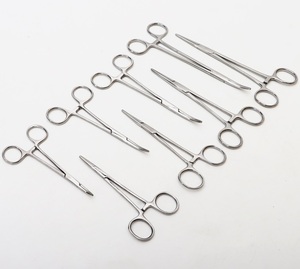
Explore our medical-grade stainless steel hemostatic forceps catalog. Engineered under ISO 13485 quality systems and verified through rigorous ASTM F1089 corrosion resistance testing, these precision instruments serve general surgery, micro-vascular reconstruction, veterinary practices, and specialized plastic surgery.
1. Enterprise Manufacturing Advantages & Quality Benchmarks (E-E-A-T)
In modern surgical procedures, hemostatic forceps (also known as arterial clamps, hemostats, or locking pincers) are indispensable hand-held instruments utilized to control hemorrhage by occluding blood vessels prior to ligation or cauterization. Sourcing surgical clamps from verified tier-one suppliers requires deep scrutiny of metallurgical composition, mechanical tolerances, and international regulatory compliance.
Our manufacturing facility combines traditional hand-finishing craftsmanship with advanced 5-axis CNC machining centers. Operating strictly under ISO 9001:2015 and ISO 13485:2016 quality management systems, we ensure that every single clamp produced delivers consistent clamping force, minimal tissue trauma, and perpetual alignment through thousands of autoclave sterilization cycles.
Metallurgical Raw Material Standards
The integrity of a surgical hemostat lies in its steel alloy. We exclusively forge our instruments using surgical-grade medical stainless steels imported from certified mills in Germany (DIN 1.4021 / DIN 1.4117) and Japan (SUS 420J2). Unlike sub-standard commercial steel that suffers from pit corrosion and jaw misalignment after repeated steam sterilization, our selected martensitic alloys provide:
- High Tensile Strength & Fatigue Resistance: Resists arm deformation under maximum ratchet lock tension.
- Superior Corrosion Resistance: Passivated via nitric/citric acid immersion to create an impenetrable chromium oxide surface barrier.
- Optimal Hardness (Rockwell C 42-48 HRC): Ensures that micro-serrations remain razor-sharp and teeth retain grip without chipping or dulling.
| Steel Grade Standard |
Composition Breakdown |
Hardness Range (HRC) |
Primary Clinical Application |
| AISI 420 / SUS 420J2 |
12-14% Cr, 0.15-0.40% C |
44 - 48 HRC |
General Hemostats (Mosquito, Kelly, Crile, Kocher) |
| AISI 410 / DIN 1.4006 |
11.5-13.5% Cr, 0.15% C max |
40 - 44 HRC |
Utility Laboratory Clamps, Veterinary Forceps |
| AISI 316L / DIN 1.4404 |
16-18% Cr, 10-14% Ni, 2-3% Mo |
Non-magnetic / Low HRC |
Implantable Auxiliaries & Single-Use Atraumatic Clamps |
| Tungsten Carbide (TC) Inserts |
WC-Co Matrix (Hard Metal) |
60 - 70 HRC |
Micro-vascular clamps, TC Needle Holders & Fine Hemostats |
Strict Quality Control & Sterilization Validation
Every batch of hemostatic forceps undergoes a comprehensive 6-stage Quality Assurance protocol before export packaging:
- Dimensional Verification: Micrometer and optical comparator check of jaw alignment, serration depth, and ratchet step-engagement angles.
- Boiling Water & Autoclave Testing (ASTM F1089): 30-minute boil test followed by 24-hour drying to verify complete freedom from rust spots or surface oxidation.
- Passive Film Analysis: Chemical verification of surface chromium-to-iron ratio to guarantee compliance with EU MDR 2017/745 Class I / Class II requirements.
- Ergonomic Clamping Test: Manual evaluation of finger ring symmetry, spring action balance, and tactile ratchet release effort.
2. Key Technological Evolution & Industry Trends in Hemostatic Instruments
The global surgical instrument industry is transitioning rapidly toward micro-precision, atraumatic tissue protection, and digitized hospital tracking systems. As surgical techniques evolve toward Minimally Invasive Surgery (MIS) and robotic-assisted procedures, the design requirements for hemostatic clamps have undergone significant innovation.
Atraumatic Jaw Serrations (DeBakey Profile)
Traditional aggressive transverse serrations can cause endothelial damage during vascular clamping. Modern trends favor fine DeBakey-style longitudinal interlocking serrations that distribute clamping pressure evenly, preventing intimal tearing.
Black Oxide & Anti-Glare Coatings
With the widespread adoption of high-intensity LED surgical headlights and operating microscopes, specular reflection from polished steel causes surgeon eye fatigue. Ceramic PVD black titanium coatings eliminate glare while improving surface hardness.
UDI / RFID Trackability Integration
To comply with US FDA Unique Device Identification (UDI) regulations and European EUDAMED databases, forceps shanks now feature 2D DataMatrix micro-laser etchings for automated tracking across hospital sterile supply departments (CSSD).
Functional Classification: Selecting the Correct Hemostatic Clamp Pattern
B2B procurement leads and hospital buyers must ensure clear alignment between clinical surgical intent and instrument specifications:
- Halsted Mosquito Forceps (12.5cm): Featuring small, delicate jaws with full horizontal serrations. Engineered for fine pediatric, plastic, and micro-vascular surgery where delicate vessel control is mandatory.
- Kelly Forceps (14cm): Designed with serrations extending only along the distal half of the jaw. Ideal for clamping larger blood vessels or tissue bundles without crushing surrounding proximal structures.
- Crile Forceps (14cm - 16cm): Feature full jaw serrations like Mosquito forceps, but constructed with longer, sturdier shanks for deeper surgical fields in general abdominal procedures.
- Kocher (Ochsner) Forceps (14cm - 20cm): Equipped with aggressive 1x2 interlocking teeth at the jaw tip combined with transverse serrations. Specially designed to prevent slippage on tough, slippery tissues such as fascia, tendons, or heavy vascular pedicles.
- Pean / Rochester-Carmalt Forceps: Heavy-duty hemostats with deep longitudinal serrations, designed for large tissue mass clamping and gynecological/obstetric surgery.
3. Strategic Sourcing & Future B2B Procurement Trends (2026–2030)
As hospital procurement boards and international medical device distributors seek to optimize supply chain resilience, sourcing strategies are shifting away from fragmented trading intermediaries toward direct partnerships with experienced original equipment manufacturers (OEM).
1. Hybrid Sourcing Models: Single-Use vs. Premium Reusable Forceps
While reusable stainless steel forceps remain the gold standard for hospital operating rooms due to their superior tactile feedback and long-term cost-per-use efficiency, demand for high-quality single-use (disposable) sterile hemostatic forceps is growing in emergency centers, outpatient clinics, and military field medicine. Top-tier manufacturers must maintain dual production capacity: offering ultra-durable hot-forged reusable instruments alongside high-volume precision-stamped single-use alternatives.
2. OEM Customization & Private-Label Branding
Global medical device brands increasingly request factory-direct private labeling. Key customization vectors include:
- Custom Laser Marking: Engraving OEM logo, custom SKU catalog codes, lot numbers, and CE markings directly onto the instrument lock box.
- Bespoke Packaging Solutions: Individual peel-pack pouching, color-coded silicone handling rings, custom sterile barrier pouches, and customized distributor master cartons.
- Modified Jaw Curves & Tension Calibration: Tailoring ratchet engagement weight to match specific surgical preferences (e.g., lower tension for delicate ophthalmic/micro-vascular clamps vs higher lock tension for orthopedic pincers).
3. Total Cost of Ownership (TCO) vs. Initial Unit Price
Sourcing officers are realizing that purchasing low-cost, unpassivated instruments results in high replacement costs due to joint freezing, surface rusting, and tip warping after minimal autoclave cycles. Partnering with a supplier using German/Japanese raw steel and standardized electrochemical passivation drastically reduces the Total Cost of Ownership (TCO) over a 5-year hospital lifecycle.