Frequently Asked Questions (FAQ) for Global B2B Buyers
Expert answers addressing regulatory, technical, and commercial inquiries for hospital procurement departments and medical device importers.
Q1: What stainless steel grades are utilized in your endoscopic surgical instruments?
We strictly utilize medical-grade stainless steel compliant with ISO 7153-1 and ASTM F899 standards. For cutting instruments and forceps jaws, we utilize high-hardness German AISI 420J2 and 440C martensitic steel. For outer sheaths, cannulas, and structural handles, we employ AISI 304 and 316L austenitic stainless steel. Titanium alloys (Ti6Al4V) and shape-memory Nitinol are also integrated into specialized flexible grasping tools and spinal UBE instruments.
Q2: Are your factory processes certified for European Union (EU MDR) and US FDA compliance?
Yes. Our manufacturing facility operates under a fully certified ISO 13485:2016 Medical Devices Quality Management System. Our product lines hold CE certification under the European Medical Device Regulation (EU MDR 2017/745) for Class I and Class IIa devices, as well as FDA registration and 510(k) listings for selected surgical tool categories, allowing seamless customs clearance across the EU, USA, Middle East, and Asia-Pacific markets.
Q3: What is the minimum order quantity (MOQ) for custom OEM laser-engraved instruments?
For standard catalogue items requiring custom laser marking (logo, catalog code, batch lot), our MOQ starts at just 20 to 50 pieces per reference. For fully customized ODM instruments requiring specialized tooling dies or unique jaw profiles, MOQs are negotiated based on engineering complexity, typically starting at 100 units. We offer initial sample runs for evaluation prior to mass production volume commitments.
Q4: How do your rotatable endoscopic hemoclips handle difficult anatomical angles?
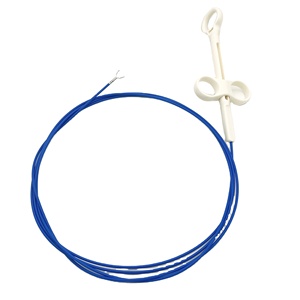
Our Gastroenterology Rotatable Disposable Hemoclips feature a synchronized 1-to-1 dual-rotation control wire mechanism and a wide 135° claw opening angle. This allows endoscopists to manipulate the clip tip with 360-degree precision inside the GI tract, ensuring optimal tissue approximation, reliable vascular occlusion, and effortless release even through complex, tortuous endoscope loop channels.
Q5: How do you ensure corrosion resistance and longevity for reusable FESS and UBE sets?
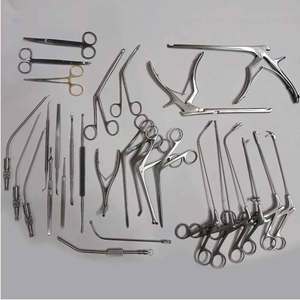
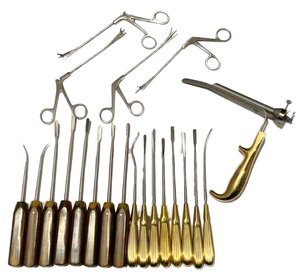
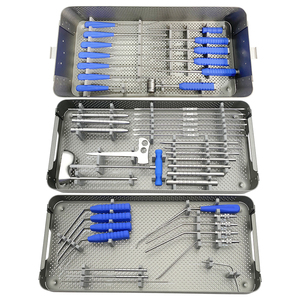
All reusable surgical sets undergo a specialized multi-stage passivation process compliant with ASTM A967, removing free iron from the instrument surface and establishing a dense, self-healing chromium oxide passive layer. Additionally, instruments are subjected to rigorous 500-cycle steam autoclave validation tests (134°C at 2.1 bar) to guarantee no rusting, pitting, or joint stiffness occurs during intensive clinical use.
Q6: What is the typical production lead time for bulk international procurement orders?
Standard catalogue stock orders ship within 7 to 10 working days. Large bulk production runs (1,000+ units or custom surgical sets) typically require 25 to 35 calendar days, including raw material quality verification, CNC machining, assembly, passivation, optical QA, and packaging. Expedited emergency shipments can be arranged via express air courier (DHL/FedEx/UPS) or air freight.