CE Certified
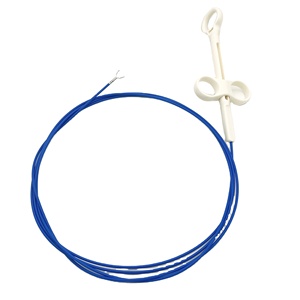
Gastroenterology Rotatable Disposable Endoscopic Hemoclip With Claw Angle 135
German Steel
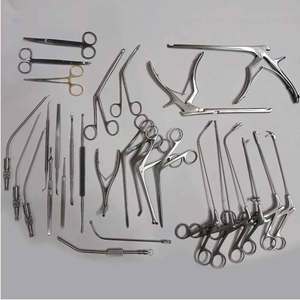
Fess Instruments Set 30 Pieces Manual Reusable Endoscopic Sinus Surgery ENT Tegra FESS Sets
Veterinary Grade
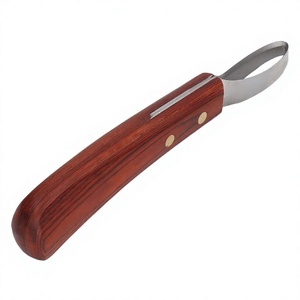
ZRHmed Disposable Veterinary Endoscopic Grasping Foreign Body Forceps For Horse Use
Class I Certified
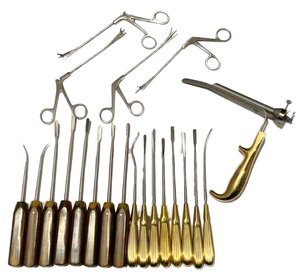
Endoscopic Facelift Instrument Set for Facial Cosmetic Surgery Class I Tools
ISO 13485
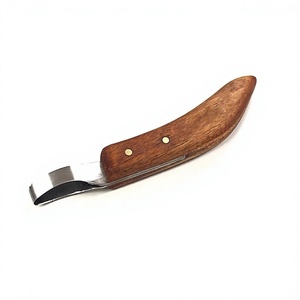
ZRHmed Disposable Stainless Steel Endoscopic Grasping Forceps Farrier Retrieval Tools
High Precision
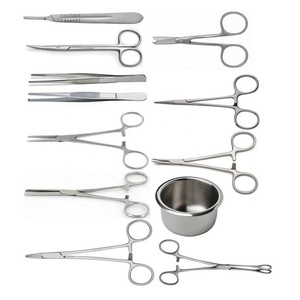
Professional Plastic Surgery Endoscopic Facelift Forceps Set Surgical Instruments
CE Marked
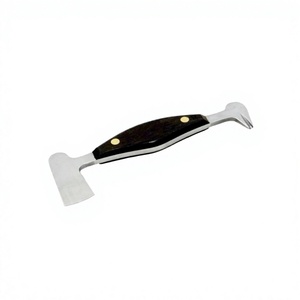
Disposable Veterinary Endoscopic Grasping Foreign Body Forceps Stainless Steel
Orthopedic UBE
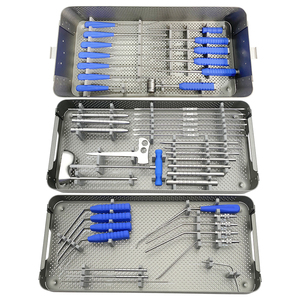
Spinal Surgery Unilateral Biportal Endoscopic (UBE) Surgery Instruments Set
40+
Years Manufacturing Heritage
5,000+
Certified Instrument Designs
50+
Global Export Markets
100%
Autoclave & QA Traceable
Executive Summary & Corporate Manufacturing Framework
In the contemporary landscape of endodontic and micro-surgical healthcare, clinical outcomes depend directly upon the mechanical integrity, tactile precision, and fatigue resistance of endodontic instruments. As a world-class certified manufacturer based in Sialkot, Pakistan—a historic global epicenter of surgical metalwork—our facility combines four decades of artisan forging with modern CNC micro-machining and strict ISO 13485 quality control systems. We produce comprehensive endodontic rotary files, hand files, reamers, obturation tools, and endoscopic surgical instrument sets supplied directly to hospital networks, dental healthcare groups, and international B2B distributors across 50+ countries.
E-E-A-T Quality Commitment: Every endodontic and surgical instrument manufactured within our facilities is forged exclusively from medical-grade German and Japanese stainless steel or advanced Nickel-Titanium (NiTi) alloys. Each lot undergoes 100% manual inspection, mechanical stress calibration, and repeated autoclave validation before export clearance.
Navigating global procurement requires direct transparency into manufacturing provenance. Middlemen and third-party brokers frequently introduce markup costs while diluting quality assurance traceability. By contracting directly with an established ISO 9001:2015 and ISO 13485:2016 certified factory, healthcare procurement directors gain full visibility over raw material certifications, micro-structure heat treatments, laser engraving options, and customized packaging compliant with European Medical Device Regulation (EU MDR 2017/745) and US FDA requirements.
Metallurgical Superiority
Utilizing high-tensile German X20Cr13 stainless steel and shape-memory NiTi alloys engineered for maximum torsional load and zero micro-fracture propagation during complex root canal treatments.
ISO & CE Compliance
Full regulatory documentation including CE Marking, ISO 13485:2016 Medical Quality System certification, ISO 9001:2015 accreditation, and complete Class I/II regulatory technical files.
OEM / ODM Customization
Complete private-label manufacturing including custom taper geometry, laser etching of brand logos and SKU lot numbers, custom color-coding rings, and sterile blister packaging.
Technical Evolution & Metallurgical Innovations in Endodontics
Endodontic therapy has underwent a profound paradigm shift driven by advancements in material science and root canal biomechanics. Historically, stainless steel K-files and Hedstrom files dominated root canal preparation. While stainless steel provides superior lateral stiffness ideal for initial negotiation of calcified canals, its high modulus of elasticity poses significant risks of ledging, zipping, and canal transportation in curved root anatomy.
1. Nickel-Titanium (NiTi) Metallurgy & Heat-Treatment Dynamics
The introduction of Superelastic Nickel-Titanium (55-NiTi alloy) revolutionized endodontic instrumentation by allowing files to undergo up to 8% elastic strain without permanent deformation. Modern CE-certified endodontic instrument factories have further advanced NiTi technology through proprietary thermal-mechanical processing. Heat treatments alter the phase transformation temperatures between Martensite (flexible phase) and Austenite (stiffer, superelastic phase) at body temperature.
Controlled Memory (CM Wire) and Gold/Blue thermal processing create files with substantially higher cyclic fatigue resistance compared to traditional ground NiTi tools. By increasing resistance to cyclic fatigue by up to 400%, these heat-treated instruments prevent catastrophic intra-canal file separation during complex endodontics.
2. Cross-Sectional Geometry & Kinematics Optimization
Beyond metallurgy, file kinematics and cross-sectional geometry govern cutting efficiency and debris evacuation. Modern endodontic instrument design balances cutting efficiency with core mass strength:
- Triangular Cross-Sections: Minimize radial lands, maximizing cutting efficiency and flexibility for narrow, curved canals.
- Off-Centered Rectangular Shapes: Create a mechanical wave-like motion along the canal wall, touching the dentin at only two points while providing enlarged clearance spaces for apical debris extrusion.
- Variable Taper Designs: Progressive tapers on a single shaft reduce the touch area between the file and dentin, significantly diminishing torsional stress and binding risk.
3. Micro-Machining Precision & Electropolishing Surface Finishing
Traditional grinding of NiTi files leaves microscopic surface flaws, burrs, and notch defects that act as stress concentration points during rotation. Professional endodontic factories implement automated electropolishing and laser surface treatment protocols. Electropolishing removes surface micro-cracks, creates a protective passive chromium-oxide layer, and enhances corrosion resistance against aggressive sodium hypochlorite (NaOCl) irrigants during clinical procedures.
Metallurgical Performance & Clinical Application Comparison
To assist procurement specialists, biomedical engineers, and clinical directors in evaluating raw material and instrument selection, the following comparison matrix details the physical, mechanical, and clinical characteristics of primary endodontic alloy formulations.
| Material / Metallurgy |
Elastic Modulus (GPa) |
Torsional Resistance |
Cyclic Fatigue Life |
Canal Centering Ability |
Primary Clinical Application |
| German AISI 302/316 Stainless Steel |
190 - 210 |
Extremely High |
Moderate |
Rigid (Risk of Zipping) |
Initial Canal Negotiation, Scouting, Calcified Canals |
| Conventional Superelastic NiTi |
30 - 50 |
High |
High |
Superior Flexibility |
Standard Rotary Shaping, Straight Canals |
| M-Wire NiTi (Thermal Treatment) |
25 - 40 |
Very High |
Very High (+390%) |
Excellent Centering |
Reciprocating & Rotary Systems in Moderate Curves |
| CM Wire / Gold Heat-Treated NiTi |
15 - 30 |
Controlled Torsion |
Maximum Resistance |
Optimal (Zero Transportation) |
Severe Apical Curvatures, Minimally Invasive Endodontics |
Future Global Procurement Trends in Endodontics & Surgical Tools (2026–2032)
The global dental and surgical instrument procurement landscape is undergoing rapid structural changes driven by regulatory tightening, supply chain consolidation, and technological integration. B2B buyers must align their sourcing strategies with four critical macro-trends:
1. Direct Factory Contracting & Supply Chain Disintermediation
Hospital purchasing consortiums and large dental service organizations (DSOs) are increasingly bypassing regional intermediaries to establish direct OEM/ODM manufacturing partnerships with certified factories in established production hubs like Sialkot. Direct factory sourcing reduces landed unit costs by 35% to 55%, while enabling customized quality specifications, rapid sample iteration, and direct batch traceability.
2. Stringent Regulatory Harmonization (EU MDR & FDA Unique Device Identification)
With the full implementation of the European Union Medical Device Regulation (EU MDR 2017/745), regulatory authorities require extensive clinical evaluation data, post-market surveillance (PMS) systems, and permanent Unique Device Identification (UDI) laser marking on all reusable and single-use endodontic instruments. Certified manufacturers with pre-established technical documentation and ISO 13485 audit histories provide seamless compliance for global importers.
3. Shift Toward Minimally Invasive Endodontics (MIE) Preservative File Geometries
Modern clinical endodontics emphasizes peri-cervical dentin preservation. Future procurement demand is shifting rapidly toward small-taper rotary files (e.g., .03 and .04 tapers) and conservative maximum flute diameter (MFD) instruments of 1.0mm or smaller. Factories with advanced CNC grinding systems capable of maintaining microscopic tolerances on ultra-thin shafts represent the future of endodontic manufacturing.
4. Adoption of Pre-Sterilized Single-Patient Packaged Instruments
Cross-contamination concerns and the labor cost of sterile processing departments (SPD) in hospitals are accelerating the demand for gamma-irradiated or EO-sterilized single-patient packaged endodontic files. Direct OEM suppliers capable of delivering cleanroom ISO Class 7 blister packaging with full barcoding are gaining significant market share globally.
Our Factory Infrastructure & Quality Management Architecture
As a leading surgical and endodontic instruments factory in Sialkot, Pakistan, our modern facility spans complete vertically integrated manufacturing processes—from raw forging and precision CNC machining to micro-polishing, quality inspection, and international logistics management.
Raw Material Certification
We import certified stainless steel billets and NiTi wire directly from audited mills in Germany and Japan. Chemical composition analysis (spectrometry) guarantees zero toxic impurities and optimal corrosion resistance.
Swiss CNC Micro-Machining
Equipped with 5-axis Swiss CNC grinding machines, our production line achieves micrometer-level precision on flute pitch, rake angle, and tip concentricity, eliminating vibration during clinical operation.
Rigorous Multi-Stage QA
Every single production lot undergoes dimensional optical comparator measurements, torsional strength-to-failure testing, cyclic fatigue rotation testing, and passive film passivation verification.
Comprehensive Procurement FAQ for B2B Importers & Distributors
Detailed answers to key commercial, technical, and regulatory questions regarding endodontic and surgical instrument manufacturing and bulk orders.
What international quality certifications do your endodontic instruments hold?
Our manufacturing facilities operate under strict ISO 13485:2016 Medical Quality Management Systems and ISO 9001:2015 standards. Our product catalog carries full CE Marking under European regulations and is compliant with US FDA Class I / II registration requirements, ensuring smooth customs clearance globally.
What raw materials are used in manufacturing your endodontic rotary and hand instruments?
We source premium surgical-grade German stainless steel (AISI 302, 316L, 420) and high-flexibility Nickel-Titanium (NiTi) alloy wires directly from certified metal mills in Germany and Japan. Material test certificates (MTC) detailing chemical composition and mechanical properties accompany all raw material batches.
Do you offer custom OEM / ODM private labeling services for dental brands?
Yes, we specialize in OEM/ODM private-label manufacturing. We provide high-precision fiber laser marking for your brand logo, custom catalog reference numbers, ISO color-coding rings, custom taper specifications, and private-label blister or box packaging tailored to your brand identity.
How does your factory test and ensure cyclic fatigue resistance in NiTi endodontic files?
Our in-house quality control laboratory utilizes dynamic cyclic fatigue testing equipment that rotates files inside artificial stainless-steel curved canals at specified RPMs and angles of curvature until fracture occurs. We record cycles to failure (NCF) to ensure every production batch exceeds international ISO 3630 standards.
What are your Minimum Order Quantities (MOQ) and lead times for bulk international orders?
Standard catalog products carry flexible minimum order quantities starting at 50 to 100 units per specification, allowing distributors to test market acceptance. Customized OEM orders typically require 500 units per size. Lead times range from 15 to 30 business days depending on order complexity and packaging specifications.
Are your endodontic and surgical instruments compatible with standard autoclave sterilization?
All reusable stainless steel and NiTi instruments are engineered to withstand repeated steam autoclave sterilization cycles up to 134°C (273°F) at 2.1 bar pressure without suffering surface discoloration, corrosion, or loss of edge sharpness, provided recommended reprocessing protocols are followed.
Partner Directly with a Certified Endodontic Instrument Manufacturer
Streamline your procurement supply chain, reduce unit costs, and elevate clinical performance with custom OEM manufacturing direct from Sialkot's premier surgical artisan facility.