Knowledge & Industry Articles

Surgical Instruments Blog & Insights

Discover the latest industry trends, regulatory guidelines, manufacturing standards, and clinical instrument guides from Rigor Instruments.

OEM & Quality Knowledge

Precision Manufacturing & Standards

In-depth guides on ISO certifications, surgical stainless steel grades, and custom tool engineering.

Global Healthcare Insights

Medical Export & Regulatory Guides

Stay informed about international health authority regulations, import standards, and clinic equipment requirements.

0%

Choosing Liposuction Surgical Instruments is not simply a matter of comparing prices or selecting the newest equipment. Clinics need tools that suit their procedures, trained staff, and established safety protocols. A cannula’s diameter, length, and tip design can affect handling and tissue access. The aspirator, tubing, and collection system must also work together. Small details matter.

This guide introduces ten commonly considered instrument types and explains what clinics may assess when building or updating a setup. It focuses on practical factors: material quality, compatibility, cleaning requirements, maintenance, and the manufacturer’s instructions for use. Those details can be easy to overlook when a product description sounds convincing. They deserve careful review.

The list is a starting point, not a universal ranking. Procedure needs differ, and equipment that fits one clinic may not suit another. Staff experience matters, too. A well-made instrument cannot replace appropriate training, patient assessment, or sound clinical judgment. That point is worth repeating.

Before purchasing, clinics should verify product specifications, service support, and applicable professional and regulatory requirements. They should also check that reprocessing procedures match the device instructions. No shortlist can answer every question. Some choices will require a second look—and that is a responsible part of equipment selection.

Top 10 Liposuction Surgical Instruments for Clinics

How Liposuction Instruments Support the Surgical Workflow

Top 10 Liposuction Surgical Instruments for Clinics

Liposuction instruments support a connected surgical workflow, not just fat removal. Cannulas, suction tubing, collection canisters, infiltration equipment, and sterile instrument trays each have a defined role. Together, they help clinicians move from preparation to aspiration while maintaining a controlled, observable setup. The American Society of Plastic Surgeons reported 347,782 liposuction procedures in the United States in 2023, up 7% from 2022. That volume makes consistent instrument readiness important, though procedure counts do not measure outcomes or safety.

Before the procedure, the team checks that cannula size and tip style suit the planned treatment area. Infiltration tubing and fluid containers need secure connections. Suction tubing should be routed without kinks, and the collection canister must remain visible for monitoring. Small details matter. A tray can look complete but still lack a needed connector. A tidy setup does not replace a final equipment check, and workflows should follow the surgeon’s training and facility protocols.

Tips: Confirm sterile packaging, inspect connections, and test equipment according to its instructions before use. Keep tubing organized near the operating field. Record any mismatch or delay; recurring setup issues deserve review, not guesswork.

Key Criteria for Selecting Instruments for a Clinic

Choosing liposuction instruments starts with the clinic’s procedures, staffing, and reprocessing capacity. The American Society of Plastic Surgeons’ 2023 Procedural Statistics Report recorded 347,782 liposuction procedures in the United States. That volume makes consistent instrument setup and maintenance practical priorities. Fit matters.

Check cannula diameter, length, and handle comfort against the techniques clinicians actually use. A cannula should move smoothly through its connection, without wobble or awkward wrist strain. Inspect tubing, seals, and connectors for secure fit and easy access during cleaning. Ask staff to handle instruments before purchase; a catalog image cannot reveal grip fatigue.

Reprocessing deserves equal attention. Instruments should tolerate the clinic’s validated cleaning and sterilization methods, with surfaces and joints that staff can inspect. The WHO Surgical Safety Checklist study by Haynes and colleagues reported complications declining from 11.0% to 7.0% across eight hospitals after checklist implementation. It was not a liposuction instrument study, but it supports reliable checks around setup and handoffs. A checklist can still be rushed. Trial the proposed set in a simulated procedure, record setup time, and note where staff pause or reach for missing items. Those small observations may expose weaknesses that a specification sheet misses.

Top 10 Liposuction Surgical Instruments for Clinics

Key Criteria for Selecting Instruments for a Clinic

The chart shows example nominal diameters for liposuction cannulas, not a universal sizing standard. Actual sizes and designs vary by instrument and manufacturer. When selecting equipment, clinics should check procedure suitability, handpiece and tubing compatibility, material and sterilization requirements, ergonomics, and availability of replacement parts.

Ten Instruments to Consider

  1. Aspiration cannula
  2. Infiltration cannula
  3. Blunt-tip cannula
  4. Multiport cannula
  5. Mercedes-tip cannula
  6. Basket cannula
  7. Fat-harvesting cannula
  8. Infiltration syringe
  9. Aspiration tubing
  10. Vacuum aspiration system

Ten Essential Liposuction Instruments and Their Functions

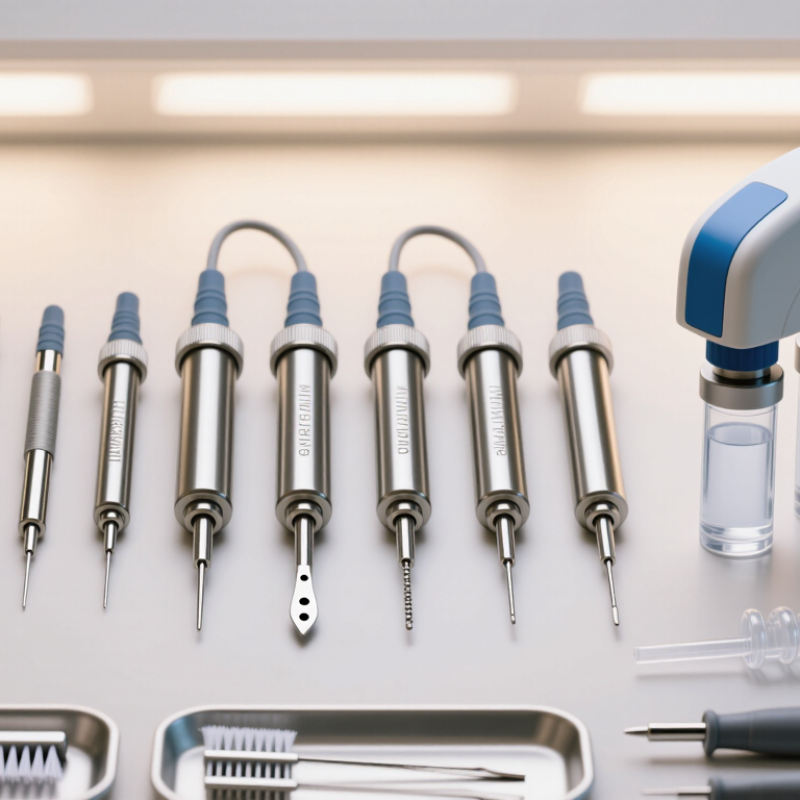
Liposuction depends on instruments that work together under a qualified surgeon’s control. An infiltration cannula delivers fluid into the treatment area. Aspiration cannulas remove tissue through openings near their tips, while different diameters and port patterns suit different clinical needs. A cannula handle helps the clinician guide movement and maintain a controlled grip. Small details matter.

A manual aspiration syringe can provide suction in selected techniques. In suction-assisted procedures, tubing connects the cannula to a vacuum pump. A pressure gauge and regulator let the team monitor and adjust suction; a collection canister safely holds aspirated material. Connectors or adapters join compatible components, while a skin-access trocar or access instrument can help create a passage for cannula entry. Not every setup includes one.

A power-assisted handpiece adds controlled mechanical movement to a compatible cannula, but it is not required for every case. These ten instruments are not interchangeable, and the right configuration depends on the procedure, patient, and clinician’s training. Sterility, equipment compatibility, and routine checks deserve attention before use. Even a well-designed instrument cannot replace sound judgment; teams should follow current clinical protocols and manufacturer instructions. In practice, the simplest setup is not always the easiest to handle.

How Instruments Are Used at Each Stage of the Procedure

Top 10 Liposuction Surgical Instruments for Clinics: How Instruments Are Used at Each Stage of the Procedure

Preparation starts with a sterile instrument tray, surgical marking pen, and suction system checked by the clinical team. The pen helps map treatment areas while the patient is positioned and prepared. Small scalpels create access points, and forceps or hemostats help manage sterile materials around them. Keep the setup orderly. A cluttered tray can slow work.

During infiltration, a fluid-delivery setup and infiltration cannula support the surgeon’s planned approach. A blunt suction cannula then connects through sterile tubing to a vacuum source and collection canister. Cannula size and design vary with the treatment area and clinical judgment; there is no universal choice. The canister lets staff monitor collected material without interrupting the sterile field. Gauze, clamps, and irrigation equipment may also be used as needed.

At closure, needle holders, sutures, and dressing supplies support wound care. Small details matter: tubing that kinks or a misplaced clamp creates avoidable friction. Even a well-prepared tray is not a substitute for trained clinicians, patient assessment, and facility protocols. Some setups look ideal on paper but need adjustment for the case.

Sterilization, Maintenance, and Safe Instrument Handling

Liposuction cannulas, tubing, and other reusable instruments need cleaning before sterilization. Blood and fatty residue can remain inside narrow channels. At the point of use, prevent soil from drying and keep instruments from striking one another during transport. In the processing area, disassemble items as instructed, brush and flush channels, then inspect them under good light. A clean exterior is not proof of a clean lumen.

Follow each device’s validated instructions and the clinic’s written procedures. The CDC’s Guideline for Disinfection and Sterilization in Healthcare Facilities describes steam-cycle parameters, but exposure times depend on the sterilizer, load, packaging, and instrument instructions. Use the specified cycle; check physical records and required chemical and biological indicators.

WHO’s 2016 Global Guidelines for the Prevention of Surgical Site Infection reported a pooled SSI incidence of 11.8 per 100 surgical patients in low- and middle-income countries. Sterilization is only one part of prevention, but it deserves careful control.

Check cannulas for bends, blocked openings, corrosion, and damaged connections before each use. Use compatible maintenance products, and document repairs, cycle results, and instrument retirement. Keep sterile packs dry and intact; handle them with clean, dry hands and store them in a protected area.

One overlooked channel matters. The checklist can feel repetitive, and teams may still miss details when work is rushed. Review near-misses and workflow with staff rather than assuming a signed log guarantees safe handling.

FAQS

What roles do liposuction instruments serve?

They support preparation, fluid delivery, aspiration, and collection. Each component has a distinct job.

What does an infiltration cannula do?

It delivers fluid into the planned treatment area. Secure tubing connections matter.

How do aspiration cannulas differ?

They remove tissue through openings near their tips. Diameter and port pattern vary by clinical need.

Why should the collection canister stay visible?

Visibility helps the team monitor collected material during the procedure. Keep it in clear view.

What should teams inspect before use?

Check sterile packaging, connections, tubing, and equipment function. Follow instructions and facility protocols.

How can tubing problems affect setup?

Kinks or loose connections may interrupt the planned workflow. A neat layout is not enough.

Are all ten instruments used in every case?

No. Not every case. The setup depends on the procedure, patient, and clinician’s training.

What does a power-assisted handpiece provide?

It adds controlled mechanical movement to a compatible cannula. It is not needed for every procedure.

Does a complete tray guarantee a ready setup?

No. A tray can look complete and still miss a connector. It is easy to miss.

Conclusion

Liposuction Surgical Instruments help clinics organize each stage of a procedure, from preparing the treatment area and creating access points to removing tissue and completing closure. A well-planned instrument set may include cannulas in suitable sizes and designs, handles, tubing, suction components, access instruments, and tools for incision care. Each item has a distinct role, so choosing instruments should take into account the procedure’s needs, compatibility, ergonomic handling, durability, and ease of cleaning.

A clear workflow helps staff select and prepare the right instruments for each stage, keep the working area orderly, and handle equipment consistently. After use, instruments should be cleaned, inspected, sterilized, stored, and maintained according to their instructions and the clinic’s established protocols. Careful selection and responsible handling support efficient preparation, reliable instrument performance, and a safer clinical environment.

Amelia

Amelia

Amelia is a skilled marketing professional with a strong understanding of the company’s products, customers, and industry landscape. With a thoughtful, research-driven approach, she transforms complex product features into clear, practical insights that help readers make informed decisions. Amelia......