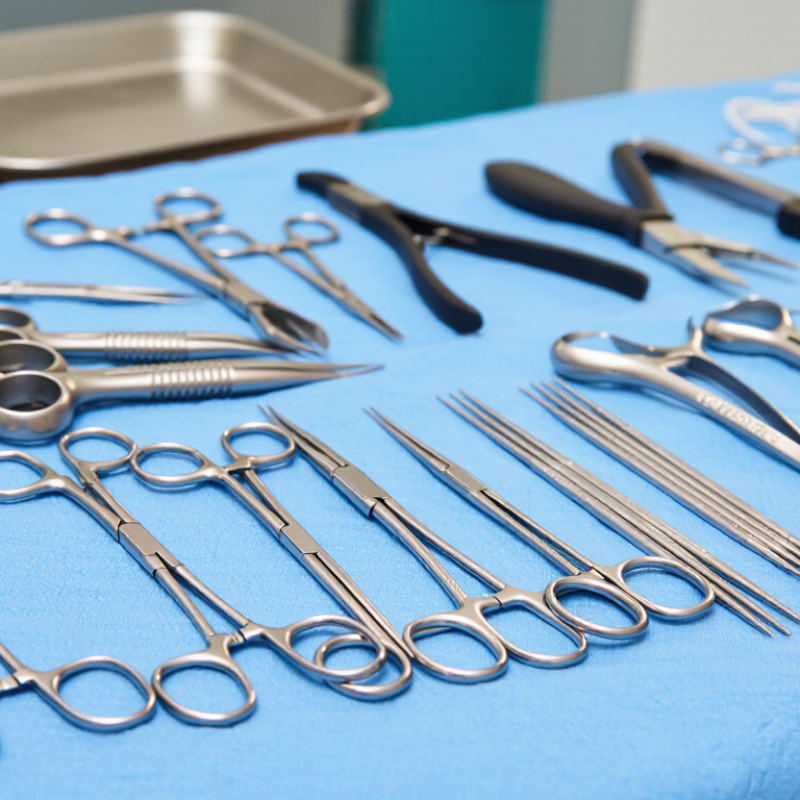
| Cutting and Dissection |
Metzenbaum scissors; vascular scissors; fine dissecting scissors |
Dividing soft tissue and carefully dissecting tissue planes around vessels or the heart. Vascular scissors may be used to extend an arteriotomy or venotomy. |
Fine blades support controlled cutting. Scissors intended for vascular work are selected to help make precise incisions while limiting unintended tissue damage. |
| Grasping and Tissue Handling |
Atraumatic vascular forceps; tissue forceps; fine dissecting forceps |
Holding or positioning delicate tissue, vessel walls, grafts, and suture material during an operation. |
Atraumatic patterns commonly have smooth or finely patterned jaws designed to provide a controlled grip while reducing crushing of fragile tissue. |
| Vessel Clamping and Occlusion |
Vascular clamps; bulldog clamps; partial-occlusion clamps |
Temporarily controlling blood flow during vessel repair, graft anastomosis, or other procedures that require a bloodless operative field. |
Clamp shape, jaw profile, and closing pressure vary by vessel and task. Partial-occlusion designs can clamp part of a vessel while allowing flow through the remaining lumen. |
| Suturing and Needle Control |
Needle holders; vascular needle holders; suture scissors |
Driving needles and tying or trimming sutures during vascular anastomoses and closure of surgical incisions. |
Jaws are designed to hold a surgical needle securely. Instrument size and jaw design are selected to match the needle, suture, and operative access. |
| Retraction and Exposure |
Sternal retractors; self-retaining retractors; handheld retractors |
Separating the edges of an incision and maintaining access to the chest or operative site during open cardiac procedures. |
Retractor blades or arms provide sustained exposure. The selected configuration depends on the incision, anatomy, and required field of view. |
| Suction and Field Clearance |
Cardiac suction tips; fine suction cannulas; suction tubing connectors |
Removing blood and fluid from the operative field to improve visibility during surgery. |
Tip diameter and shape affect access and flow. Suction is applied as needed under the surgical team's control to clear the field. |
| Cannulation and Fluid Delivery |
Arterial cannulas; venous cannulas; cardioplegia cannulas |
Providing access for blood flow or delivery of cardioplegic solution in procedures involving cardiopulmonary bypass or myocardial protection. |
Designs differ by intended vessel or chamber, flow pathway, and connection. Selection and placement are determined by the procedure and clinical requirements. |
| Probing and Vessel Measurement |
Vessel probes; sizing instruments; coronary probes |
Assessing vessel passage or estimating vessel size during selected vascular and cardiac procedures. |
Graduated or size-specific designs help support consistent assessment. These instruments are used gently and are not substitutes for clinical imaging or judgment. |
| Temporary Support and Organization |
Vessel loops; tourniquet tapes; surgical clips and clip appliers |
Identifying, gently retracting, or temporarily controlling selected vessels and tissue structures during an operation. |
Loops and tapes help organize or apply controlled traction to structures. Clips are used for tissue or vessel closure where appropriate to the procedure. |