
Knowledge & Industry Articles

Surgical Instruments Blog & Insights

Discover the latest industry trends, regulatory guidelines, manufacturing standards, and clinical instrument guides from Rigor Instruments.

OEM & Quality Knowledge

Precision Manufacturing & Standards

In-depth guides on ISO certifications, surgical stainless steel grades, and custom tool engineering.

Global Healthcare Insights

Medical Export & Regulatory Guides

Stay informed about international health authority regulations, import standards, and clinic equipment requirements.

0%

Choosing the right DeBakey Clamps is a small decision with serious surgical consequences. Their atraumatic serrations, slender jaws, and balanced grip can protect delicate vessels during exposure, dissection, and anastomosis. Yet, not every DeBakey pattern suits every tissue, vessel diameter, or operative field.

The World Health Organization’s Global Patient Safety Action Plan 2021–2030 reports that approximately one in ten patients experiences harm in healthcare. More than half of this harm is considered preventable. Instrument choice cannot eliminate every risk. It can reduce avoidable pressure, slipping, and unnecessary tissue handling. AORN’s Guidelines for Perioperative Practice also stress inspection, cleaning, sterilization, and traceability for reusable surgical instruments. Those steps matter. A flawless clamp is still unsafe when its jaws are misaligned or its serrations are damaged.

Dr. Michael E. DeBakey is often credited with saying, “The surgeon must have the mind of a scientist, the heart of a humanist, and the hand of an artist.” That principle fits clamp selection well. A surgeon must compare jaw length, tip geometry, spring tension, handle comfort, and the intended vessel size. Stainless steel quality and repeated sterilization performance deserve equal attention. A longer clamp may improve access, but it can reduce tactile control. A finer tip may improve precision, yet it can feel fragile under resistance. This guide examines those practical trade-offs, using surgical application, manufacturer specifications, and validated perioperative practices rather than catalog appearance alone. Some choices remain imperfect. That is precisely why careful evaluation matters.

How to Choose the Right DeBakey Clamps for Surgical Use

DeBakey Clamps: Design, Structure, and Surgical Purpose

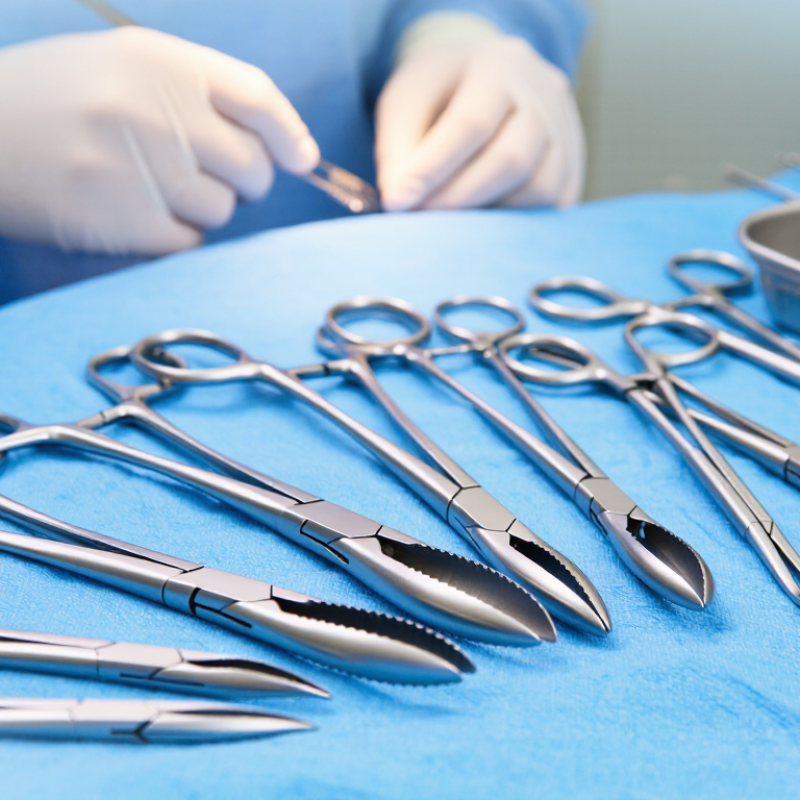
Choosing the right DeBakey clamp begins with understanding its design, not its appearance. The atraumatic jaws usually feature fine longitudinal serrations, which support a secure grip while reducing crushing pressure. Their smooth, tapered profile helps the instrument pass through narrow operative spaces. Some models have straight jaws, while others use curved jaws for angled access and improved visibility.

Structure also affects control. Ring handles, a box lock, and balanced weight allow measured finger pressure during delicate manipulation. The shaft length should match the surgical field. A long shaft can reach deep tissue, but it may reduce tactile feedback. Shorter instruments often provide better precision in superficial work. Handle tension matters, too. Excessive resistance can cause fatigue during repeated use.

In practical instrument checks, I look for smooth jaw alignment, consistent closure, and an undamaged lock. A clamp that closes unevenly should not be selected for critical tissue handling. It is easy to overvalue sharp-looking serrations. Tissue response matters more. For vessels, nerves, and other fragile structures, choose the least aggressive pattern that still provides control. For broader tissue or temporary holding, a different jaw width may be appropriate. Always match the clamp to the procedure, anatomy, and surgeon’s technique. Personal preference can help, but it should never replace inspection, training, or the instrument’s validated instructions.

Match Clamp Patterns to Tissue Type and Surgical Procedure

Choosing the right DeBakey clamp starts with tissue, not appearance. Atraumatic patterns are designed to reduce crushing during grasping. Fine longitudinal serrations suit delicate vessels and thin-walled structures. They help maintain control with limited pressure. Broad serrations may provide steadier handling for tougher tissue. However, excessive force can still cause trauma. The pattern cannot replace careful technique.

For vascular anastomosis, fine, smooth serrations often support precise vessel handling. An angled clamp can improve access around deep or narrow operative fields. Straight jaws may offer better visibility during open, superficial procedures. For bowel or other fragile tissue, select a pattern that holds without tearing. Longer jaws may distribute pressure, but they can reduce tactile feedback. Short jaws often provide more controlled placement. Procedure demands should guide the choice.

A practical check includes jaw alignment, hinge movement, and surface condition. Even a small burr can damage tissue. Hold the clamp lightly and test its grip before applying it. A common mistake is choosing the longest instrument for every deep field. That assumption needs rechecking. Length can improve reach, yet it may reduce precision. Surgeons should match the clamp to tissue thickness, access angle, and expected manipulation. Sterile processing teams should also inspect the instrument after each cycle. Selection remains partly judgment-based, and preferences may change after real operative use. Record those observations and discuss them during instrument reviews.

Select the Appropriate Size, Length, and Jaw Configuration

How to Choose the Right DeBakey Clamps for Surgical Use

Choosing DeBakey clamps starts with tissue protection, not appearance. Match the clamp size to the vessel or tissue diameter. Fine, smaller clamps suit delicate vascular work and narrow operative fields. Larger clamps provide stronger control but may obscure tissue or increase pressure. The right choice should hold securely without crushing the vessel wall. A perfect selection is not always obvious.

Length matters when access changes. Short clamps improve fingertip control near the incision. Longer clamps reach deep fields while keeping the surgeon’s hand away from the wound. Excessive length can reduce tactile feedback and increase wrist fatigue. Select a length that reaches comfortably, then test the handle balance before use. This step is often overlooked.

Jaw configuration should follow anatomy and exposure. Straight jaws support direct, visible application. Angled jaws improve access around vessels and organs. Curved jaws can follow anatomical contours, but they may hide the exact contact point. Fine atraumatic serrations are preferred for fragile vessels. Coarser patterns may offer grip, yet they demand greater caution. AORN guidance emphasizes instrument inspection and safe handling, while AAMI ST79 stresses effective cleaning and sterilization practices. WHO’s Global Guidelines report surgical-site infections in about 2–5% of inpatient surgical patients in high-income settings and 11% in low- and middle-income settings. That statistic does not prove clamp choice causes infection, but it reinforces disciplined instrument handling. Inspect each clamp for alignment, smooth action, damaged serrations, and residual debris before use. Small defects matter.

Evaluate Handling, Visibility, Material, and Sterilization Needs

Selecting the right DeBakey clamps begins with handling, not appearance. Hold the instrument with a gloved hand and test its balance, spring tension, and ratchet action. The jaws should close smoothly without forcing the wrist. Fine serrations can support delicate tissue control, but excessive pressure may cause unnecessary trauma. A lighter clamp is not always better.

Visibility matters during deep or crowded procedures. Choose a jaw length that reaches the target without blocking the operative field. Slim profiles can improve access, while a clear finish may reduce glare under strong surgical lighting. Inspect the tips closely. Even slight misalignment can affect precision. This detail is easy to miss.

Material selection should match the procedure and reprocessing system. High-quality surgical stainless steel generally offers durability, corrosion resistance, and reliable cleaning. However, material alone does not guarantee performance. Check the instrument’s technical documentation and your facility’s sterilization requirements. Confirm compatibility with steam sterilization, ultrasonic cleaning, and automated washers when applicable. Follow the validated cycle exactly.

Before routine use, examine the clamp under bright light. Look for pitting, stains, rough edges, loose joints, or weakened spring action. A clamp may feel acceptable while failing under delicate manipulation. That possibility deserves attention. Staff feedback can reveal practical problems that specifications overlook, especially after repeated sterilization. When uncertain, compare the instrument with a calibrated surgical standard and consult qualified operating-room or sterile-processing professionals.

How to Choose the Right DeBakey Clamps for Surgical Use

A practical, non-brand-specific evaluation model for comparing handling, visibility, material suitability, and sterilization requirements. Scores range from 1 to 5, with 5 indicating the highest selection priority.

Prioritize atraumatic control and precise handling for delicate tissue. Confirm jaw visibility, instrument length, stainless-steel compatibility, and the healthcare facility’s validated sterilization cycle before use.

Verify Quality, Compatibility, and Safe Clinical Use

How to Choose the Right DeBakey Clamps for Surgical Use

Selecting DeBakey clamps requires more than checking size and appearance. Quality begins with medical-grade construction, smooth jaws, secure alignment, and a handle that closes predictably. Under operating-room lighting, inspect the serrations for chips, uneven spacing, or trapped debris. The jaws should meet evenly without excessive force. A stiff hinge can reduce control during delicate vascular handling. Corrosion, surface pitting, or loose joints are clear reasons for removal from service.

Compatibility also matters. Match the clamp’s length, jaw profile, and tip design with the intended procedure and tissue sensitivity. Confirm compatibility with the facility’s sterilization process, surgical tray, and instrument tracking system. Always review the manufacturer’s instructions and local clinical protocols. A clamp may look suitable yet perform poorly with a particular sterilizer or storage method. That detail is easy to miss. Safe use includes preoperative inspection, correct handling, validated sterilization, and immediate reporting of damaged instruments. Do not rely on appearance alone.

Tips: Test the hinge gently before use. Check jaw alignment against a clean background. Confirm the instrument is fully processed and dry. Keep a record of inspection findings and lot information. If the grip feels unfamiliar, pause and ask a senior clinician or sterile-processing professional. Practical judgment improves with repetition, but it is never perfect. Even experienced teams can overlook a small defect during a busy case. A second inspection can prevent that mistake.

FAQS

What makes an atraumatic surgical clamp suitable for delicate tissue?

Fine longitudinal serrations provide grip while limiting crushing pressure. The jaws should close evenly. Gentle control matters more than aggressive teeth.

Should I choose straight or curved jaws?

Straight jaws often improve visibility in open, superficial fields. Curved jaws can reach angled or deeper spaces more easily. The operative angle should decide.

How does clamp length affect surgical handling?

Longer shafts improve reach in deep tissue. They may reduce tactile feedback and precision. Shorter clamps often feel more controlled near the surface.

What features should be checked before using a clamp?

Inspect jaw alignment, hinge movement, lock condition, and surface smoothness. Look for burrs, pits, stains, loose joints, or weakened springs. Small defects matter.

How should jaw patterns match different tissues?

Fine serrations suit delicate vessels and thin-walled structures. Broader serrations may steady tougher tissue. Excessive force can still cause trauma.

How can a clamp improve visibility in a crowded surgical field?

Choose a slim profile and suitable jaw length. The instrument should reach the target without blocking the field. A clear finish may reduce glare under strong lights.

What should the clamp feel like during handling?

Hold it with a gloved hand and test balance, spring tension, and closure. The jaws should close smoothly without forcing the wrist. A lighter instrument is not automatically better.

How should sterilization requirements influence material selection?

Select materials compatible with the facility’s validated reprocessing system. Check compatibility with steam, ultrasonic cleaning, and automated washing. Follow the approved cycle exactly.

What common mistake should users reconsider when selecting clamp length?

Choosing the longest clamp for every deep field can reduce precision. Reach is useful, but control may suffer. That assumption needs rechecking.

What should happen when a clamp’s performance seems uncertain?

Remove it from critical use and compare it with a calibrated surgical standard. Consult qualified surgical or sterile-processing professionals. Personal preference should never replace inspection and training.

Conclusion

Choosing the right DeBakey Clamps requires understanding how their atraumatic, finely patterned jaws are designed to handle delicate tissues while providing secure control. The clamp pattern should match the tissue type and surgical purpose, whether the task involves grasping, occluding, dissecting, or temporarily holding vessels and other sensitive structures. Selecting the correct size and length is equally important: smaller clamps support precision in confined areas, while longer instruments may improve access to deeper surgical fields. Jaw shape, curvature, and tip design should be assessed according to the required reach, visibility, and degree of tissue control.

Practical handling also depends on balanced weight, comfortable finger rings, clear visibility, and a surface that supports reliable grip. The instrument’s material should withstand repeated cleaning and sterilization without compromising function. Before clinical use, verify that the clamp is compatible with the procedure, free from damage, aligned correctly, and operating smoothly. Proper inspection, sterilization, and adherence to established surgical protocols help promote safe, consistent performance.

Amelia

Amelia

Amelia is a skilled marketing professional with a strong understanding of the company’s products, customers, and industry landscape. With a thoughtful, research-driven approach, she transforms complex product features into clear, practical insights that help readers make informed decisions. Amelia......