Knowledge & Industry Articles

Surgical Instruments Blog & Insights

Discover the latest industry trends, regulatory guidelines, manufacturing standards, and clinical instrument guides from Rigor Instruments.

OEM & Quality Knowledge

Precision Manufacturing & Standards

In-depth guides on ISO certifications, surgical stainless steel grades, and custom tool engineering.

Global Healthcare Insights

Medical Export & Regulatory Guides

Stay informed about international health authority regulations, import standards, and clinic equipment requirements.

0%

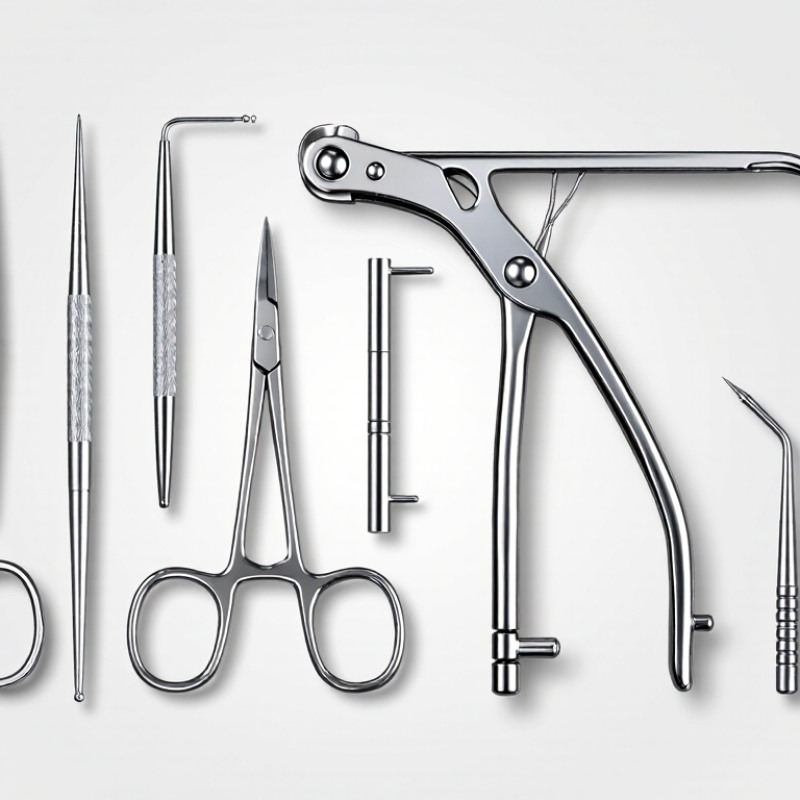
Choosing the right Plastic Surgery Instruments begins with clinical purpose, not glossy catalog images. Global buyers need tools that support precision, safe handling, and repeatable performance. A delicate forceps should close evenly. A needle holder should provide controlled grip without excessive hand strain. Retractors should feel stable during prolonged procedures. Small details matter.

Plastic surgeon Dr. Sydney Coleman is often associated with this principle: “The goal of plastic surgery is not to make people look different, but to make them look like themselves.” That idea also influences instrument selection. Surgeons need dependable scissors, forceps, clamps, cannulas, and elevators that support measured tissue handling. The instrument should serve the technique, not distract from it. This sounds obvious. It is not always practiced.

For international buyers, material quality deserves close examination. Surgical stainless steel, corrosion resistance, joint alignment, and surface finishing affect daily reliability. Review cleaning instructions, sterilization compatibility, and traceability records before placing an order. ISO 13485 certification can indicate a controlled quality system, but certification alone does not prove every instrument performs well. That assumption needs checking. Ask for inspection reports, sample testing, warranty terms, and replacement policies. Confirm whether product labeling matches the destination market’s requirements.

Experienced purchasing teams also evaluate supplier communication. Can the manufacturer explain tolerances clearly? Can it maintain consistent dimensions across repeat orders? A lower price may become expensive when tips misalign or hinges loosen. No catalog is perfect. Careful buyers compare clinical feedback, technical evidence, and hands-on samples before choosing Plastic Surgery Instruments for global distribution.

Top Plastic Surgery Instruments for Global Buyers?

Types of Plastic Surgery Instruments and Their Clinical Uses

Top Plastic Surgery Instruments for Global Buyers?

Types of Plastic Surgery Instruments and Their Clinical Uses

For global buyers, instrument choice should follow the procedure, not the catalogue photograph. The ISAPS 2023 survey recorded more than 34 million aesthetic procedures worldwide. This growth increases demand for dependable surgical sets. Scalpel handles and fine blades support precise skin incisions. Adson and toothed forceps help grasp skin edges during closure. Metzenbaum scissors separate soft tissue, while Mayo scissors handle thicker tissue. Needle holders maintain suture control around delicate facial structures. Retractors keep the field visible without excessive pressure.

Liposuction requires cannulas matched to tissue depth, port design, and surgeon preference. ASPS 2023 statistics reported 347,782 liposuction procedures in the United States. Fine cannulas suit contour refinement. Wider cannulas remove larger volumes more efficiently. Microvascular procedures need smaller forceps, needle holders, and vessel dilators. Breast, nasal, hand, and reconstructive cases may require specialized retractors and measuring tools. That distinction matters. A general-purpose set can still be clinically inadequate.

Tips: Confirm surgical compatibility, grip balance, jaw alignment, and surface finish before purchase. Ask for material certificates, sterilization instructions, and documented quality controls. Reusable instruments need inspection after every cycle. Hinges may loosen quietly. This is easy to miss. Buyers should assess local servicing, replacement parts, and training support. Clinical feedback should guide selection, although feedback is sometimes inconsistent. That weakness deserves review, not concealment.

Material, Design, and Performance Features to Evaluate

Global buyers should judge plastic surgery instruments by material, design, and measurable performance, not polished photographs. Grand View Research estimated the global surgical instruments market at about USD 13.7 billion in 2023, reflecting strong demand for dependable operating tools. In practice, corrosion-resistant stainless steel remains common, but its grade, hardness, and surface finish deserve close inspection. A smooth satin surface can reduce glare, while poor polishing may trap residue around joints. That detail matters.

Design affects control during delicate procedures. Scissors should open evenly, hold alignment, and cut without excessive hand pressure. Forceps need balanced tips, secure grip, and enough flexibility to avoid tissue trauma. A 2023 American Society of Plastic Surgeons report recorded more than 1.5 million cosmetic surgical procedures in the United States, showing the scale of repeated instrument use. High-volume settings need handles that remain comfortable after long procedures. Small differences become painful quickly.

Performance testing should include repeated cleaning, sterilization exposure, joint movement, and tip alignment. ISO 13485-based quality systems can support traceability, but certification alone does not prove practical usability. Buyers should request inspection records, material specifications, and sample testing. Weaker instruments may look acceptable at first. They can loosen after several cycles. That is a costly surprise. My own evaluation would include a gloved handling test, because catalog dimensions rarely reveal balance, grip fatigue, or awkward locking mechanisms. Some purchasing teams still prioritize low price too heavily. That choice deserves reconsideration.

Top Plastic Surgery Instruments for Global Buyers? - Material, Design, and Performance Features to Evaluate

Instrument Category Typical Surgical Applications Common Material Options Design Features to Evaluate Performance Characteristics Cleaning and Sterilization Considerations Global-Buyer Evaluation Points
Adson Tissue Forceps Grasping skin edges and soft tissue during incision closure and reconstructive procedures. Medical-grade stainless steel; tungsten-carbide inserts may be used on selected precision models. Fine profile, balanced spring action, straight or toothed tips, and atraumatic finger grip. ★★★★★High control for superficial tissue handling. Should tolerate validated steam sterilization cycles. Serrations and teeth require thorough brushing to remove bioburden. Check tip alignment, tooth geometry, surface finish, corrosion resistance, and left- or right-handed usability.
Metzenbaum Scissors Dissecting and cutting delicate soft tissue in cosmetic, reconstructive, and general plastic surgery. Stainless steel; tungsten-carbide cutting edges are available for longer edge retention. Long shanks with relatively short, curved or straight blades; smooth finger rings and controlled hinge movement. ★★★★★Designed for precise dissection rather than heavy cutting. Hinges should be cleaned while open and lubricated with a sterilization-compatible instrument milk when required by the manufacturer. Evaluate cutting performance near the blade tip, joint smoothness, handle comfort, and resistance to pitting.
Mayo Scissors Cutting heavier tissue, sutures, dressings, and other materials used during operative procedures. Hardened stainless steel; carbide inserts may improve durability on premium configurations. Shorter, broader blades than Metzenbaum scissors; straight or curved patterns. ★★★★☆Higher cutting strength for heavier materials. Separate instruments by intended use to help protect fine cutting edges. Inspect the box lock after each reprocessing cycle. Confirm blade thickness, edge sharpness, handle ergonomics, and suitability for repeated high-temperature processing.
Hemostatic Forceps Clamping blood vessels or tissue pedicles and controlling bleeding during surgery. Medical-grade stainless steel with precision-machined serrations and a ratchet lock. Curved or straight jaws, graduated ratchet positions, and a box lock designed for secure closure. ★★★★☆Reliable clamping when jaw alignment is maintained. Ratchets and box locks must be fully opened during cleaning. Excessive lubrication or damaged teeth can affect locking performance. Assess clamping pressure, jaw symmetry, ratchet engagement, corrosion resistance, and availability of repair services.
Needle Holder Driving and rotating surgical needles during wound closure, flap surgery, and microsurgical procedures. Stainless steel; tungsten-carbide jaw inserts are commonly used to improve needle grip and wear resistance. Short, stable jaws, ergonomic ring handles, and a secure ratchet; microsurgical versions use finer profiles. ★★★★★Stable needle control is essential for consistent suturing. Inspect carbide inserts for chips and check that the ratchet releases smoothly. Clean serrated surfaces without abrasive damage. Compare jaw length, insert pattern, needle-size range, handle balance, and replacement or refurbishment options.
Skin Hooks Gentle retraction and positioning of skin edges during facial, breast, hand, and reconstructive procedures. Stainless steel; atraumatic polymer handles may be used for grip comfort on reusable instruments. Single- or double-prong configurations, fine atraumatic tips, and a lightweight handle. ★★★★☆Provides controlled retraction with minimal obstruction to the field. Fine tips must be protected from bending during transport and cleaning. Follow the material-specific sterilization instructions. Evaluate tip sharpness, prong symmetry, handle texture, visibility in the operative field, and packaging protection.
Gigli Wire Saw and Handles Controlled cutting of bone in selected craniofacial and reconstructive procedures. Stainless steel wire with reusable metal handles; some systems use sterile, single-use wire components. Flexible serrated wire, secure handle attachment, and a design that permits controlled reciprocating movement. ★★★★☆Useful where a flexible bone-cutting path is required. Reusable handles require complete cleaning of attachment points. Single-use wire components must not be reprocessed unless specifically validated. Confirm wire diameter, tensile strength, handle compatibility, packaging integrity, and regulatory status in the destination market.
Rhinoplasty Osteotomes Controlled contouring and modification of nasal bone during rhinoplasty and related procedures. Hardened stainless steel with a precisely ground cutting edge; impact-resistant handle materials may vary. Straight or curved blade, guarded or unguarded profile, non-slip handle, and a durable striking surface. ★★★★★Edge geometry and balance influence control and accuracy. Protect the cutting edge from contact with other metal instruments. Inspect for mushrooming, cracks, and loss of sharpness. Review blade width, bevel angle, handle ergonomics, impact durability, and availability of sharpening or replacement services.
Dermal Curettes Removing tissue, smoothing selected surfaces, or performing controlled curettage in dermatologic and reconstructive applications. Stainless steel with a loop or cup-shaped working end; reusable and sterile single-use formats exist. Sharp or blunt circular edge, rigid shaft, and handle sized for controlled rotational movement. ★★★☆☆Performance depends strongly on edge geometry and intended tissue use. Small cavities require careful flushing and visual inspection. Single-use versions should be discarded after the procedure. Check cup diameter, edge profile, shaft rigidity, sterility labeling, and compatibility with local disposal requirements.
Suction Cannulas Removing blood, irrigation fluid, and tissue debris during liposuction and other plastic surgery procedures. Stainless steel or medical-grade polymer, depending on whether the cannula is reusable or single-use. Rounded atraumatic tip, side ports, ergonomic connector, and smooth internal lumen to support consistent flow. ★★★★★Flow performance is affected by lumen diameter, port design, and tubing compatibility. Reusable cannulas require validated flushing and lumen cleaning. Inspect for blocked ports, deformation, and damaged connectors. Compare outer diameter, working length, port pattern, connector standards, material compatibility, and cleaning validation data.
Lipoinjection Cannulas Placing processed autologous fat into subcutaneous tissue during fat-grafting procedures. Polished stainless steel, often with a blunt rounded tip and lateral openings. Blunt atraumatic tip, calibrated shaft, low-friction surface, and port arrangement suited to controlled deposition. ★★★★☆Smooth passage and predictable delivery support consistent placement. Internal lumens and side ports must be cleaned immediately after use. Single-use sterile cannulas should not be reused. Evaluate tip radius, port number and size, shaft length, connector fit, surface polish, and sterility documentation.
Retractors Holding skin, muscle, tissue, or wound margins away from the operative field. Stainless steel for reusable models; medical-grade polymer may be used in selected single-use designs. Self-retaining or handheld construction, atraumatic edges, adjustable tension, and a profile appropriate to the surgical site. ★★★★☆Effective exposure should be achieved without excessive tissue pressure. Ratchets, hinges, and narrow gaps need special attention during cleaning. Check for bent blades before sterilization. Assess retraction depth, blade shape, pressure distribution, locking stability, operating-room visibility, and storage requirements.

Essential Instruments for Common Plastic Surgery Procedures

Common plastic surgery procedures require instruments that match tissue, access, and surgical precision. For blepharoplasty, fine-toothed forceps, delicate scissors, needle holders, and small retractors support controlled eyelid work. Their tips should align smoothly, without catching thin tissue.

Rhinoplasty often depends on nasal elevators, narrow osteotomes, rasping tools, suction tips, and specialized scissors. The surgeon needs clear visibility and predictable handling around bone and cartilage.

For facelifts, skin hooks, undermining scissors, broad retractors, and reliable hemostatic instruments can improve exposure. Fit matters. A heavy instrument may increase fatigue during long procedures.

Liposuction requires compatible cannulas, secure tubing, collection systems, and easy-to-clean connectors. Cannula diameter and tip design should suit the treatment area and the surgeon’s technique.

For wound closure, buyers should inspect needle holders, tissue forceps, and scissors under bright light. A loose hinge can compromise accuracy.

Sterilization compatibility, corrosion resistance, traceable documentation, and local regulatory requirements also deserve careful review. In practice, no checklist is perfect; some instruments look precise but feel awkward after repeated use. Trial evaluation, staff feedback, and maintenance records reveal problems that product photographs cannot show. Reliable sourcing means checking material certificates, cleaning instructions, packaging integrity, and replacement availability before purchase.

International Quality, Safety, and Regulatory Requirements

Top Plastic Surgery Instruments for Global Buyers

International buyers should judge plastic surgery instruments by intended use, not appearance alone. Fine scissors, forceps, needle holders, retractors, and cannulas need stable geometry and controlled movement. Under magnification, jaw alignment should remain even. Hinges should open smoothly without lateral play. Small defects matter.

Material selection affects patient safety and service life. Stainless steel must resist corrosion after cleaning, disinfection, and sterilization. Suppliers should provide material grades, heat-treatment records, and lot traceability. Reusable instruments also need validated processing instructions, including cleaning steps, drying time, and sterilization limits. ISO 13485 supports quality management, while ISO 14971 guides risk evaluation. Biocompatibility evidence may apply to patient-contacting components under ISO 10993. Requirements depend on the product.

Regulatory documentation should match the destination market and intended use. Buyers may request technical files, inspection records, declarations, and test reports from qualified laboratories. Packaging should protect delicate tips during transport and show lot or batch information. A practical incoming inspection checks surface finish, sharpness, insulation, locking action, and dimensional accuracy. Not every certificate proves performance. This is easy to overlook. I would also question reports with unclear sample identification or outdated standards. Local registration, labeling, language, and post-market obligations must be confirmed with the relevant authority. A checklist helps, but it cannot replace risk-based review and hands-on inspection.

How Global Buyers Can Compare Suppliers and Place Orders

Top Plastic Surgery Instruments for Global Buyers?

How Global Buyers Can Compare Suppliers and Place Orders

Global buyers should compare suppliers beyond catalog photos and low prices. A reliable evaluation starts with instrument specifications, intended clinical use, and manufacturing controls. Check the steel grade, surface finish, jaw alignment, handle movement, and resistance to repeated sterilization. Ask for inspection records, material certificates, and traceability documents. Clear answers matter.

Request samples before placing a large order. Test scissors for smooth cutting, forceps for accurate grip, and retractors for stable tension. Measure hinge movement and inspect edges under strong light. A sample may look excellent but perform poorly after several cleaning cycles. That is easy to miss.

Supplier comparison should also include production capacity, minimum order quantities, lead times, packaging, and export experience. Confirm whether documents support your destination market’s requirements. Written specifications can prevent expensive misunderstandings. Define acceptable defects before production begins, including scratches, loose joints, and uneven polishing. Use a pre-shipment inspection when order value justifies it. Do not rely only on promises.

When placing an order, approve one final sample and attach its specifications to the purchase agreement. Confirm payment stages, delivery terms, replacement procedures, and responsibility for damaged goods. Keep communication in writing. A cheaper quote can become costly after delays, rework, or rejected shipments. Even experienced buyers sometimes overlook small details, especially packaging dimensions and sterilization instructions. That oversight deserves a second review.

FAQS

Which instruments are commonly used for eyelid surgery?

Fine-toothed forceps, delicate scissors, needle holders, and small retractors support controlled eyelid work. Their tips should align smoothly. Thin tissue catches easily.

What instruments are useful during nasal surgery?

Nasal elevators, narrow osteotomes, rasps, suction tips, and specialized scissors improve access around bone and cartilage. Clear visibility matters. Handling should feel predictable.

Which tools support facelift procedures?

Skin hooks, undermining scissors, broad retractors, and hemostatic instruments can improve exposure. Fit matters during long procedures. Heavy tools increase fatigue.

What should buyers check when selecting liposuction equipment?

Cannula diameter and tip design should match the treatment area and surgical technique. Check tubing security and connector cleaning. Small fittings deserve attention.

How can buyers inspect instruments for wound closure?

Inspect needle holders, tissue forceps, and scissors under bright light. Check hinge movement, jaw alignment, sharpness, and locking action. Loose hinges reduce accuracy.

Which materials and documents should suppliers provide?

Request material grades, heat-treatment records, lot traceability, cleaning instructions, and sterilization limits. Documentation should identify the tested samples. Unclear reports need questioning.

What regulatory checks are important for international purchases?

Requirements depend on the destination market and intended use. Confirm registration, labeling, language, declarations, inspection records, and local obligations. Rules can differ.

Can product photographs prove instrument quality?

No. Photographs cannot reveal awkward handling, lateral hinge movement, or repeated-use problems. Trial evaluation and staff feedback provide better evidence. A checklist is helpful, but incomplete.

Conclusion

Choosing the right Plastic Surgery Instruments is essential for achieving precision, safety, and consistent clinical results. This overview explains the main categories, including cutting, dissecting, grasping, retracting, suturing, and specialized instruments, along with their roles in procedures such as tissue reshaping, reconstruction, and wound closure. It also highlights how material selection, ergonomic design, surface finishing, balance, durability, and sterilization performance can influence instrument quality and usability.

For global buyers, purchasing decisions should also consider internationally recognized quality systems, traceability, packaging, sterilization compatibility, and applicable medical-device regulations in the destination market. A practical supplier comparison should examine product specifications, manufacturing capabilities, inspection procedures, documentation, customization options, lead times, order quantities, and after-sales support. By evaluating these factors systematically and confirming requirements before placing an order, healthcare institutions and distributors can select reliable instruments that support clinical performance, patient safety, and long-term value.

Charlotte

Charlotte

Charlotte is a dedicated marketing professional with a strong understanding of the company’s products, services, and customer needs. With a background in market research, content strategy, and business communication, she transforms complex product information into clear, practical, and engaging......