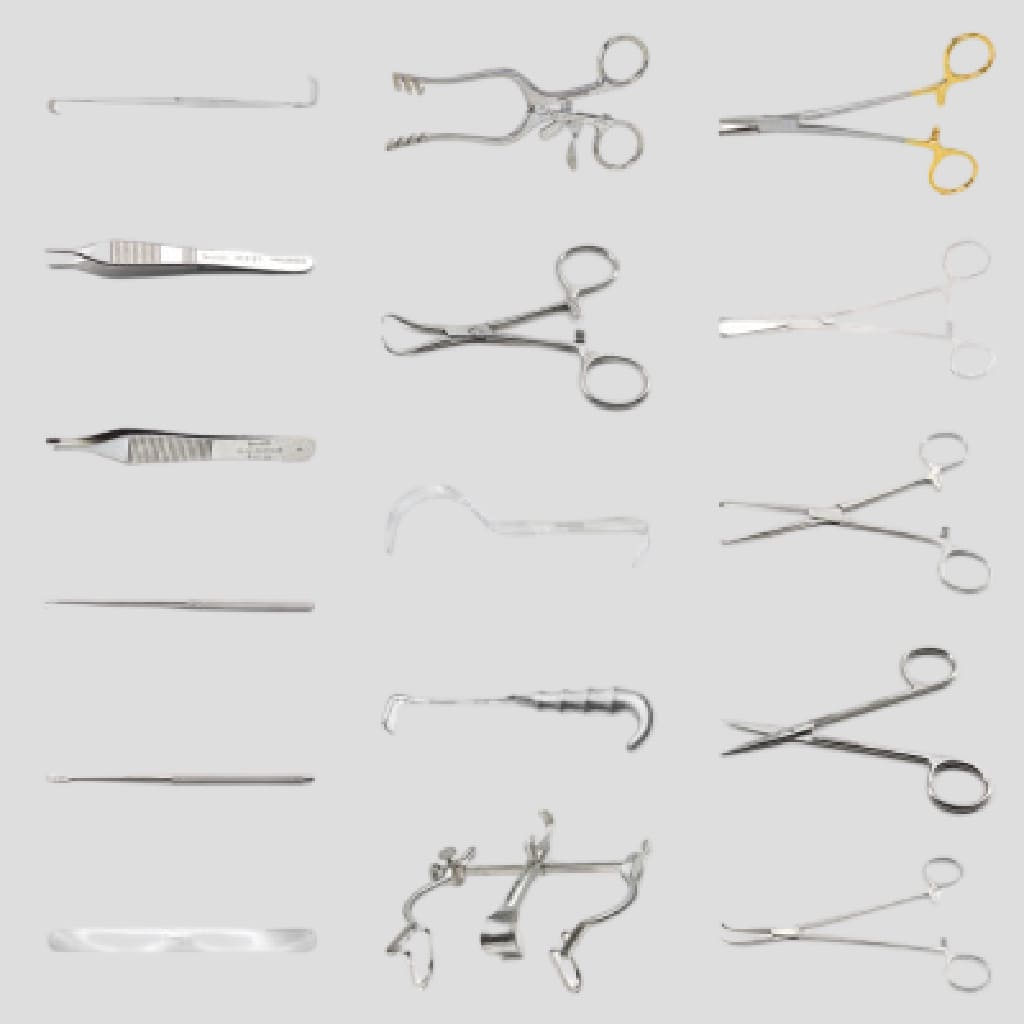
B2B Autopsy Knives Procurement Guide: Engineering Specifications, Pathology Blade Selection, and Global Manufacturing Trends

An authoritative technical evaluation for hospital procurement managers, forensic laboratory directors, and medical equipment distributors seeking high-gain insights on post-mortem dissection instruments, steel metallurgy, and OEM supply chain optimizations.

Understanding Autopsy Knives: Technical Engineering & Intent-Driven Procurement

In forensic pathology, post-mortem examination, and necropsy procedures, Autopsy Knives represent a specialized class of heavy-duty cutting instruments engineered to cut through tough soft tissue, dense cartilage, and fibrous organs with surgical precision and minimal physical fatigue for the prosector. Unlike delicate scalpels used in living tissue resection, high-performance autopsy knives require a unique synthesis of high-carbon martensitic stainless steel, optimized blade geometry, bevel stability, and seamless handle ergonomics to withstand repetitive mechanical strain and harsh chemical sterilization.

For global procurement directors, medical equipment importers, and hospital purchasing committees, sourcing clinical-grade autopsy blades is not merely a matter of price per unit. Modern semantic search data and AI intent mining reveal that medical procurement officers frequently evaluate critical questions such as: What AISI steel grade offers the ideal edge retention without micro-chipping during costal cartilage resection? How do Virchow, Rokitansky, and Satterlee blade profiles differ in organ dissection vs. brain slicing? What quality control certifications (ISO 13485, CE, FDA) guarantee compliance for government forensic lab tenders?

As a leading surgical instrument manufacturer based in Sialkot, Pakistan, Rigor Instruments brings over 40 years of metallurgical expertise and master craftsmanship to the design and production of medical-grade autopsy knives. This guide offers deep information gain—moving beyond generic catalog lists to deliver actionable technical metrics, structural blade comparisons, global procurement trend analyses, and direct manufacturer insights built upon Google’s Search Quality Rater Guidelines for Experience, Expertise, Authoritativeness, and Trustworthiness (E-E-A-T).

Rigor Instruments Metallurgical Commitment

Every autopsy knife crafted in our Sialkot facility undergoes vacuum heat treatment and controlled cryogenic tempering to achieve a Rockwell hardness rating of HRC 54–58. Using premium German AISI 420 and Japanese SUS 420J2 stainless steel alloys, our instruments ensure superior corrosion resistance, high tensile strength, and exceptional edge retention through thousands of autoclave cycles.

Recommended Autopsy Knives & Post-Mortem Dissection Blades

Factory-direct precision instruments manufactured to rigorous international standards. Explore our core pathology catalog for bulk hospital and forensic lab procurement.

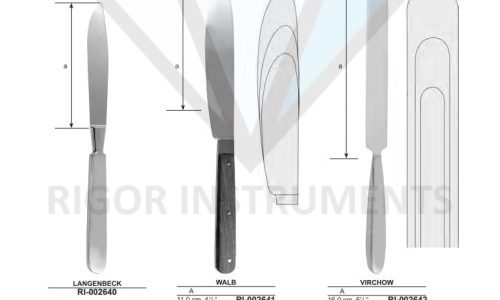
Virchow Autopsy Knife - Rigor Instruments
SKU: RI-002642

Virchow Autopsy Knife

The gold standard for organ dissection and heavy tissue sectioning. Featuring a broad convex cutting edge and a solid stainless steel ergonomic handle, the Virchow knife allows smooth sweeping cuts across dense liver, lung, and abdominal tissue.

Blade Length: 160 mm / 200 mm Steel Alloy: German Stainless AISI 420 Handle Type: Solid Flat Textured Grip
Get Catalog
Rokitansky Autopsy & Brain Sectioning Knife
SKU: RI-002645

Rokitansky Autopsy Knife

Designed specifically for precise organ slicing, post-mortem brain examination, and delicate tissue layer division. The thin, dual-ground straight edge minimizes tissue tearing and distortion during macroscopic specimen preparation.

Blade Length: 140 mm / 180 mm Steel Alloy: Japanese SUS 420J2 Finish: Satin Dull Polish (Anti-Glare)
Get Catalog
Cartilage Dissection Autopsy Knife
SKU: RI-002650

Cartilage & Rib Autopsy Knife

Heavy-duty autopsy knife constructed with a reinforced thick spine and a short, rigid blade designed to cut through costal cartilage, fibrous ligaments, and sternal joints without edge deflection or blade bending.

Blade Length: 80 mm / 100 mm Hardness: HRC 56–58 Feature: Extra Heavy Reinforced Spine
Get Catalog
Satterlee Bone & Post-Mortem Resection Knife
SKU: RI-002654

Walcher / Satterlee PM Resection Knife

Heavy post-mortem knife with an integrated weighted metal handle providing downward momentum for long initial skin incisions and deep muscle resection during forensic autopsies and pathology training.

Blade Length: 220 mm Weight: 340g (Weighted Balance) Sterilization: Autoclave Safe up to 134°C
Get Catalog
Disposable Safety Autopsy Blade Handle Set
SKU: RI-002660

PM Long Scalpel Handle & Blade System

Industrial autopsy scalpel handle fitting extra-long post-mortem blades (#60, #70). Ideal for pathology laboratories prioritizing disposable blade efficiency and cross-contamination prevention.

Handle Material: Premium Stainless Steel Blade Compatibility: PM Blades #60–#73 Locking Mechanism: Heavy Duty Bayonet Lock
Get Catalog
Complete Post-Mortem Autopsy Instrument Set
SKU: RI-SET-PM08

Complete Forensic Pathology Autopsy Set

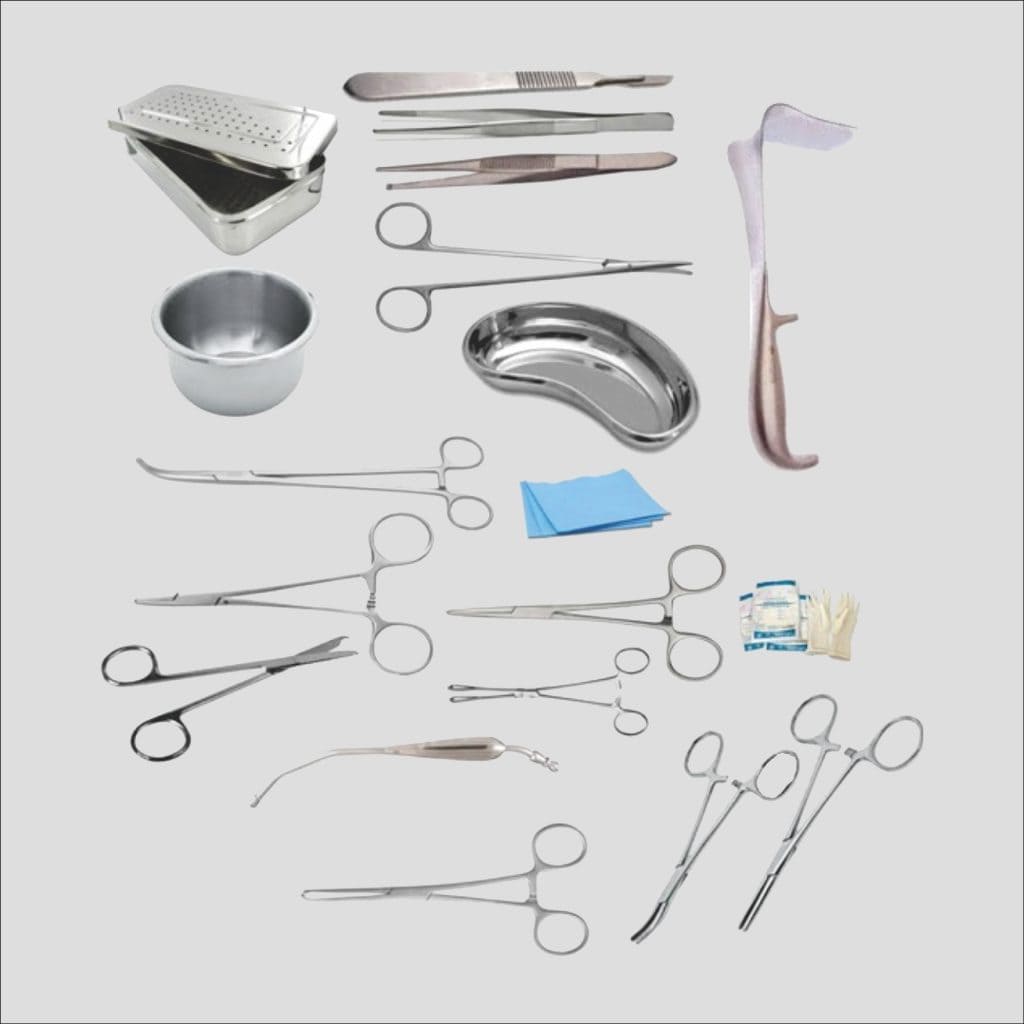
Comprehensive 18-piece post-mortem instrument kit including Virchow knives, cartilage shears, bone saws, tissue forceps, and brain slicing blades presented in an autoclavable stainless steel storage container.

Set Composition: 18 Essential PM Tools Customization: OEM Laser Marking Compliance: ISO 13485 & CE Certified
Get Catalog

Technical Specifications & Structural Comparison Matrix

When evaluating autopsy knives for institutional tenders or wholesale procurement, technical buyers must match blade geometry, spine thickness, and steel metallurgy to specific anatomical dissection tasks. The table below outlines the mechanical parameters engineered into Rigor Instruments' post-mortem product lines.

Knife Model Primary Anatomy Application Blade Geometry Spine Thickness Recommended Steel Grade Hardness (HRC)
Virchow Knife Organ dissection, major visceral organ sectioning Convex belly, single sharp edge 3.5 mm – 4.5 mm AISI 420 / DIN 1.4021 54 – 56 HRC
Rokitansky Knife Brain slicing, delicate tissue layer division Straight double-bevel razor edge 2.0 mm – 2.8 mm SUS 420J2 / DIN 1.4028 55 – 57 HRC
Cartilage Knife Costal cartilage, sternum joints, ligaments Short, rigid, reinforced spine 5.0 mm – 6.0 mm German Stainless AISI 440B 56 – 58 HRC
Walcher / Satterlee Initial body opening, deep muscle resection Heavy weighted blade, curved tip 4.0 mm – 5.0 mm Martensitic Stainless 420 54 – 56 HRC
PM Scalpel Blade Micro-dissection, forensic pathology sampling Interchangeable disposable blade 0.8 mm – 1.2 mm High Carbon Surgical Steel 58 – 60 HRC

Key Engineering Criteria for Pathology Knife Manufacturing

  • Passivation & Chemical Resistance: Post-mortem cutting tools are exposed to aggressive organic fluids, formalin, phenol solvents, and harsh enzymatic detergents. Rigor Instruments utilizes ultrasonic passivation treatment according to ASTM A967 standards, removing free iron from the surface and forming a thick, self-healing chromium oxide film that prevents pitting and rust formation.
  • Ergonomic Balance and Micro-Textured Grip: Autopsy procedures require sustained tactile control under wet, lubricated conditions. Our solid forged handles feature anti-slip satin finishing and knurled ergonomic contours that eliminate hand fatigue and reduce slip hazards for forensic medical examiners.
  • Re-Sharpenability vs. Edge Longevity: While ultra-hard steel holds a sharp edge longer, it can become brittle during bone contact. Our proprietary heat-treatment balancing process ensures high edge retention while maintaining sufficient ductile toughness to allow easy re-sharpening using standard pathology sharpening stones or automated blade sharpeners.

Future Procurement & Industry Development Trends in Autopsy Instruments (2026–2035)

The global forensic medical equipment and pathology supply market is undergoing structural shifts driven by technological advances, regulatory changes, and evolving safety protocols in mortuaries and research institutes. B2B procurement managers and medical distributors who anticipate these trends gain a distinct competitive edge in securing long-term institutional contracts.

6.8%
Global PM Market CAGR
100%
Traceability Compliance
ISO 13485
Mandatory Quality Standard

1. Shift Towards Hybrid Autopsy Systems (Reusable Core Handles + Disposable Blades)

While traditional reusable autopsy knives (such as solid Virchow and Rokitansky models) remain indispensable for major organ sectioning due to their heft and balance, there is accelerating growth in hybrid systems. Hospitals and forensic pathology departments are increasingly adopting heavy stainless steel handles paired with high-precision disposable surgical blades. This hybrid approach drastically reduces cross-contamination risk, cuts down on sharpening maintenance overhead, and speeds up specimen turnaround times in busy municipal coroner facilities.

2. Integration of Laser-Etched UDI & Digital Asset Tracking

International regulatory authorities (including the US FDA, EU MDR, and healthcare authorities across the Middle East and Asia) are tightening tracking requirements for surgical and pathology equipment. Modern autopsy knives produced by top OEM manufacturers now incorporate micro laser-etched Unique Device Identification (UDI) matrix codes. These codes allow automated tracking of instrument sterilization cycles, usage history, and sharpening maintenance intervals within hospital asset management software.

3. Ergonomic Safety Standards & Prosector Exposure Prevention

Occupational health standards in forensic laboratories are prioritizing prosecotor safety. Future instrument designs emphasize anti-glare dull satin finishes to eliminate glare under high-intensity surgical lamps, along with safety guards and weighted handles that absorb vibration during bone sectioning. Manufacturers who provide certified ergonomic tools with proven slip resistance are outperforming traditional suppliers in international government tenders.

4. Sustainable & Ethically Sourced Steel Supply Chains

Global medical purchasing organizations are evaluating suppliers based on environmental and ethical metrics. Responsible sourcing of surgical-grade steel, zero-waste metal recycling in forging facilities, and compliance with REACH/RoHS environmental directives have become core procurement criteria. As a second-generation surgical instrument manufacturer in Pakistan, Rigor Instruments operates eco-conscious manufacturing processes and full raw material supply chain traceability.

Why Choose Rigor Instruments as Your Autopsy Knives OEM Manufacturer?

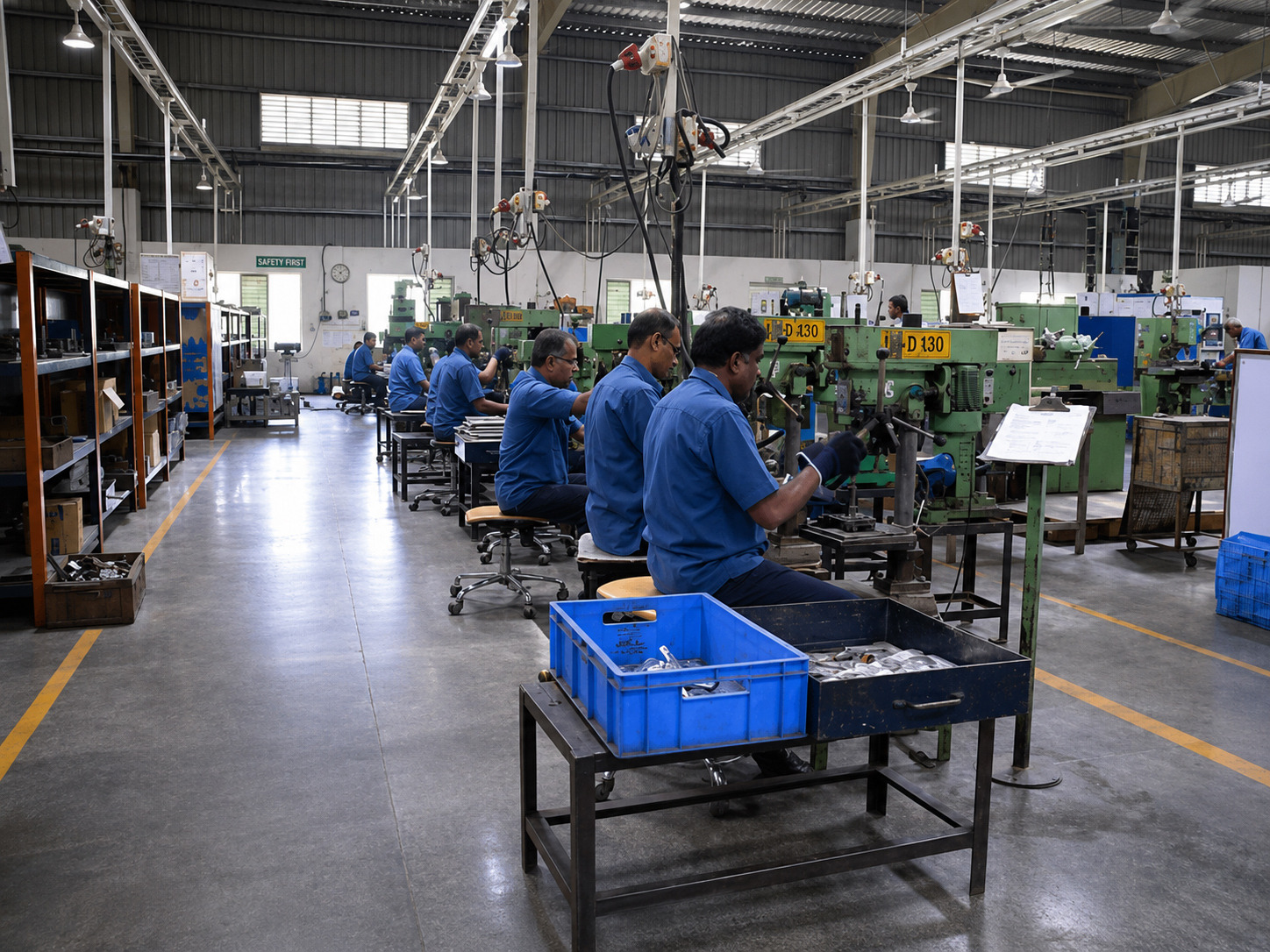
Located in Sialkot, Pakistan—the world-renowned capital of medical instrument metallurgy—Rigor Instruments has established itself over 40 years as a premier manufacturer and exporter of surgical and pathology equipment. We partner directly with medical distributors, hospital networks, private-label brands, and government health ministries across more than 50 countries.

40+ Years of Precision Forging Experience Second-generation master craftsmanship combined with modern CNC milling, laser cutting, and vacuum heat treatment technologies.
Certified Quality Assurance (ISO & CE Marked) Fully accredited under ISO 9001:2015 and ISO 13485:2016 medical quality management standards, FDA registered, and CE compliant.
German & Japanese Steel Integrity We exclusively forge our autopsy knives from premium imported stainless steel bars, guaranteeing rust-free durability and long-lasting edge retention.
Full OEM / ODM & Private Label Services Custom blade sizing, specialized handle contours, laser logo engraving, custom catalog numbering, and tailored B2B packaging options.
Rigor Instruments Manufacturing Facility Sialkot Pakistan
ISO 13485 Certification ISO 13485
ISO 9001 Certification ISO 9001
CE Mark CE Mark
FDA Listed FDA Listed

Frequently Asked Questions (B2B Procurement FAQ)

Addressing top queries from medical procurement officers, hospital purchasing departments, and global surgical distributors.

Q1: What grade of stainless steel is used in Rigor Instruments' autopsy knives?

We manufacture our autopsy knives using premium surgical-grade martensitic stainless steel, primarily German AISI 420 (DIN 1.4021) and Japanese SUS 420J2. For heavy-duty cartilage knives requiring enhanced edge retention and hardness, we offer high-carbon AISI 440B variants. All materials undergo mill certification and chemical composition testing prior to forging.

Q2: What is the Minimum Order Quantity (MOQ) for wholesale or OEM autopsy knife orders?

Our standard MOQ for wholesale catalog orders is 20 units per item specification. For custom OEM designs, specialized handle modifications, or private-label packaging with laser-etched branding, our MOQ typically ranges between 50 to 100 units depending on tool complexity. Contact our sales team via the live chat or catalog request button for custom quote evaluations.

Q3: How do Virchow, Rokitansky, and Satterlee autopsy knives differ in post-mortem dissection?

The Virchow Knife features a broad curved belly optimized for sweeping tissue cuts and visceral organ sectioning. The Rokitansky Knife has a long, thin, straight double-bevel blade designed for uniform organ slicing (particularly brain and liver tissue without tearing). The Satterlee / Cartilage Knife features a thick, reinforced spine and heavy blade geometry engineered for slicing costal cartilage and dense connective tissues.

Q4: Are Rigor Instruments' autopsy knives compatible with steam autoclave sterilization?

Yes, all our stainless steel autopsy knives are 100% reusable and fully autoclavable up to 134°C (273°F). Thanks to our ultrasonic passivation treatment and corrosion-resistant steel alloys, our instruments resist oxidation, pitting, and discoloration even after repeated exposure to autoclave steam and formalin disinfection solutions.

Q5: Can we order custom branding, laser engraving, or custom catalog numbers on the knives?

Absolutely. We offer comprehensive OEM/ODM private-label services. We can laser engrave your company logo, brand name, custom item SKU, UDI barcodes, and CE markings directly onto the stainless steel handles or blades. Custom box packaging, pouch printing, and barcode labeling are also available for distributors.

Q6: How long is the production lead time and what are the international delivery options?

Standard catalog orders are dispatched within 2 to 3 weeks. Custom OEM production runs typically require 4 to 6 weeks from sample approval. We ship globally from Sialkot/Lahore airports and Karachi sea ports via express air freight (DHL, FedEx, UPS) or containerized sea cargo, providing full export documentation, Certificate of Origin, ISO/CE certificates, and commercial invoices.

Precision in pathology starts with superior steel — Partner directly with Pakistan's leading surgical instrument manufacturer.

Rigor Instruments, Sialkot, Pakistan  ·  Manufacturer & Exporter of Autopsy & Surgical Knives  ·  Serving 50+ Countries